Guinea: A landslide victory for the Generation for Modernity and Development movement in the legislative elections
The legal appeals phase begins
Written by Ziad Abdel Fattah:
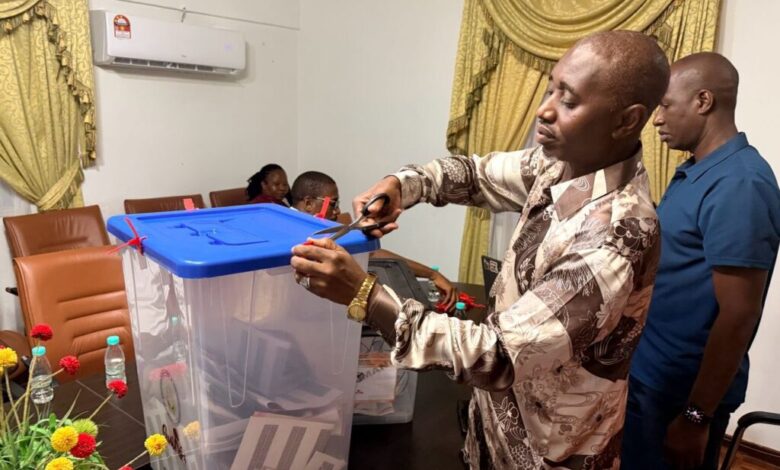
The directorate announced General Elections In Guinea, the preliminary results of the legislative elections held on May 31.
The Generation Movement for Modernity and Development achieved a large majority in the electoral districts within the country and among expatriates, while several opposition parties obtained seats through proportional representation.
The General Directorate of Elections announced the preliminary results of the legislative elections held on May 31, 2026 in Guinea yesterday, Thursday, June 4, 2026, before referring the election files to the Supreme Court registry, thus beginning the stage of legal appeals.
The Union for a Popular Movement participated in the elections as part of a political alliance with the Generation Movement for Modernity and Development, the dominant party in the elections.
Out of 6,948,894 registered voters, distributed across 50 electoral districts, 375 municipalities and 36 diplomatic missions, the elections mobilized 23,619 polling stations and 16,735 voting centers, while 3,741,573 voters cast their votes, with a turnout of 52.87%, with 3,448,994 valid votes.
9 seats for the Union Party
At the national level, 49 seats were contested. The Union for a Popular Movement (UMP) led the way with 636,900 votes and 9 seats, followed by the New Beginning Party and the Guinean Workers' Rally (RGT) with 7 seats each. The Forces of Integrity for Democracy and Liberty (FIDEL) won 6 seats, the Union for Democracy and Development (UDD) 5 seats, and the National Alliance Front (FAN) 2 seats.
Several parties won seats, including the Democratic Alternative for Change, Future of New Guinea, Alliance for Renewal and Progress, Liberal Bloc, New Generation for the Republic, Alliance for Action for Change, Democratic People's Alliance, Democratic Alliance for Democracy, Republican Alliance for Democracy, Republican Alliance for Growth, Republican Alliance for Democracy, Republican Alliance for Democracy, United Democratic Alliance, and United Alliance of Forces.
The Guinean Democratic Movement (MDG) dominated the elections in both single-member and multi-member constituencies, winning the majority of seats in all fifty. The party achieved notable victories in the constituencies of Dixine, Kaloum, Lambani, Matoto, Ratoma, Doubrika, Kindia, Labé, Kankan, and Nzérékoré, with the exception of a few seats won by the Ausons party in Matam, the Frondég party in Kondara, and the Democratic Alternative for Democracy party in Béssia.
These results remain provisional and may be challenged before the Supreme Court before the final announcement of the formation of the next National Assembly.