Colonial-era maps ignite a century-long race.. Congo's hidden treasures resurface
A century-old archive unlocks a $24 trillion fortune
Written by Omnia Hassan
In a move that brings pages from the past into the heart of present-day conflicts, Belgium is preparing to open one of the largest geological archives of the Democratic Republic of Congo, an archive dating back to the colonial era. Africa It includes maps, field reports, and mining records over a hundred years old.
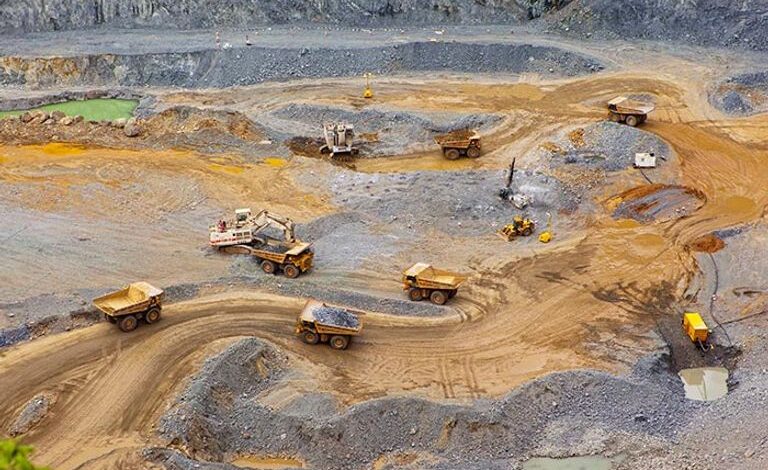
These documents are not just a historical legacy, but have today become a potential key to discovering vast mineral wealth at a time of intense global competition for the critical minerals needed for battery manufacturing, electric vehicles, and renewable energy technologies.
Old documents and a new opportunity for Congo
The archive, preserved at the Africa Museum in Tervuren, Belgium, contains hundreds of meters of maps and geological data prepared by Belgian experts before Congo's independence in 1960. It focuses on copper and gold deposits, as well as early indications of cobalt, lithium, and coltan.
Kinshasa hopes these records will help identify untapped deposits, attract new investment, and strengthen its control over the mining sector in a country whose mineral resources are valued at approximately $24 trillion.
Digitizing Records: The Battle for Information Sovereignty
The issue is no longer limited to the recovery of historical documents, but has transformed into a strategic project aimed at digitizing the archives and making them available to the Congolese authorities.

Brussels and Kinshasa have agreed to prepare a joint roadmap and establish a working group to oversee the data transfer process, in a move described by the Congolese government as an enhancement of ”geological sovereignty.”.
As digitization accelerates within Congo, hundreds of thousands of pages have been converted into electronic copies, allowing access to information in minutes, saving years of research and exploration.
Global Race for Strategic Metals
The disclosure of the archives coincides with the intensifying competition between the United States, China, and Europe to secure supplies of critical minerals, particularly cobalt, of which the Congo possesses the world's largest reserves.
At the same time, Kinshasa tightened its control over cobalt exports through a quota system and a government-managed strategic reserve, in an effort to maximize economic returns and give the state greater leverage in the global metals market.
Between maps drawn by geologists a century ago and an economic struggle led by the major powers today, the Congo finds itself facing a historic opportunity to transform a colonial legacy into a card of power, redrawing the map of influence in one of the most important arenas for competition over the wealth of the future.