Despite fear and rising hostility, migrants hold on to staying in South Africa
They have no option to return.
Written by: Mohamed Ragab
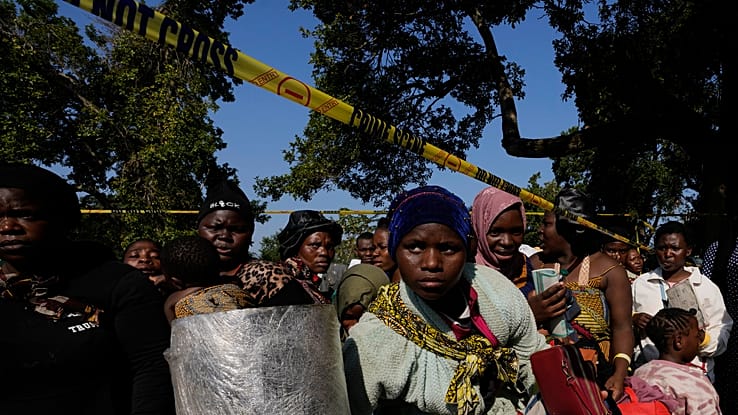
Foreign communities in South Africa are living in a state of anxiety and anticipation, amid escalating anti-immigrant protests and the accompanying violence and looting targeting shops and properties owned by foreigners.
While thousands of migrants have left the country in recent days, others have chosen to stay, asserting that they have no other option to return to their homelands.
These developments come after protests in several cities on June 30, led by a group demanding the deportation of undocumented immigrants, accusing them of causing high rates of unemployment and crime and putting pressure on public services – claims that the government and experts say are not based on evidence.
Refugees refuse to return despite the risks
Among them is Ethiopian Helena Wolde, who sought refuge in South Africa more than 20 years ago, fleeing political persecution in his country. He says he cannot return to Ethiopia after losing his home and ties there, preferring to stay despite the increasing dangers.
Wolde explained that his wife and three children, who were born in South Africa, experienced moments of terror during the protests, but he reopened his shop in Durban after the riots ended, hoping to resume his normal life.
Heavy losses for shop owners
Many foreign-owned shops were not spared from looting and vandalism. Ethiopian immigrant Daniel Abid says one of his shops was completely looted, while the other escaped the attacks. He added that he intends to reopen his shop despite the losses.
Abid stressed that immigrants do not take jobs away from citizens, but rather establish small projects that provide jobs and contribute to revitalizing the local economy, noting that the decline in demand for foreign stores due to the state of fear has caused significant losses for their owners.
Tensions are rising despite the limited number of migrants.
United Nations data indicates that South Africa hosts more than 167,000 refugees and asylum seekers, while the total number of migrants is about 3 million people, which is equivalent to about 41 TP3T of the country’s population, a percentage that is considered low compared to a number of other African countries.
Nevertheless, anti-immigrant sentiment is growing as economic challenges persist and unemployment rates rise, while studies confirm that immigrants are not the main cause of these crises, and that problems with the economy and public services are linked to more complex structural and administrative factors.
Calls to contain the crisis
Observers warn that continued hate speech against foreigners could lead to new waves of violence, at a time when the South African government has called for respect for the rule of law, stressing that verifying the legal status of immigrants is the sole responsibility of security agencies, not individuals or groups.
Human rights organizations have also called for the protection of migrants and refugees, confronting incitement to violence, and working to address the economic and social causes that fuel tensions, in order to maintain social peace and prevent the country from repeating the acts of violence it witnessed in previous years.