After the Oceans Conference in Kenya: Is the blue economy an opportunity or a new form of exploitation?
Written by: Ayman Ragab
From June 16 to 18 in Mombasa, Kenya, the “Our Ocean” conference was held for the first time on African soil, with the participation of more than 100 governments, companies and civil society organizations, where 320 new commitments worth $6.4 billion were announced to enhance ocean protection, support sustainable fisheries, adapt to climate change and develop the blue economy.
But behind the atmosphere of pledges and promises, a more complex question emerges: Is the problem a lack of commitments or the way the oceans are managed?
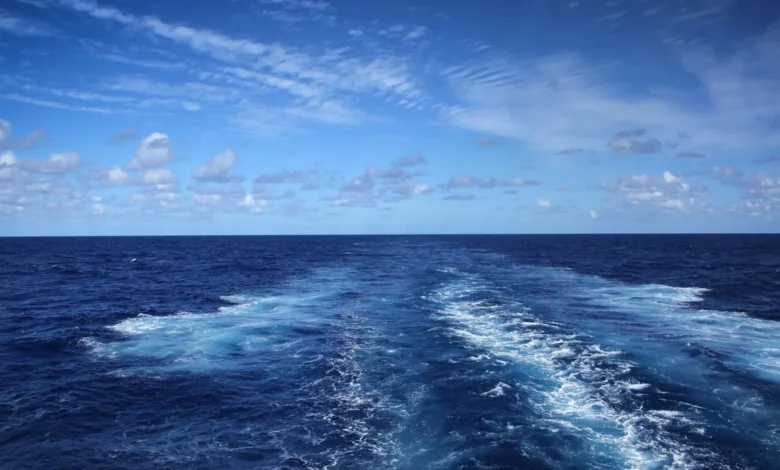
The ocean knows no divisions drawn by institutions. It is a single, interconnected system, its waters, currents, and creatures moving without regard for political or administrative boundaries. Humans, however, have divided its responsibilities among various ministries, budgets, agreements, and institutions, so that each entity manages a part of the picture without bearing responsibility for the entire system.
This fragmentation does not appear in the form of an obvious disaster, such as an oil spill or a polluted beach, but rather operates quietly through conflicting jurisdictions, multiple donors, duplicate reports, and a disconnection of decisions from the reality of coastal communities.
Mangroves are an example of the problem
Mangrove forests clearly embody this dilemma: for climate negotiators they are a blue carbon reservoir, for biodiversity experts they are a habitat for species, for the fishing industry they are nursery grounds for fish, and for disaster planners they are a natural barrier protecting coastlines.
As for the people who live near it, it is a source of food, fuel, shade, memory, and stability.
All of these visions are correct, but administrative systems often treat them as separate files: one project for carbon, another for biodiversity, a third for resilience, and a fourth to support women working in the fishing sector, according to African Arguments.
The result is that activity increases, but real change remains limited.
Repeated questions and a lack of listening
In many coastal communities, the same scene is repeated: one team arrives to study the impact of climate, another to study threatened species, a third to find out the needs of women, and a fourth to investigate illegal fishing.
Societies provide the same answers many times, and their experiences are transformed into multiple reports, but this amount of information does not necessarily translate into better decisions.
Thus, distraction becomes a substitute for genuine participation.
It's a political problem, not just an administrative one.
This system allows everyone to claim responsibility without anyone bearing full accountability. When jurisdictions overlap, it becomes difficult to determine who is responsible for failure.
Large figures, such as the announcement by the “Our Ocean” conference of a $6.4 billion mobilization, also raise questions about the actual size of the new funding and how much money will reach coastal communities.
Pledges do not necessarily mean implementation, and announcements do not mean that resources will reach those who need them.
The Fishermen... The Forgotten Episode
The effects of fragmentation are particularly evident in the fishing sector. A small-scale fisherman may be a source of catch data for one ministry, a security file for another, and an informal worker for a third, while not receiving full recognition from any of them.
The FAO’s “Lighting Up the Hidden Harvest” study indicates that small-scale fisheries provide at least 40% of the total global catch and are linked to the livelihoods of one in 12 people worldwide.
However, coastal work remains among the most dangerous and least protected jobs, existing among multiple files without clearly belonging to any of them.
Illegal, unreported and unregulated fishing also costs African economies between $11 billion and $13 billion annually, according to widely circulated estimates.
The blue economy: an opportunity or a new form of exploitation?
Calls are growing for the development of the blue economy in Africa, but the fundamental question is not just about how important this economy is, but who has the right to set its rules and who benefits from it.
Ports, marine reserves, carbon markets, and marine resource access agreements can deliver significant economic benefits, but they can also marginalize coastal communities if they are not part of the decision-making process.
A blue economy that does not promote the rights of people who depend on the sea does not represent a sustainable transformation, but may become a new form of exploitation.
The real test comes after the conferences.
The world has witnessed important steps in the field of ocean protection, including the entry into force of the High Seas Convention on January 17, 2026, and the global pledge to protect 30% of land and sea by 2030.
Our Ocean initiative has also resulted in more than 3,200 commitments worth $176 billion since 2014.
But the real test lies not in the number of conferences or the volume of press releases, but in more direct questions:
Do you follow up on commitments after they are announced?
Do local communities participate in the design of projects before they are implemented?
Will fishermen be recognized as rights holders?
Is the data used to make better policies or just for reporting?
The ocean knows no boundaries of ministries or budget items. These divisions are man-made, but their persistence weakens their ability to protect it.
The problem is not that the environment is fragmented, but that the power responsible for managing and protecting it is still distributed in a way that makes everyone present, but no one fully responsible.