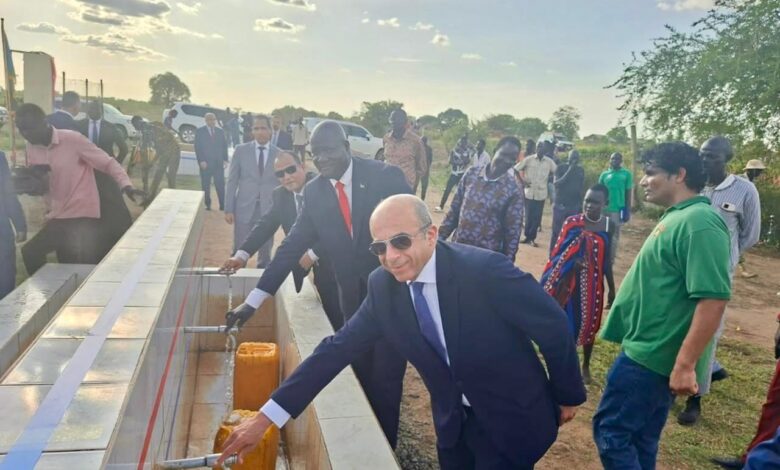
With Egyptian support, a groundwater station was inaugurated at the University of Juba to enhance water services in South Sudan.
Egypt is implementing a groundwater drinking water station powered by solar energy to support sustainable development.
Written by: Mohamed Ragab
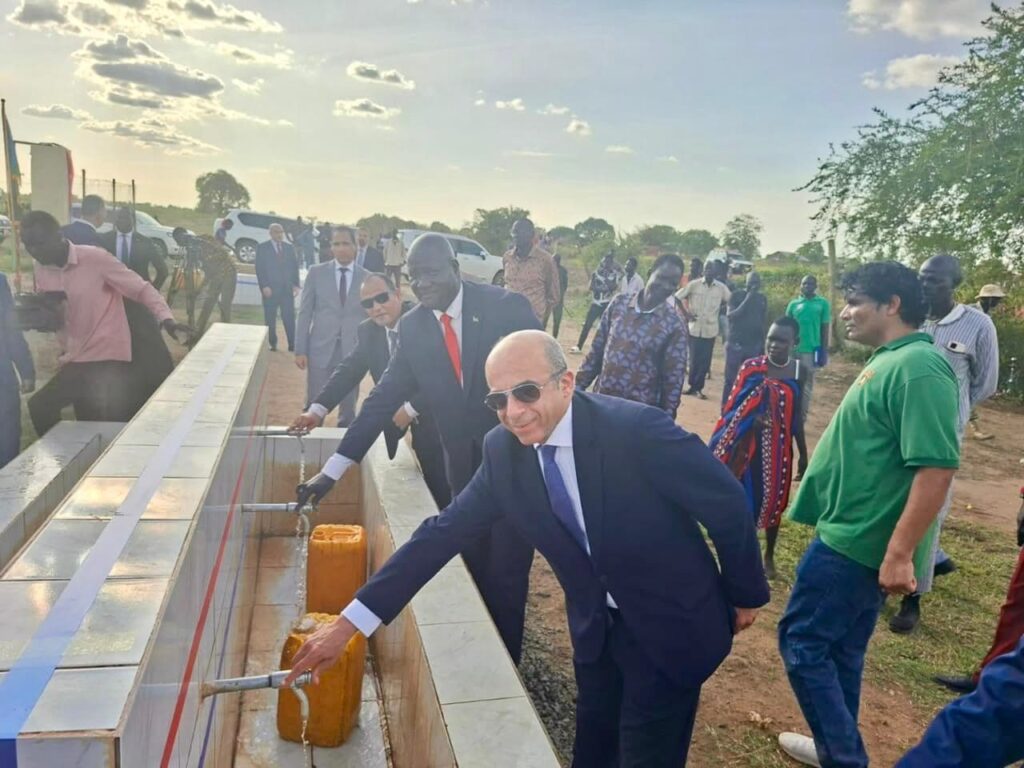
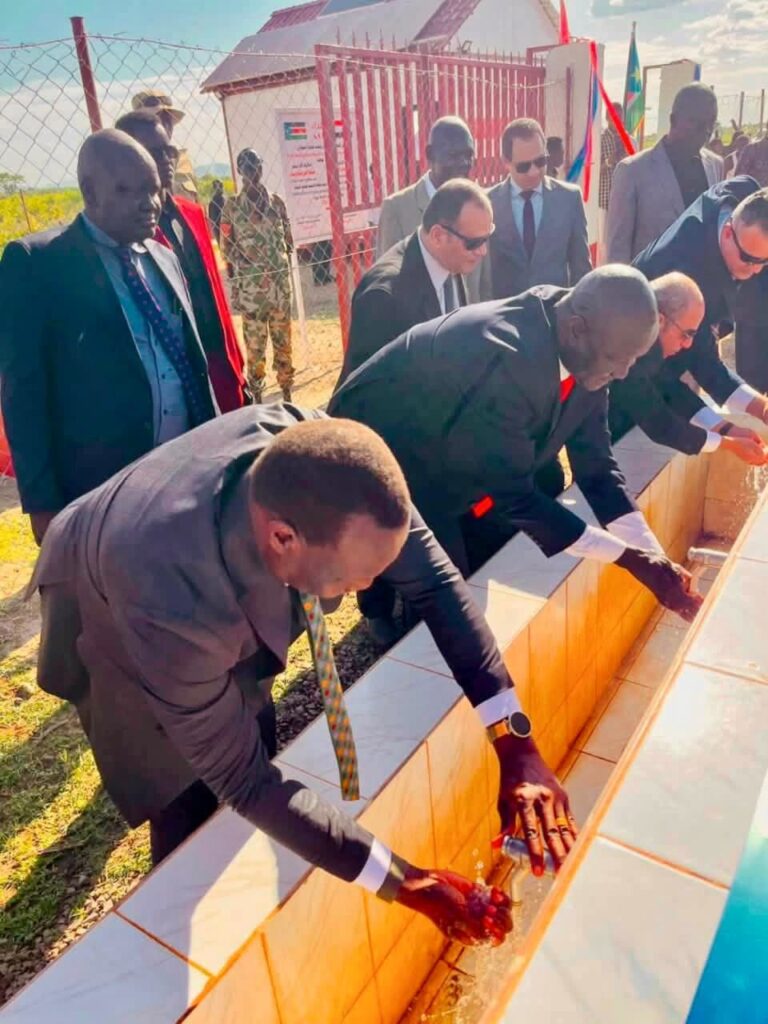
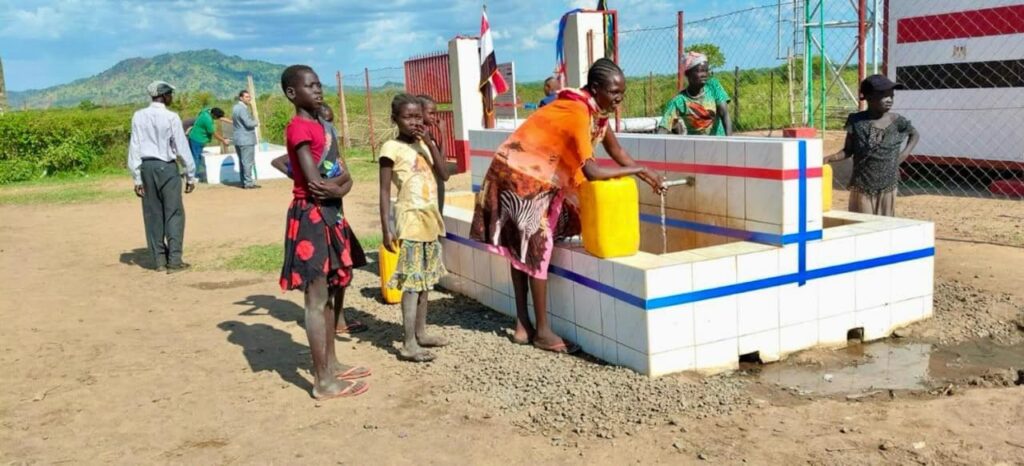
The Republic of South Sudan inaugurated the “Sumba” groundwater station at the University of Juba, which was implemented with a grant from the Arab Republic of Egypt, within the framework of ongoing cooperation between the two countries to support development projects and improve the level of basic services for citizens.
The station was inaugurated in the presence of the Minister of Water Resources and Irrigation of the Republic of South Sudan, James Mawiec Makwaj, the Egyptian Ambassador to South Sudan, Hazem Mamdouh, and Engineer Shaaban Abu Al-Fath, head of the Egyptian Irrigation Mission in South Sudan, along with a number of officials from both the Egyptian and South Sudanese sides.
The depth of relations between Egypt and South Sudan
Dr. Hani Sweilem, the Egyptian Minister of Water Resources and Irrigation, affirmed that the opening of the “Somba” station reflects the depth of the historical and fraternal relations that unite Egypt and South Sudan, noting the Egyptian state’s keenness to continue providing technical and developmental support to the brothers in South Sudan in a way that contributes to achieving sustainable development and improving the quality of life for citizens.
Sweilem explained that the station represents an important addition to the drinking water sector in South Sudan, as it provides safe and clean water to the students and staff of the University of Juba, as well as the residents of the surrounding areas, thus contributing to improving health and environmental conditions and supporting the educational process.
28 solar-powered groundwater stations in South Sudan
The Minister of Water Resources and Irrigation pointed out that the “Sumba” station comes within a broad system of Egyptian-South Sudanese cooperation projects in the field of water, which includes the implementation of 28 groundwater drinking water stations powered by solar energy to serve citizens in various regions.
Each of these stations serves more than 3,000 families, reflecting the importance of Egyptian support in promoting access to clean drinking water for local communities, especially in areas facing challenges in providing water sources.
Comprehensive Egyptian cooperation in the fields of water resources
Cooperation between Egypt and South Sudan extends to many areas related to water resources management, where the Egyptian Ministry of Water Resources and Irrigation is implementing a number of projects, including the cleaning of waterways in Bahr al-Ghazal in the city of Bentiu, and the construction of dams to harvest rainwater to benefit from it during periods of drought.
The projects also include the establishment of stations to measure water levels and flow rates, with the aim of providing the data necessary to prepare studies for development projects, in addition to the establishment of a forecasting and early warning center at the headquarters of the Ministry of Water Resources and Irrigation in South Sudan.
Training local staff to ensure the sustainability of projects
Dr. Hani Sweilem emphasized that the Egyptian projects in South Sudan are not limited to the establishment of infrastructure only, but also include training and qualification programs for local technical personnel, with the aim of ensuring the efficient operation and maintenance of these projects and the continued provision of their services to citizens.
He explained that the transfer of technical expertise and capacity building are a key element in the Egyptian cooperation strategy with South Sudan, in order to achieve long-term benefits from the implemented projects.