A Million March in Farewell to “Khamenei”: The Supreme Leader to His Final Resting Place
Ahmed Salem
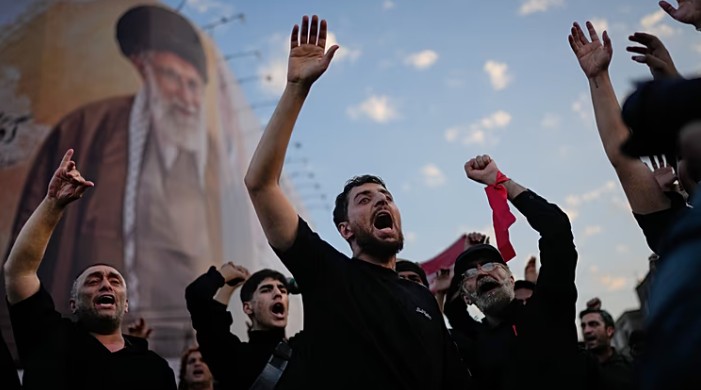
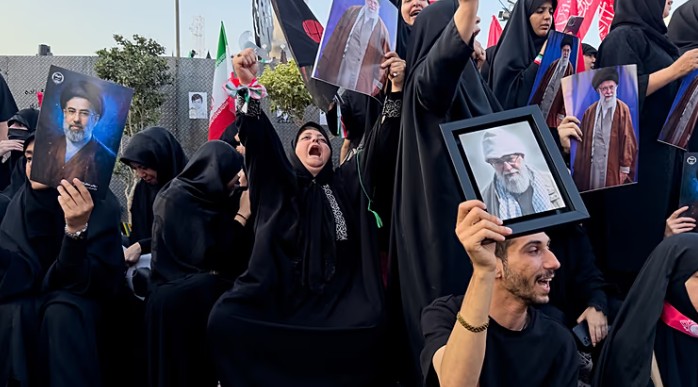
Large numbers of people flocked to the Iranian capital on Monday to participate in the funeral procession of the late Supreme Leader Ayatollah Ali Khamenei, amid crowds of people dressed in black chanting "Death to US President Donald Trump.".
The coffin of Khamenei, draped in the flag, and the coffins of his family members who were killed on February 28 in an air raid by Israel and the United States at the start of the war, were placed on a truck decorated to mimic the latticework decorations that surround the Imam's shrine.
This large public turnout, which Iran called for as a demonstration of its strength, came at a time when it is negotiating with the United States to end the war that killed the 86-year-old cleric.
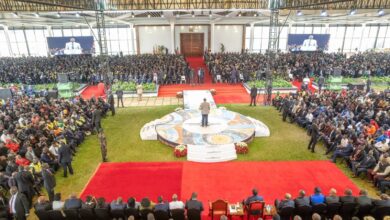
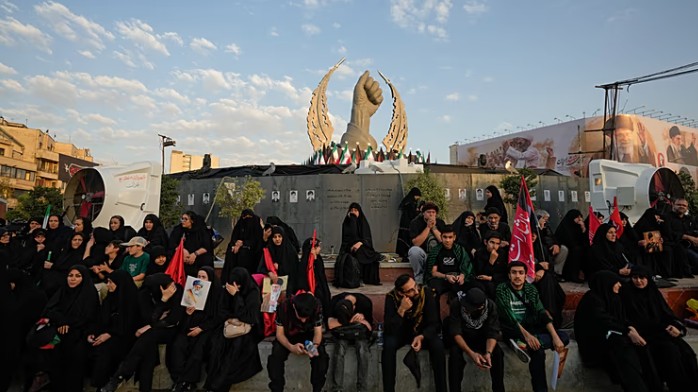
Images taken by helicopters and broadcast by Iranian state television showed huge crowds stretching from Azadi Square (Freedom Square) in Tehran for kilometers along a multi-lane street of the same name.
The procession exceeded the million-strong funeral procession for Qassem Soleimani.
The footage showed that these crowds were larger than those that participated in the funeral procession for Qassem Soleimani, the commander of the Quds Force of the Iranian Revolutionary Guard, in 2020, which attracted more than one million people.
Authorities did not provide an immediate count of the crowd as the truck carrying Khamenei's coffin slowly moved down the street. But people along the truck and elsewhere on the route held signs and chanted slogans calling for Trump's death.
During the procession, the mourners made sure to reach out and touch the truck, and some of them threw scarves and other things for those present to wipe the coffin with, a common custom in Iran that is considered blessed.
Security forces appeared confused and concerned about the risks of a large crowd being near the procession, as loudspeaker officials urged the public to walk slowly, not to push, and to stay on the edges of the street.
General Hassan Hassanzadeh, the Revolutionary Guard commander overseeing the procession, said the coffins would be transported through the streets of Tehran on a 12-hour journey to Mehrabad International Airport.
Authorities closed streets, airspace, and daily life in mourning, which began on Saturday and will end on Thursday with Khamenei's burial at the Imam Reza shrine in Mashhad, his birthplace.
Calls to assassinate Trump during funeral ceremonies
As the funeral procession continued, calls for revenge for Khamenei's assassination intensified among the mourners. They held up signs demanding the deaths of both Trump and Israeli Prime Minister Benjamin Netanyahu. These signs were seen again on Monday along the procession route, where an effigy of Trump was displayed.
US federal authorities have been monitoring Iranian threats against Trump and other officials in his administration for years, against the backdrop of Trump’s order to assassinate Soleimani in 2020, the commander of the Quds Force of the Iranian Revolutionary Guard.
Iran has repeatedly denied plotting to assassinate Trump, although militant propaganda clips have long suggested that Trump was a target of Tehran's attacks.
At the same time, Trump promised to destroy Iranian civilization during the war, among other threats.
US-Iran negotiations on war are stalled
Amid this, the United States is keen to press ahead with negotiations with Iran aimed at fully reopening the Strait of Hormuz, reversing its disputed nuclear program, and achieving a lasting end to the war. Talks appear to be on hold until after the funeral.
The funeral was, in part, a show of unity, as Iran demands a degree of control over the Strait of Hormuz, a vital waterway for global energy that it closed during the war. The United States has rejected these demands, and the two sides are also divided on other key issues, including Iran's nuclear program and the conflict between Israel and the Iranian-backed Hezbollah in Lebanon.
Meanwhile, Iran’s new Supreme Leader, Ayatollah Mojtaba Khamenei, has not yet appeared at the multi-day funeral ceremonies.
He is believed to be in hiding after reports emerged that he was injured in the air raid that killed his father.
At the height of the war before the April ceasefire, Israel targeted senior leaders, and in at least one instance likely exploited their public appearances to consolidate their position, and threatened to kill Khamenei's son.