Solving the mystery of Mercury from the heart of Africa: How did a Tanzanian volcano lead scientists to an amazing discovery?
From East Africa to the nearest planets to the sun...
Written by Omnia Hassan:
At a distance of more than 77 million kilometers, the connection between the north seems Tanzania The planet Mercury is something that sounds more like science fiction, but that is what scientists are currently trying to prove in one of the most exciting studies in the field of planetary science.
A rare volcano located in East Africa may hold the key to solving a geological mystery that has puzzled researchers for decades on the surface of the planet closest to the sun.
Mysterious cavities baffle scientists
The bright cavities scattered across the surface of Mercury have long puzzled scientists. These formations appear as small, extremely bright pits scattered within craters and on rocky slopes, and studies indicate that they are relatively recent in formation and may still be forming.
Despite the numerous scientific explanations, the origin of these cavities remains an open mystery, especially since their characteristics differ from most known geological phenomena on other rocky planets.
A unique volcano
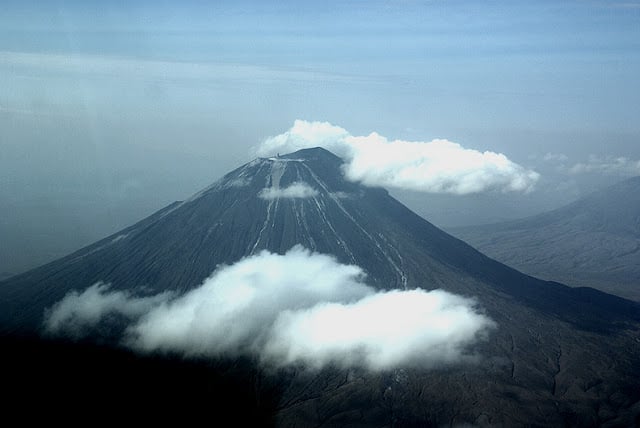
This is where the role of the Oldoinyo Lengai volcano in northern Tanzania comes into play, as it is considered one of the strangest volcanoes on Earth. The volcano is distinguished by producing an extremely rare type of carbon-rich lava, a material unlike the traditional lava found in most other volcanoes around the world.
Researchers believe that the presence of similar carbonaceous materials beneath Mercury's surface may lead to specific volcanic activity, which could explain the formation of those bright cavities that space missions have detected on the planet.
A space mission to test the hypothesis
To verify this idea, scientists are currently studying samples of lava ejected by the Tanzanian volcano, in preparation for comparing them with data that will be collected by the European-Japanese BepiColombo mission to Mercury.
Researchers hope that future measurements will reveal similarities that support the hypothesis of carbon-rich volcanic activity, which could open the door to a new interpretation of one of the most mysterious geological enigmas in the solar system.
The strangest hypotheses may be the closest to the truth.
Despite the ongoing scientific debate surrounding this theory, researchers emphasize that the idea deserves serious study, especially since the history of space exploration has repeatedly proven that major discoveries sometimes begin with hypotheses that initially seemed strange or unexpected, and perhaps the Tanzanian volcano is indeed the missing link to understanding the secrets of Mercury.