From 9 points... Egypt, Libya, and Tunisia: Libya's security is an extension of Arab national security
Egypt, Tunisia, and Algeria reaffirm their support for Libyan unity at a tripartite meeting in Cairo.

Written by: Mohammed Omran
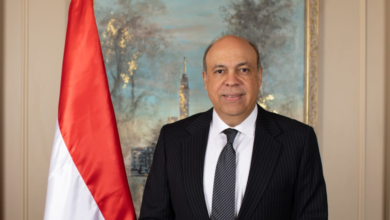
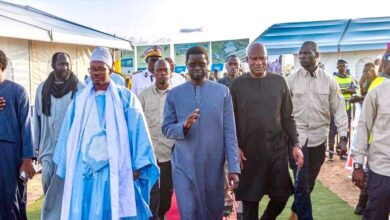
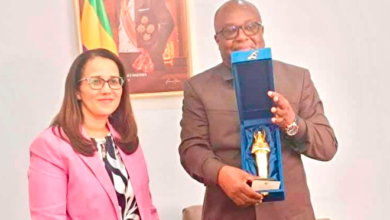
Dr. Badr Abdel-Aati participated Foreign Minister International Cooperation and Egyptians Abroad, on Thursday, May 21, at the fourth ministerial meeting of the Libya Neighboring Countries Mechanism, held in Cairo with the participation of Mohamed Ali Nafti, Minister of Foreign Affairs, Migration and Tunisians Abroad, and Ahmed Attaf, Minister of Foreign Affairs and the National Community Abroad of the Republic of Algeria, as the meeting comes as a continuation of the work of the tripartite mechanism for continuous consultation between the three countries on Libya.
Egypt, Tunisia, and Algeria reaffirm their support for Libyan unity at a tripartite meeting in Cairo.
The meeting addressed the coordination of positions of neighboring countries regarding developments in the Libyan scene, where Minister Abdel-Aati affirmed during the meeting the constants of the Egyptian position based on the need to preserve the unity of Libyan territory and its sovereignty, stressing that the security of Libya represents an integral extension of Egyptian and Arab national security.

In this regard, the Foreign Minister stressed that a purely Libyan-Libyan solution is the only pillar for ensuring sustainable stability and a comprehensive settlement, noting the importance of holding presidential and legislative elections simultaneously as soon as possible, and stressing that the continued absence of a unified executive authority is hindering stability efforts.
He also stressed the need for all foreign forces, mercenaries and foreign fighters to leave Libyan territory immediately, in implementation of the relevant international resolutions.

Furthermore, the three ministers emphasized the importance of adopting a comprehensive approach that extends beyond security and political aspects to encompass the economic and social dimensions of the crisis, addressing its root causes. They also agreed to maintain close consultation and coordination to ensure a unified vision that serves the interests and aspirations of the brotherly Libyan people.
The following is the text of the joint statement issued by the meeting:
Final statement of the meeting of the foreign ministers of Egypt, Tunisia and Algeria on Libya (Tripartite Neighboring Countries Mechanism)
The Arab Republic of Egypt hosted a meeting of the foreign ministers of the Arab Republic of Egypt, the People’s Democratic Republic of Algeria and the Republic of Tunisia, within the framework of the tripartite neighboring countries mechanism on Libya, to consult on the latest political and security developments in the sisterly State of Libya, and to discuss ways to support efforts aimed at reaching a comprehensive political settlement that achieves security and stability and preserves Libya’s unity and sovereignty.
Arab-African consensus on supporting the political track to resolve the Libyan crisis
The ministers affirmed the deep historical and fraternal ties that bind their countries to sisterly Libya, and the relations of neighborliness and common destiny that unite them, renewing their commitment to continue coordination and consultation within the framework of the tripartite neighboring countries mechanism in a way that contributes to preserving Libya’s unity and sovereignty over its territory, and helping the Libyan brothers to mend the rift, end the crisis, and preserve their country’s resources, and to achieve the prosperity and sustainable development that the brotherly Libyan people aspire to.

The ministers stressed that a comprehensive political solution remains the only way to end the Libyan crisis, emphasizing the importance of moving the political process forward under the auspices of the United Nations, leading to an end to the state of division, the unification of Libyan state institutions, and the creation of suitable conditions for holding presidential and parliamentary elections simultaneously in response to the aspirations of the Libyan people.
The ministers affirmed the principle of Libyan ownership and leadership of the political process, stressing that the solution must be Libyan-led, stemming from the will and consensus of all components of the Libyan people without exclusion, and in a way that preserves Libya’s unity and sovereignty.
The ministers expressed their concern about the security challenges in Libya, including incidents of violence and political assassinations, and renewed their call on all Libyan parties to exercise maximum restraint, avoid escalation, and prioritize the supreme national interest in order to preserve the security and safety of the Libyan people and protect the country’s resources, stressing the importance of supporting efforts to consolidate the ceasefire and enhance security and stability throughout the country.

The ministers stressed that reaching the desired political settlement requires adopting a comprehensive approach based on the interdependence of the various political, economic and social tracks, which would enable the achievement of security, stability, development and prosperity for the Libyan people.
The ministers affirmed their rejection of all forms of foreign interference in Libyan affairs, as this represents a major factor in fueling tensions and prolonging the crisis. They reiterated their support for the efforts of the Joint Military Committee (5+5) to establish a ceasefire and work towards the withdrawal of all foreign forces, foreign fighters, and mercenaries from Libyan territory within a specific timeframe, thus creating the conditions for unifying Libyan military and security institutions.
The ministers stressed the importance of continued coordination and consultation among the three countries with the United Nations and regional and international partners, including the League of Arab States and the African Union, in support of efforts to achieve a comprehensive and sustainable political settlement in Libya.

The ministers concluded their meeting by emphasizing the continuation of the Tripartite Neighboring Countries Mechanism meetings on a regular basis to enhance coordination and consultation on developments in Libya, agreeing to hold the next meeting in the People’s Democratic Republic of Algeria at a date to be determined through diplomatic channels, expressing their appreciation to the Arab Republic of Egypt for hosting this meeting.