Following widespread criticism, the Nigerian army defends its strike in Borno as the death toll rises.
The target is a terrorist stronghold.
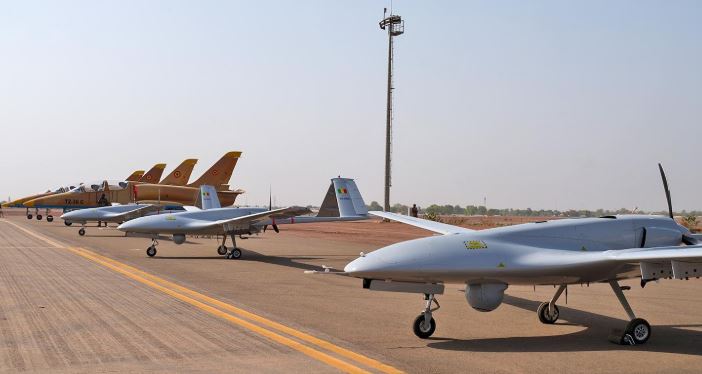
The Nigerian military responded to the controversy surrounding an airstrike targeting a market in the village of Jele near the Borno-Yobe border, describing the target as a terrorist stronghold, amid growing public anger over reports of civilian casualties.
Local sources in Nigeria reported that the strike, which was carried out on Saturday as part of Operation HADIN KAI, sparked widespread criticism, with local authorities, political leaders and human rights organizations condemning the incident amid conflicting accounts of the number of victims.
Estimates suggest that the death toll exceeded 40 civilians, while other reports indicated that the figures could be much higher, reflecting confusion and disagreement about the exact number of victims.
In this regard, the Nigerian military confirmed that the site was a legitimate military target, describing Jelli as a known logistics hub and gathering point for ISIS fighters in West Africa.
The media officer for the Nigerian Army’s Northeastern Joint Task Force, Operation Hadin Kai, Lieutenant Colonel Sani Oba, said the operation came after continuous intelligence, surveillance and reconnaissance missions detected movements of suspects, including motorcycles and armed trucks, heading towards the area.
Successful airstrike on a terrorist stronghold
Oba explained: “The air component of the Combined Joint Task Force (Northeast) conducted Operation HADIN KAI, a precise, well-coordinated, well-planned, and intelligence-based operation, a successful air strike on a known terrorist stronghold and logistics hub located near the abandoned village of Gili in the Gobo Local Government Area of Borno State.”.
He continued: The strike carried out on April 11, 2026, came after continuous reconnaissance missions on the Bendol-Jili axis, a axis long known as a major corridor for terrorist movements and a gathering point for ISIS fighters in West Africa and their collaborators.
He added: “In January 2026, forces moving from Gobo to Damasak were attacked with an IED on the Bindol road, resulting in the death of eight soldiers and injuries to others. More recently, on April 9, coordinated attacks were recorded in Ngamdu and Benishek, supported by the same terrorist logistics network.”.
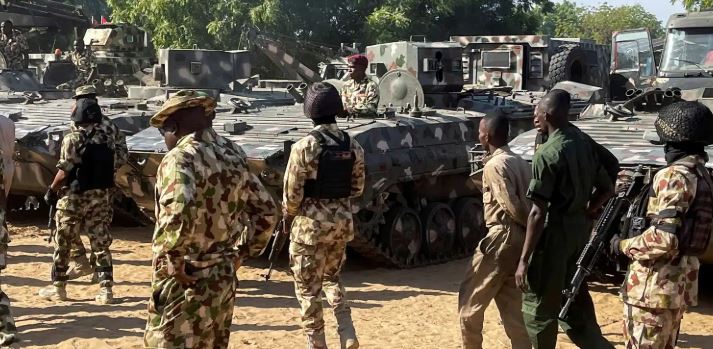
He explained that as a result, “the theater of operations intensified aerial surveillance and intelligence gathering in the area. On April 11, 2026, multiple reports were received of armed trucks and motorcycles belonging to the ISWAP organization moving in the area. Accordingly, aerial intelligence coverage was immediately intensified. During the surveillance mission, a group of motorcycles was observed moving towards Jili, followed by additional vehicles, all heading towards the same location. These movements were confirmed by reliable human intelligence sources.”.
He emphasized that the target selection process was rigorous and professional, with the target's accuracy verified through multiple sources. He stated, "Following final verification, the air component conducted a series of precision strikes on the target, while monitoring continues to assess the damage.".
Oba noted that the post-strike assessment confirmed that the target was hit with high precision, the terrorists' logistical site was destroyed, a large number of them were killed, their vehicles were destroyed, and the rest fled.
He also explained that intelligence indicated the targeted individuals were in the final stages of receiving supplies to launch coordinated attacks, and that the operation significantly disrupted imminent terrorist plans. He emphasized that the operation reflects the army's ability to maintain sustained pressure on terrorist groups.
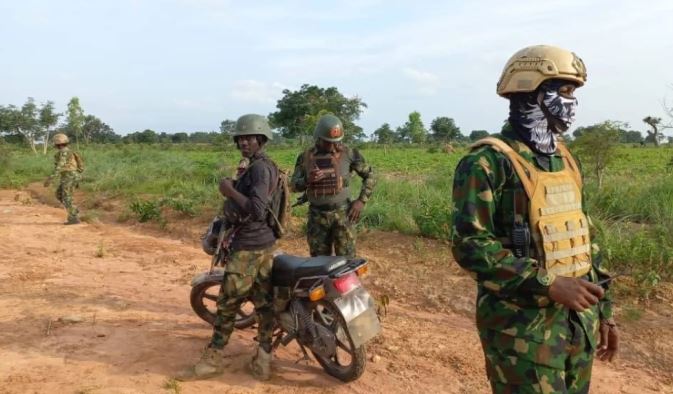
Anti-Nigerian Army narrative
In contrast, the Yobe State Emergency Management Agency confirmed that civilians, including traders, were affected by the raid, which it described as “accidental,” explaining that among the victims were residents of the Gedam area who were in the market.
Amnesty International condemned the strike, describing it as "reckless," and called for an immediate investigation.
The organization said that more than 100 people may have been killed.
Former Nigerian Vice President Atiku Abubakar also criticized the incident, calling it a “devastating failure” and questioning the value of Nigerian lives.
In response to the controversy, the Nigerian Air Force announced it had opened an investigation, reaffirming its commitment to protecting civilians.