The specter of Ebola is overwhelming the Congo's response capabilities.
Lack of resources and refusal to undergo testing are complicating efforts to contain the epidemic.
Written by Ziad Abdel Fattah:
Health authorities in the Republic are facing Congo Democracy, growing challenges in containing the Ebola outbreak, amid a severe shortage of logistical capabilities, delays in reporting suspected cases, and the refusal of some patients to undergo examinations, which hinders the efforts of surveillance teams and increases the risk of the infection spreading.
A field tour conducted by Reuters with response teams in Bunya, the epicenter of the outbreak, revealed that the monitoring teams rely on a limited number of vehicles, no more than 4 cars, to serve a city with a population of over one million, spread across 23 health districts, which directly affects the speed of response to new cases.
The teams are unable to detect injuries.
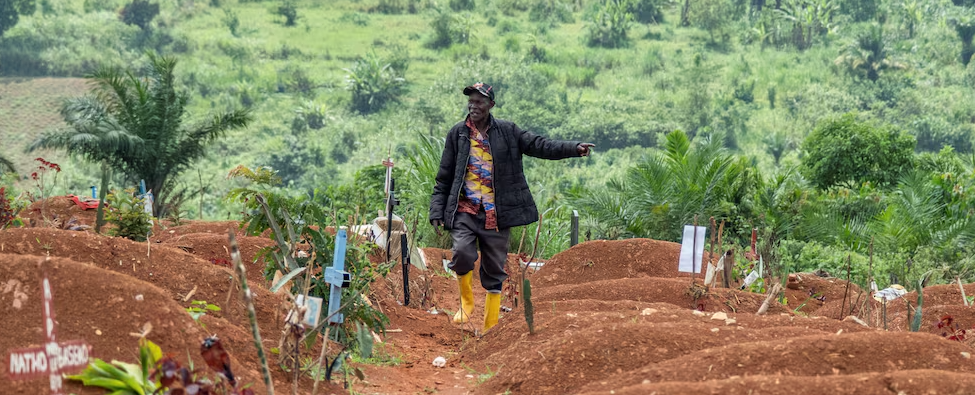
Dr. Mubarak Kano, one of the surveillance team officials, said that the teams are often unable to detect infections until after the infection has spread to others, adding: «We do not anticipate the disease, but rather chase it after it has spread.».
During the inspection tour of a number of health centers, the team discovered that some clinics had not reported suspected Ebola cases to the health authorities, despite the appearance of symptoms that warranted examination. Some workers attributed this to a lack of knowledge of reporting procedures or the unavailability of means of communication, while some facilities hesitated to report for fear of losing patients and transferring them to specialized treatment centers, which would affect their revenues.
The situation is becoming increasingly complicated
Complicating matters further is the fact that the currently spreading strain, known as Bundibugyo, is a rare strain of the Ebola virus, for which there is currently no approved vaccine or treatment, and its initial symptoms are similar to other diseases such as typhoid fever, making it more difficult to detect in the early stages.
According to the latest government data, the number of registered infections has exceeded 3,200, while the death toll has surpassed 1,400. However, the World Health Organization has warned that the true number of infections could be two to four times higher than the official figures due to weaknesses in monitoring and reporting systems.
Monitoring teams also observed cases of families refusing to undergo medical examinations, including a mother who refused to transfer her two children, who were suspected of being infected, to a specialized treatment center, despite their suffering from fever and symptoms consistent with Ebola infection, which forced the authorities to enlist the help of psychologists to persuade the family to cooperate.
Crisis due to a shortage of qualified personnel
Several frontline workers indicated that the shortage of qualified personnel, delays in the disbursement of financial entitlements, along with logistical problems, have negatively affected the efficiency of the response since the outbreak of the epidemic was announced last May.
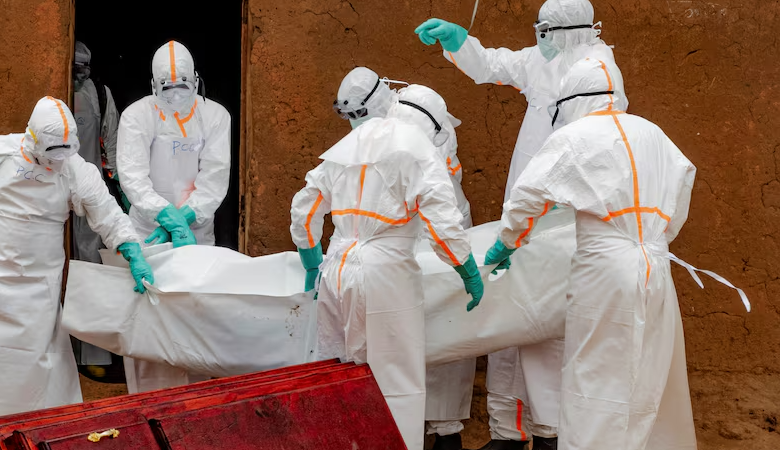
At one of the final stops on the tour, civil protection teams participated in carrying out safe burial procedures for a man who died after being suspected of having Ebola, while surveillance officials began tracing contacts in an attempt to break the chain of transmission, although they acknowledged that the virus had often already spread to others before reaching them.
Health authorities, with the support of their international partners, continue to intensify their efforts to contain the epidemic, while health experts warn that controlling the spread of the disease will remain dependent on the speed of case detection, improving the reporting system, and enhancing citizens' confidence in testing and treatment procedures.
3262 injuries
The Congolese Ministry of Health announced in its latest update that the number of confirmed cases in the ongoing Ebola outbreak in Congo has reached 3,262, a figure close to the number of cases recorded in the outbreak that occurred between 2018 and 2020, which is the largest ever in the country.
1437 injured people died
The data showed that 1,437 patients had died out of 3,262 cases, in what officials described as the fastest recorded Ebola outbreak, which was centered in the eastern Ituri province.
The outbreak that occurred between 2018 and 2020 in Congo and neighboring Uganda lasted for nearly two years, with more than 3,400 cases recorded, including more than 2,200 deaths, according to the US Centers for Disease Control and Prevention.
The period between 2014 and 2016 was the worst in history.
The most severe outbreak in West Africa occurred between 2014 and 2016, and is considered the worst in history, with 28,000 cases and more than 11,000 deaths.