Is Africa facing a climate disaster as the «Godzilla» El Niño approaches?
Warnings of climate disruptions that could hit several regions between drought and floods.
Written by: Mohammed Omran
Preparing African continent We are in a critical climate phase with the approaching impact of the «Godzilla» El Niño phenomenon, which is expected to bring waves of drought, floods, and severe climate disruptions. As international warnings increase about repercussions that could extend to food security, infrastructure, and the livelihoods of millions of people, the continent faces a difficult test that requires rapid preparation and unprecedented response capabilities.
In light of the fragility of some ecosystems and economies, experts are raising urgent questions about Africa's readiness to confront a phenomenon that could reshape the map of climate disasters in the coming months.
Is Africa facing a climate disaster as the «Godzilla» El Niño approaches?
Vast areas of the African continent are expected to suffer severe damage to agriculture and infrastructure as the effects of the El Niño phenomenon approach, which could cause floods, droughts, fires, and increased risks to food security. The continent's nations have only a few months left to prepare for this anticipated climatic shock.
The U.S. National Oceanic and Atmospheric Administration (NOAA) officially announced the start of El Niño on June 11, following several months of sustained increases in tropical Pacific Ocean surface temperatures exceeding 0.5 degrees Celsius above average. This phenomenon occurs when trade winds in the Pacific reverse direction, causing warm water to flow toward the central and eastern regions of the ocean. This leads to significant evaporation and heavy rainfall, resulting in widespread global climate disruptions.

Although El Niño is a natural phenomenon that occurs every two to seven years, forecasts indicate that the current version could be among the strongest ever, due to the effects of climate change and rising ocean temperatures, which are multiplying its intensity and impacts.
Warnings of climate disruptions that could hit several regions between drought and floods.
NOAA estimates indicate a 62% probability that Pacific Ocean temperatures will rise more than 2 degrees Celsius above average, placing the phenomenon in the “severe El Niño” category, Climate experts warn that this scenario could lead to a global wave of extreme weather events, including droughts, floods, and storms.
UN Secretary-General António Guterres said that “El Niño conditions will fuel the fire of global warming,” referring to the seriousness of the overlap between climatic phenomena and the current climate crisis.
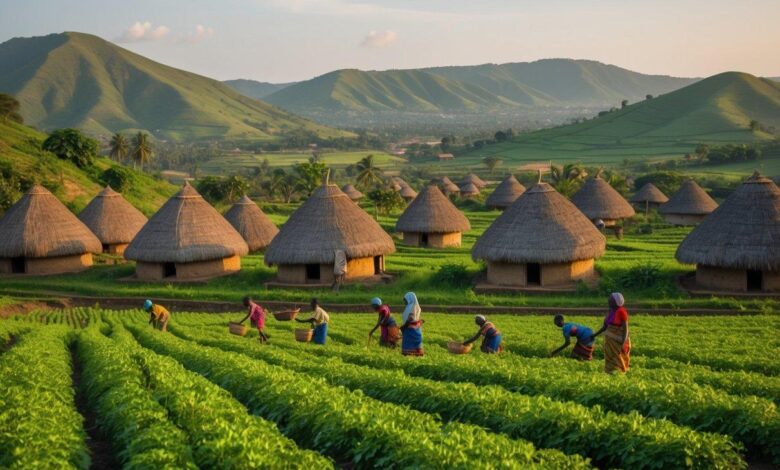
As for Africa, the projected impacts may be more severe, given the fragility of infrastructure and the reliance of millions of people on rain-fed agriculture. Projections indicate worsening drought in the Sahel, the Horn of Africa, and parts of the South, while there is an increased likelihood of heavy rainfall and floods in areas such as Somalia, Kenya, and northern Tanzania.
Experts from the International Fund for Agricultural Development (IFAD) emphasize that the continent faces the risk of significant crop losses, which could reach a complete loss of the agricultural season in some regions. This is especially true given the rising costs of fuel and fertilizers resulting from global geopolitical crises, which exacerbates food insecurity.
As UN organizations warn of the potential for increased flood risks in Somalia between October and December, a period that has previously witnessed widespread humanitarian disasters during past El Niño cycles, leading to the displacement of over a million people and significant loss of life.

Meteorologists indicate that early preparedness has become an urgent necessity, emphasizing that “action must begin now, not when the rains start,” at a time when many African countries face weak infrastructure and emergency response capabilities.
In the south of the continent, the expected drought could lead to a decline in agricultural production and damage strategic sectors such as hydroelectric power, especially in countries heavily reliant on dams for electricity generation, like Zambia.

For their part, relief organizations warn that the floods could lead to widespread destruction of infrastructure and mass displacement of the population, as well as the outbreak of diseases like cholera due to the deterioration of water and sanitation systems.
Despite international efforts to enhance preparedness, funding shortfalls and declining humanitarian support are making the response more difficult, at a time when organizations like Oxfam emphasize that they are working on emergency plans for rapid funding activation should the crisis worsen.

Climate experts emphasize that the real challenge lies not only in confronting the current El Niño phenomenon, but in building more resilient systems capable of withstanding the recurrence of climate disasters, stressing that investing in prevention is far less costly than responding after a disaster.
The report concluded by emphasizing that Africa has a limited opportunity to prepare before the full impact of what is known as ”Godzilla El Niño” arrives, which could pose one of the most serious climate challenges in recent years.