Africa at the heart of the Egyptian vision... Zoom Africa News interviews Ambassador Alaa Youssef, Head of the State Information Service
Ambassador Alaa Youssef reveals the key aspects of Egypt's partnership in the development of Africa.
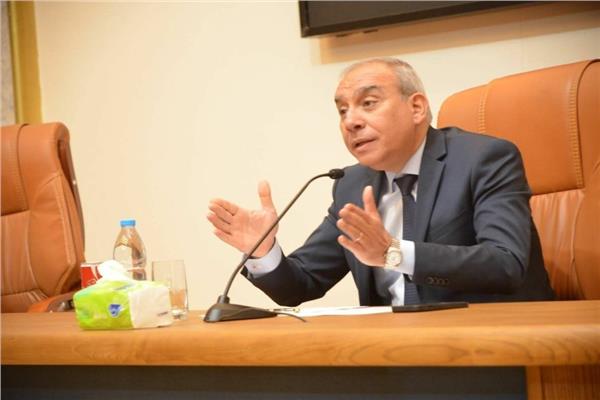
Ambassador Alaa Youssef:
-
Unprecedented leap in Egyptian-African relations in recent years
-
President Sisi's vision regarding Africa has made a remarkable difference.
-
Egypt has regained its role and influence within the African continent, both politically and developmentally.
-
The Egyptian state offers development projects and initiatives to support African countries.
-
Egypt supports peace, security and development issues within Africa
Interview conducted by: Sally Atef
In light of the rapid transformations taking place in the African continent, and the regional and international challenges that necessitate strengthening cooperation and integration among its countries, Egypt has emerged in recent years as one of the most prominent actors in supporting development and stability within the continent, based on a comprehensive strategic vision that has revitalized its historical relations with its African brothers.
Zoom Africa NewsHe conducted a special interview with Ambassador Alaa Youssef, head of the State Information Service, which included a discussion of the features of the Egyptian move in Africa, President Abdel Fattah al-Sisi’s vision to enhance partnership with the countries of the continent, Egypt’s efforts in supporting issues of peace, security and development, as well as promising economic and investment opportunities, and the role of the media and the State Information Service in conveying the true image of Egypt and promoting rapprochement between African peoples.
During his dialogue, the head of the authority reviewed the most prominent development initiatives and projects implemented by Egypt in the continent, the mechanisms for confronting misinformation, and his vision for the future of Egyptian-African relations in light of current international changes, stressing that Africa will remain at the forefront of Egyptian foreign policy priorities, as it is a natural extension of Egyptian national security and a key partner in building a more stable and prosperous future for the African continent. Here is the text of the dialogue:
To begin with, how do you assess the development of Egyptian-African relations in recent years?
Egyptian-African relations have witnessed an unprecedented leap in recent years, starting from traditional bonds of brotherhood to a stage of comprehensive strategic and developmental partnership.
This great development is due to the wise vision of President Abdel Fattah al-Sisi regarding the African depth, and the special attention he pays to the issues of the continent, which has resulted in strong and sustainable relations based on mutual respect and common interests.
Perhaps the last few weeks represent new evidence of the strength and centrality of this movement, which was embodied in the important speech delivered by President Abdel Fattah al-Sisi on the occasion of “Africa Day,” in which he renewed Egypt’s firm commitment to supporting the aspirations of the peoples of the continent towards sustainable development, security and stability, stressing the unity of destiny and goal.
This momentum is also evident in the President’s participation in conferences and summits that address African affairs, the latest of which was the “Africa-France” summit in the Kenyan capital, Nairobi, where his participation confirmed Egypt’s role as a voice defending the continent’s priorities in reforming the international financial system and integrating it into the global agenda.
On the domestic and educational level, our national institutions, foremost among them the Ministry of Foreign Affairs, kept pace with this trend with a rich record of events. We witnessed the high-level celebration organized at the prestigious Cairo University on Africa Day, coinciding with the distinguished event organized by the National Council for Women to celebrate this occasion, highlighting the pivotal role of African women in leading the development engine and building social peace on the continent.
We also followed the opening of the new headquarters of the “Senghor” International University in Borg El Arab City, in the presence of President Sisi and President Macron. All these moves place on us in the Authority the responsibility to keep pace with them with modern media mechanisms that convey this comprehensive achievement to the depths of the continent and in more than one language.
What are the most prominent features of President Sisi's vision for strengthening cooperation with African countries?
President Abdel Fattah al-Sisi’s vision stems from a firm belief that links Egypt’s stability and growth with the security and growth of the African continent, and this vision is embodied through strategic features that have shaped a new reality for the Egyptian-African partnership.
It is based, first and foremost, on the inevitable link between security and development, based on the firm conviction that sustainable security stability cannot be achieved without an economic renaissance, and that a strong economy cannot be built without a safe environment. This is what Egypt translates practically through adopting a comprehensive approach to drying up the sources of terrorism, and through its leadership of the post-conflict reconstruction and development file within the framework of the African Union.
This path is aligned with the consolidation of the principle of “African solutions to African problems,” based on the belief that the peoples of the continent and the efforts of its sons are best able to shape its future without external dictates or interventions.
This vision is also manifested in the dimensions of development diplomacy and the transfer of expertise, through presenting the Egyptian development model to African brothers by contributing to the implementation of major national infrastructure, construction and energy projects and launching continental connectivity networks such as land routes and shipping lanes.
This naturally paves the way for achieving economic integration and pushing strongly towards activating the African Continental Free Trade Agreement to create a unified market that raises intra-regional trade rates and strengthens regional supply chains, ultimately leading to self-sufficiency and food security for the continent.
The pillars of this strategic vision are completed by investing in human capital, through empowering youth and women as a fundamental pillar of the Sustainable Development Agenda (Africa 2063), and affirming Egypt’s role as a beacon of knowledge and academia that provides thousands of educational and training grants through its major national institutions such as Al-Azhar Al-Sharif, Cairo University, and Senghor University, to build promising African cadres capable of leading the future and making decisions.
There are also Egyptian experts in many fields who are sent to countries on the continent, as well as medical convoys and urgent aid that Egypt sends to help African peoples, especially in times of disasters and crises, as was recently done with the Democratic Republic of Congo and Uganda to contain the Ebola outbreak and strengthen the health response in the affected areas.
How did Egypt regain its role and influence within the African continent, politically and developmentally?
Egypt has regained its leading role and historical influence within the African continent, through a strategy based on an active return and direct field engagement, as political and diplomatic momentum is combined with developmental and knowledge-based influence on the ground at the same time.
On the one hand, the culmination of the political comeback was embodied in Egypt’s successful presidency of the African Union in 2019, the President’s leadership of the “post-conflict reconstruction and development” file, Cairo’s hosting of the headquarters of the African Union Center for Reconstruction, and the confirmation of Egypt’s position as a pillar of continental peace and security through the pivotal role played by the “Cairo International Center for Conflict Resolution and Peacekeeping in Africa” in building African capacities and formulating stability policies.
On the other hand, this political presence was paralleled by the transformation of Egyptian developmental influence into sustainable mega-projects implemented by Egyptian companies. The most prominent model that we at the Authority are working to highlight in the media in all languages is the construction of the Julius Nyerere Dam and Hydroelectric Power Station in Tanzania.
This comes alongside continental connectivity projects such as the “Cairo-Cape Town” road, where 80% of the project, which passes through 9 African countries including Egypt, Sudan, Ethiopia, Kenya, Tanzania, Zambia, Zimbabwe, Botswana, and South Africa, has been completed.
It was not limited to infrastructure projects, but Egypt regained its position as a beacon of knowledge and a leading soft power, and this was embodied in the major technological and scientific leap with the opening of the headquarters of the “African Space Agency” in Cairo, in addition to the recent academic leap represented by the opening of the new headquarters of “Senghor” University in Burj Al Arab.
In addition, the historic and pioneering role of Al-Azhar Al-Sharif, the beacon of moderation in Africa, is highlighted through its missions and the thousands of scholarships it provides to its international students. This developmental and humanitarian scene is complemented by what we have witnessed in the media regarding the launch of major presidential initiatives, such as the initiative to treat one million Africans from Hepatitis C and the establishment of medical excellence centers on the continent.
This also includes sending ophthalmology convoys to Chad, establishing the Magdi Yacoub Center for Heart Diseases and Surgery in Rwanda, and implementing projects to drill wells and remove weeds and water hyacinth in the Nile Basin countries, which has solidified the image of modern Egypt among its brothers as a sincere and honest humanitarian and development partner.
I would like to particularly commend the role played by Dr. Badr Abdel-Aty, Minister of Foreign Affairs, Immigration and Egyptian Expatriates Affairs, in translating the presidential vision through his numerous visits to African countries, which amounted to 30 visits, aimed at strengthening and intensifying the Egyptian presence at all levels.
The Ministry of Foreign Affairs succeeded in establishing “development diplomacy” and the pivotal link between peace and development, while leading efforts to calm regional crises, as well as activating the role of the “Egyptian Agency for Partnership for Development” as a strong arm for building African capacities, which gave new momentum to Egyptian foreign policy and consolidated Cairo’s position as a voice defending the interests of the continent and its development agenda.
What are the most prominent development projects and initiatives that Egypt offers to support African countries?
Egypt does not merely provide temporary aid, but rather launches sustainable development partnerships that directly impact the lives of African citizens, and are distributed across several key areas:
Firstly: In the field of energy, the most prominent example is the Julius Nyerere Dam and Power Station in Tanzania, which was built entirely by the hands and alliance of major Egyptian companies for power generation and flood control, demonstrating to our brothers the ability of Egyptian personnel to lead the construction development engine in the continent.
secondlyContinental connectivity projects and the Nile Basin, foremost among them is Egypt’s strategic initiative to establish the navigational link between Lake Victoria and the Mediterranean Sea (VICMED) to facilitate trade, and the Cairo-Cape Town road project, in addition to a financing mechanism for projects of the countries of the southern Nile Basin with a contribution of $100 million to enhance joint water development cooperation in a model that achieves the interests of all.
ThirdCapacity building and digital transformation through the Africa Digital Applications Initiative (AAL LaunchPad) to hone the skills of African youth in artificial intelligence technologies and entrepreneurship.
FourthComprehensive health initiatives and medical convoys: These are spearheaded by the presidential initiative “Treating one million Africans from Hepatitis C”, the construction of a specialized Egyptian medical center in Rwanda for the treatment of tumors and heart diseases, and the provision of urgent medical assistance through the Egyptian Agency for Partnership for Development.
FifthThe African Union Centre for Post-Conflict Reconstruction and Development (AUC-PCRD): headquartered in Cairo, with the aim of formulating policies and providing development support to African countries to build stable national institutions in the aftermath of conflicts.
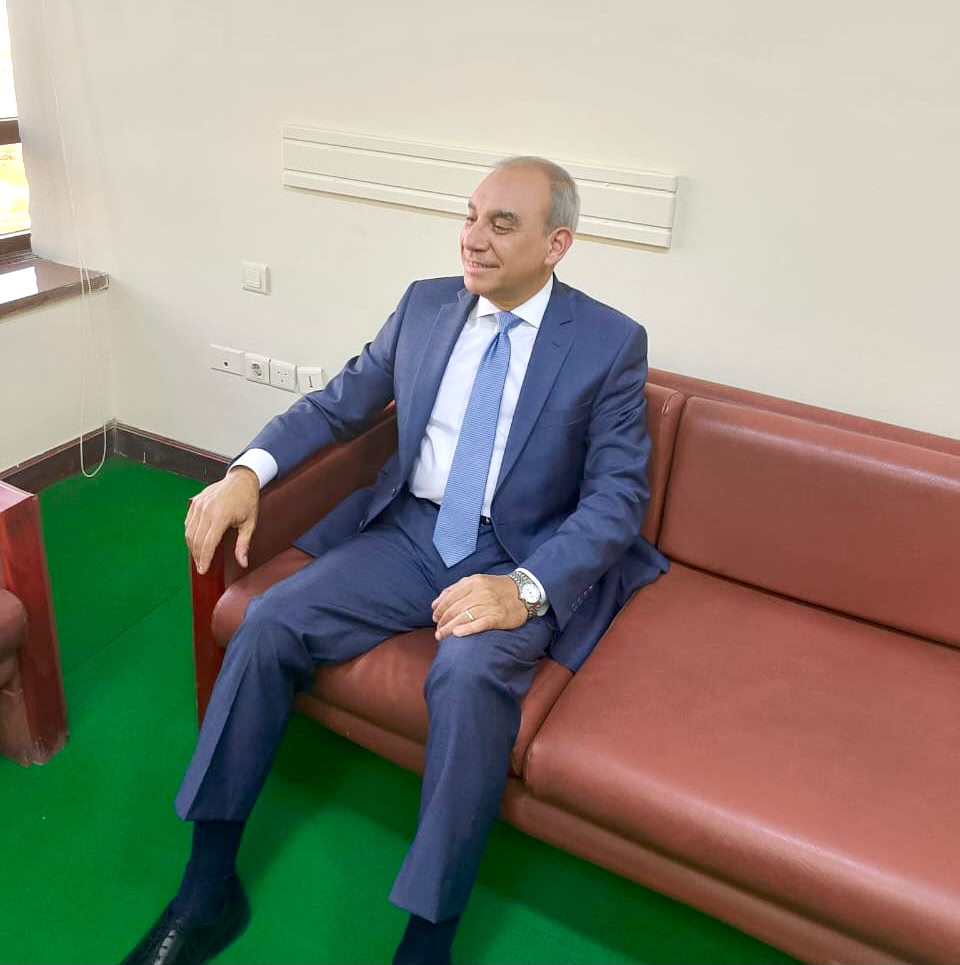
How does Egypt contribute to supporting peace, security and development issues within Africa?
The Egyptian state proceeds from a firm strategic doctrine based on the inevitable correlation between three main pillars: “No development without stability, no sustainable stability without security, and no security without awareness.”.
This pivotal Egyptian contribution is translated into practical action on the ground through integrated field and intellectual paths, as President Abdel Fattah al-Sisi leads the post-conflict reconstruction and development file at the level of the African Union, a strategic effort that culminated in the establishment and hosting in Cairo of the headquarters of the African Union Center for Post-Conflict Reconstruction and Development as an intellectual and executive arm for building the monuments of peace.
This diplomatic role is accompanied by an active Egyptian presence at the forefront of major countries contributing military and police forces to UN and African peacekeeping missions in troubled areas of the continent, in order to preserve the security and stability of the countries of the continent and to ensure the establishment of the foundations of peace and the peaceful settlement of conflicts.
Because Egypt’s security approach is comprehensive and not limited to the military aspect only, it extends to drying up the intellectual sources of terrorism through the enlightening role of Al-Azhar Al-Sharif and national religious and academic institutions in spreading the values of moderation and refuting extremist discourse, in the belief that development and awareness are the strongest preventive tools for making peace and fighting poverty and unemployment, which represent the fuel that feeds conflicts.
What are the opportunities for economic and investment cooperation between Egypt and African countries in the coming period?
The economic and investment prospects between Egypt and its brothers in the African continent during the next stage are very promising and huge.
We see that these opportunities are no longer just aspirations, but have become real business paths and projects taking shape on the ground, which Egypt translates practically through its anticipated hosting of three major events during June 2026 in El Alamein: the African Union’s semi-annual coordination summit, the African Export-Import Bank meetings, and the first edition of the African Business Forum.
At the forefront of these opportunities is the continued maximization of the benefits of the African Continental Free Trade Agreement, which Egypt was at the forefront of the countries that signed and supported it, in order to create a unified African market that includes more than 1.3 billion consumers.
This contributes to raising intra-African trade rates, removing customs restrictions, and achieving self-sufficiency and food and drug security for African peoples, in parallel with comprehensive investment opportunities in infrastructure and continental connectivity.
This is based on the vast experience and internationally recognized efficiency of Egyptian companies in the energy, construction, road projects, and maritime connectivity sectors, where Egyptian investments in Africa have exceeded $12 billion, while the volume of trade with African countries has exceeded $10 billion.
These prospects expand to include strengthening investments in joint manufacturing, agriculture, pharmaceutical and food manufacturing, and land reclamation to maximize the benefit from the enormous human and natural resources that the African continent abounds in.
Our role at the State Information Service is based on media coverage and intensive promotion through our specialized platforms and publications, and introducing Egyptian activities in the continent.
What is the role of the media and the authority in promoting rapprochement between African peoples and conveying the true image of Egypt?
The State Information Service represents Egypt’s gateway to communicating with foreign media, and we seek to develop an ambitious strategy to build knowledge bridges with our brothers, as our role is shaped through several executive paths that formulate a new media reality.
As we launch a multilingual developmental media discourse that broadcasts its messages in many vital languages through our official platforms and websites, we focus on highlighting the shared Egyptian-African success story, and raising awareness of comprehensive national projects and living examples of the Egyptian presence on the continent.
Relations with African journalists and media institutions are also documented through the Authority’s “Press Center for Foreign Correspondents”, providing all facilities to accredited African correspondents in Egypt, and organizing field visits for them.
This digital momentum is accompanied by the regular issuance of specialized publications and periodicals, which represent a high-level intellectual and cultural platform for discussing issues of peace, security and development and proposing conscious solutions to African challenges, in addition to confronting rumors and false reports broadcast by some external parties to incite division among the countries of the continent, as we move immediately with official statements and irrefutable facts to respond to these reports.
Our efforts are not limited to the outside world, but extend to the Egyptian interior through the Authority’s internal media centers, which are spread throughout all governorates, and which organize continuous awareness seminars for citizens to consolidate awareness of identity and African depth, and to emphasize the importance of the African circle for Egyptian national security.
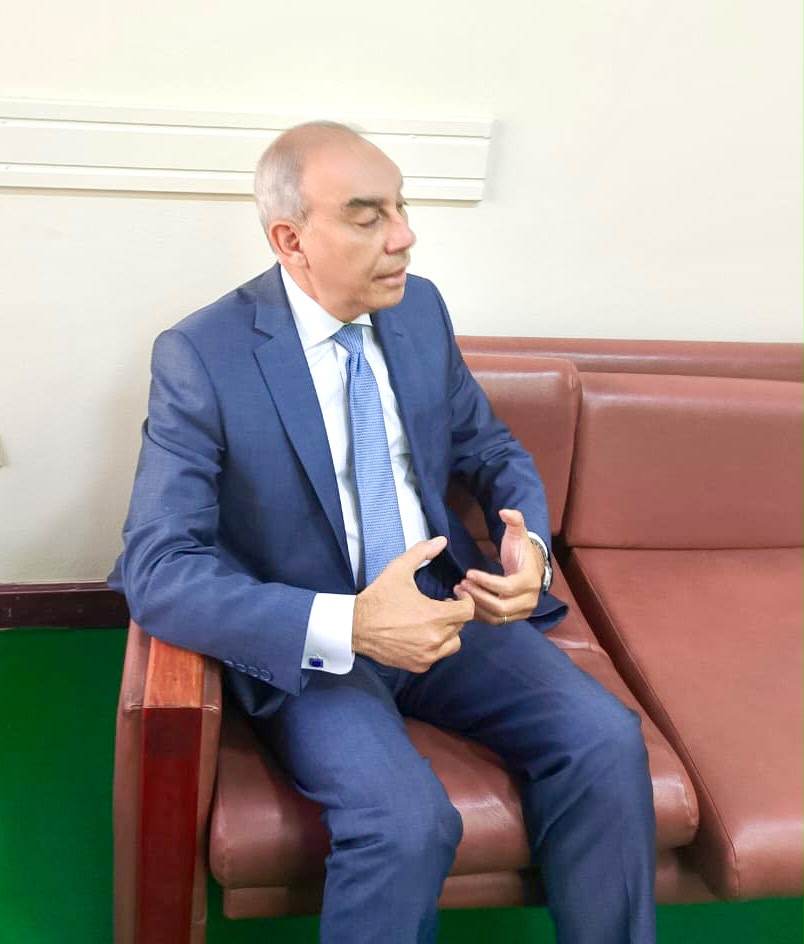
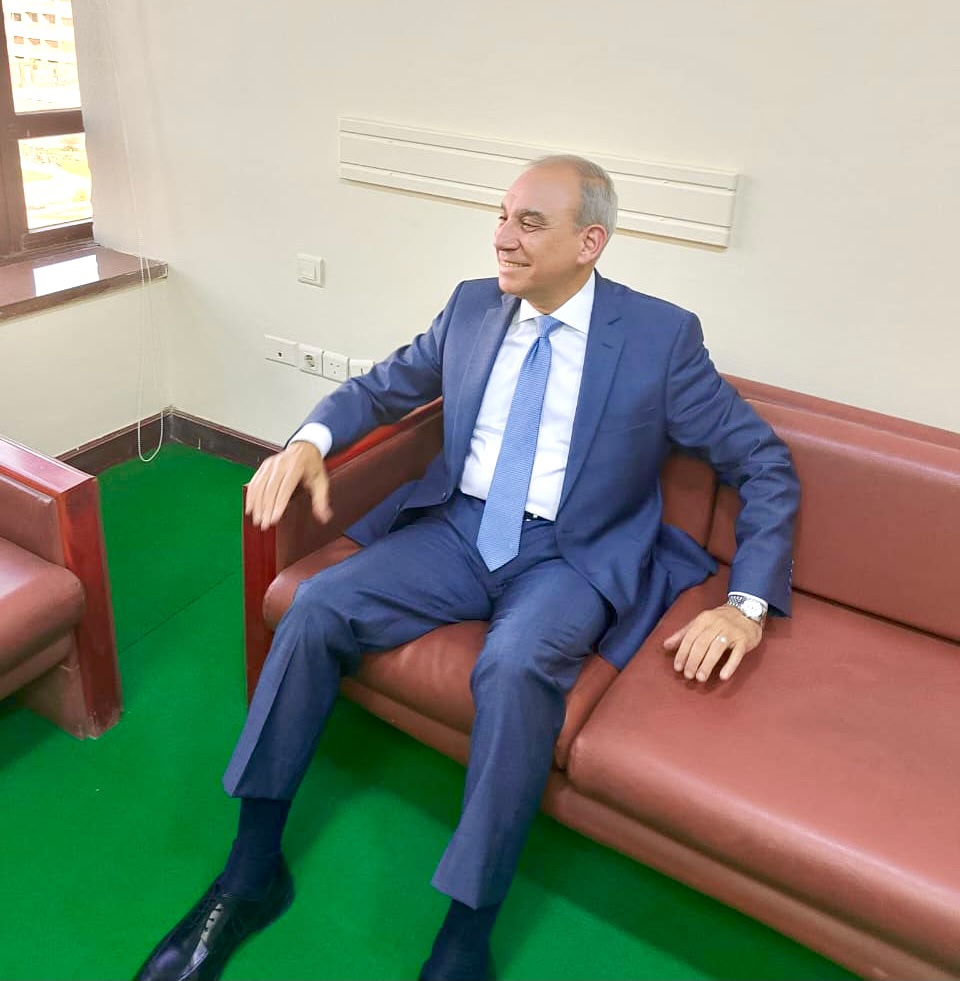
Ambassador Alaa Youssef, Head of the State Information Service
How do you see the future of Egyptian-African relations in light of the current regional and international challenges?
Despite the magnitude of regional and international geopolitical turmoil and economic crises that have cast their shadow over the world, these challenges represent a strong incentive and motivation for the countries of the continent to deepen integration and interdependence across various strategic dimensions.
At the forefront of these dimensions is the imperative of economic integration and consolidation, as global crises have proven to our African brothers that the safe haven lies in accelerating the activation of the African Continental Free Trade Agreement to create a unified market that achieves self-sufficiency and food and pharmaceutical security for our people, away from external fluctuations. This is a path that Egypt is pushing forward with all its might, in parallel with efforts to unify political visions and positions.
The challenges have necessitated the formulation of a single, strong African voice in international forums, which is what the Egyptian state is undertaking, using its diplomatic weight to defend the rights and resources of the peoples of the continent, and to demand a more just international financial system that takes into account the developmental needs of our countries, as was embodied in the speech of the President at the “Africa-France” summit in Nairobi recently.
This cohesion is also reflected in the promotion of sustainable security as a fundamental pillar of stability and in confronting the security tensions witnessed by some neighboring countries and the continent. Here, the pivotal role of proactive Egyptian diplomatic moves to consolidate the foundations of national states and resolve crises regionally is highlighted, which was clearly embodied in President Abdel Fattah El-Sisi’s recent reception of the Tunisian and Algerian foreign ministers, along with Dr. Badr Abdel-Aty, to discuss ways to advance efforts to resolve the Libyan crisis, confirming the firm Egyptian belief that solutions must stem from the national will of the people, preserve national institutions, and reject foreign interference.
Because facing future challenges requires building minds capable of leadership and safeguarding this stability, Egypt continues to sustain and invest its soft and intellectual power by extending its intellectual and scientific bridges to the heart of the African continent to ensure a safe and prosperous future.
How does the organization work to convey the true image of Egypt and its development achievements to the people of Africa? and its media؟
Conveying the true image of modern Egypt to our brothers in the African continent is at the heart of the State Information Service’s strategic message. We do not rely solely on traditional media, but also work through an integrated and direct communication system that addresses the African mind and is based on specific executive mechanisms.
At the forefront of these mechanisms is addressing the continent in its national languages through digital platforms and websites that broadcast their content in the most widely spoken languages on the continent, namely (Arabic, English, French, Swahili, Hausa, Amharic and Portuguese), through which we pump out a daily stream of news and reports supported by data, infographics and video about major development projects in Egypt.
This field and digital effort complements the intellectual dimension that the organization establishes through our publications concerned with African affairs, such as the journal "African Horizons," which represents a high-level intellectual and cultural platform for discussing issues of peace, security, and development on the continent and proposing realistic solutions to various challenges.
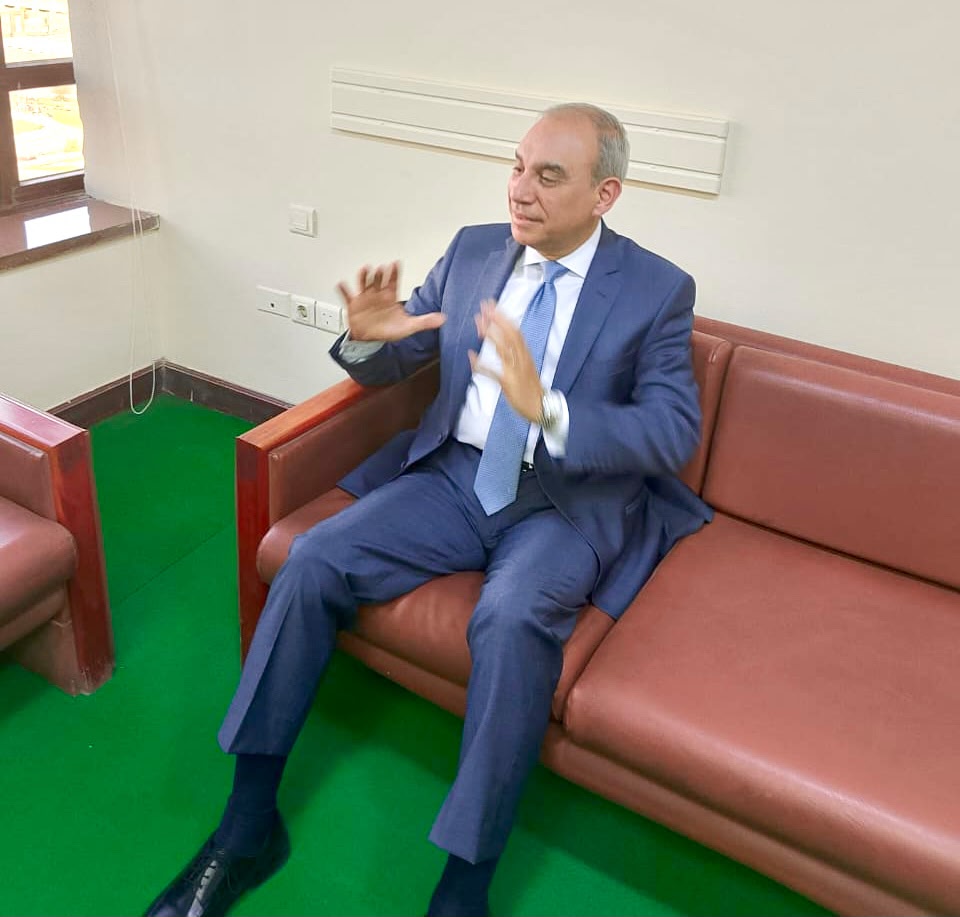
What are the most prominent media activities implemented by the organization to enhance communication with journalists and media institutions in Africa?
The State Information Service relies on the philosophy of “participatory media“ as a fundamental pillar for building bridges of sustainable communication with the journalistic and media community in the African continent. We do not merely act as recipients or broadcast messages from one direction, but rather we adopt a package of executive activities and live initiatives that aim to empower African media professionals and create a genuine professional partnership with them.
At the forefront of these initiatives is capacity building and advanced training programs, as the Authority is constantly keen to encourage the training of African journalists and media professionals in cooperation with specialized national institutions such as the African Media Training Institute, through integrated courses organized by these national institutions that include modern techniques in journalistic work, mechanisms for producing digital content, and ways to combat misleading news and information wars, in order to develop the media system in the continent.
It is worth noting that the Media Training and Studies Center of the Supreme Council for Media Regulation conducted a training course from May 10 to 21, 2026, with the participation of a select group of media professionals from the African continent, in which 15 media professionals from Guinea, the Democratic Republic of Congo, Mali, Djibouti, Chad, Kenya, Zimbabwe, Nigeria, Rwanda, Comoros, Namibia, Somalia, South Africa, and Benin participated.
In a related context, the Authority focuses its logistical efforts on providing all facilities and technical support to African press and media delegations visiting Egypt, especially those coming to cover international conferences, summits, and major regional events. The Press Center for Foreign Correspondents organizes intensive field visits and experiences for these visiting media professionals within the giant national and developmental projects, so that the African journalist can convey the developmental gains and modern Egyptian renaissance to his people with firsthand experience and with the highest degree of professional credibility.
In the digital space, we kept pace with this communication by developing the Authority’s comprehensive electronic portal for Africa (africa.sis.gov.eg) as the largest digital communication platform aimed at addressing the people of the continent in six vital and powerful languages (Arabic, English, French, Swahili, Hausa, Amharic, and Portuguese), to ensure the daily infusion of news and analytical content and live monitoring of what is published in the African press, thus providing informational momentum and shared knowledge communication.
How do you see the role of the media in countering rumors and supporting rapprochement and understanding between Egypt and African countries?
The media has a dual and crucial responsibility that is integrated through two strategic paths. The media represents, firstly, a bulwark against misinformation, as the African continent, and Egypt at its heart, faces systematic and directed campaigns from some external circles to spread rumors, stir up disputes, and distort common national positions.
Here, the Authority’s strategy to counter this misinformation is highlighted through the pillar of proactive media and rapid response. We do not wait until the rumor takes root, but rather we act immediately through our continuous monitoring of what is published globally and continentally to provide official data and documented facts in cooperation with the ministries and relevant authorities in the country.
In contrast, the media, in its complementary course, becomes a developmental and cultural bridge with a superior ability to formulate a shared continental belonging that supports rapprochement between peoples. This is achieved by highlighting the Egyptian developmental approach and conveying a vivid image to African peoples about how Egyptian hands contribute to building their future, such as presidential health initiatives to treat Hepatitis C, and energy and continental connectivity projects, thus consolidating the image of Egypt as a sincere and vital partner that does not seek influence or achieve interests unilaterally.
This enlightenment bridge is crowned by sustainable investment in soft and intellectual power, as our media discourse continuously highlights the Egyptian intellectual institutions that build young African cadres, foremost among them the pioneering role of Al-Azhar Al-Sharif in spreading enlightened thought and moderation, and the rich academic effort of Cairo University, along with the recent educational and academic boom represented by Senghor University, so that truth and awareness remain the faithful guardian of Egypt’s rapprochement with its brothers in the African continent.