Yoweri Museveni calls on Ugandans to form a popular front against corruption
Presidential call to hold violators accountable
Written by Amina Hassan
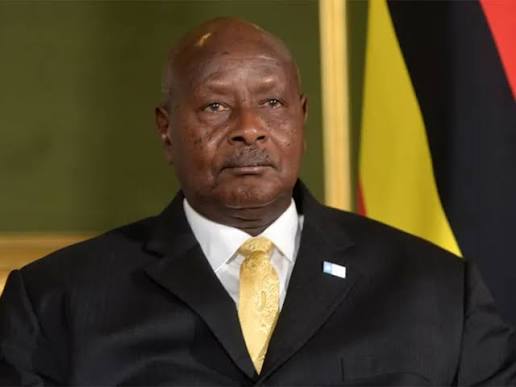
Ugandan President Yoweri Museveni made a direct appeal to citizens to actively participate in combating corruption, stating that holding those responsible for financial violations accountable is not solely the state's responsibility, but a collective responsibility shared by the entire society.
He stressed that corruption hinders the path of national development, undermines the quality of public services, and shakes citizens' confidence in state institutions.
Corruption is a constitutional responsibility for everyone.
His special presidential assistant for anti-corruption affairs, Rebecca Atweyne, conveyed the president's assurances that the Ugandan constitution places a duty on every citizen to fight corruption.
Museveni stressed that the failure of individuals to report or confront corrupt practices amounts to indirect complicity, calling for the establishment of a culture of public accountability in various sectors.
Digitalizing services and enhancing transparency
The President proposed a multi-pronged approach to combat this scourge, based on digitizing government services to reduce direct contact that opens the door to bribery, along with expanding public participation in monitoring government performance. He also called for targeted interventions in the sectors most vulnerable to corruption, to ensure more transparent and efficient management of resources.
Atweyne explained that the government is seeking to channel Ugandans' creative energies away from circumventing legal and administrative procedures through a ten-point national program aimed at building a corruption-free society. The program focuses on strengthening institutional integrity and developing oversight and accountability mechanisms.
Alarming figures and implementation challenges
According to data from the Uganda Anti-Corruption Coalition, corruption is deeply entrenched in several sectors and is a major obstacle to economic development and poverty reduction. Figures indicate that 381,000 people had to pay bribes to obtain public services during the past year.
Although Uganda’s anti-corruption legal framework is relatively advanced with the enactment of new laws, weak implementation, particularly in major corruption cases, remains the biggest challenge to achieving tangible results.
In Ugandan law, severe penalties are imposed for corruption offenses under the Anti-Corruption Act, 2009, which is the main legal framework for combating corruption in the country. According to this Act, committing acts of corruption, such as accepting or offering bribes, exploiting one’s position for personal gain, or misappropriating public funds, is a criminal offense punishable by imprisonment and a fine.