The Global Civilization Initiative at a seminar at Alexandria University: The first African city mentioned in Chinese historical references
فكر شي جين بينغ للصين والعالم
Written by Amna Hassan
Xu Min, the Chinese Consul General in Alexandria, stated that the friendly relations between China and Alexandria have witnessed continuous development in recent years. She noted that over 100,000 Chinese tourists visit Alexandria annually, and that the Chinese language is taught in six preparatory and secondary schools and two universities in the city. Alexandria University, Suez Canal University, and the Library of Alexandria, in cooperation with Chinese educational and cultural institutions, have organized numerous exchange and cooperation activities. Furthermore, there is stable cooperation between the two countries in the field of underwater archaeology and cultural heritage, with work concentrated in Alexandria. Both sides continue to draw upon the rich heritage of their respective civilizations and deepen cultural and people-to-people exchanges, thus injecting vitality into the comprehensive strategic partnership between China and Egypt.
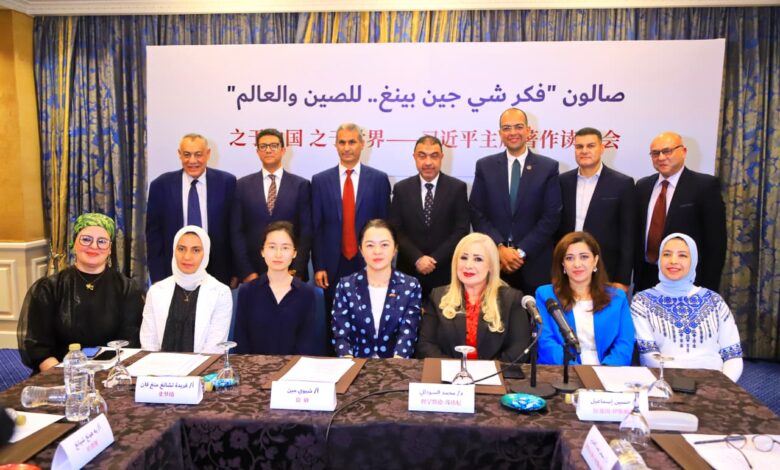
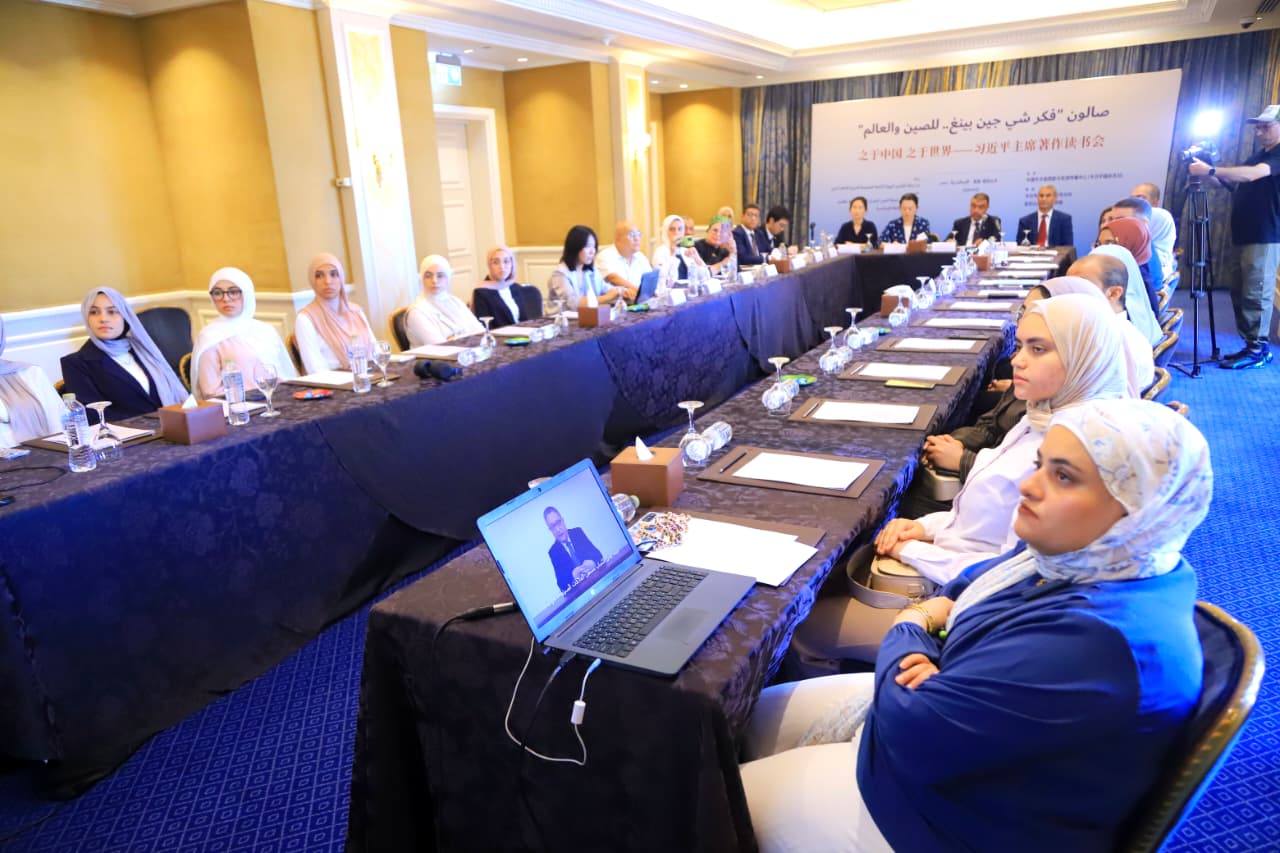
This came during a seminar organized by the Faculty of Arts at Alexandria University, in cooperation with China Today magazine, affiliated with the China International Media Group, entitled “Xi Jinping Thought… For China and the World,” with the participation of a select group of experts and researchers from China and Egypt, who discussed during two sessions “The Global Civilization Initiative and Civilizational Exchange between China and the Arab World.”.
Li Wuzhou, vice president of China Today magazine, emphasized that exchange and mutual learning between civilizations should not remain merely an idea, but requires continuous practice to propel it forward. Universities bear a noble responsibility in inheriting civilization and innovating knowledge, the media has an important role in promoting understanding and rapprochement between peoples, and young people represent the future of Sino-Arab relations.
He said that China and the Arab states have ancient civilizations and rich cultures. From the ancient Silk Road to today's Belt and Road Initiative, Sino-Arab friendship is based not only on practical cooperation, but also on mutual understanding between civilizations.
Dr. Mohamed Al-Sudani, Vice Dean of the Faculty of Arts at Alexandria University, said that history testifies that Egyptian-Chinese relations were not merely political or economic ties, but have always been a civilizational bridge and a deep cultural connection; from the ancient Silk Road to the Belt and Road Initiative, Egypt and China have always been beacons of human and intellectual communication.
In the second session, moderated by Hussein Ismail, Deputy Editor-in-Chief of the Arabic edition of China Today magazine, Dr. Sahar Abdel Aziz Salem, Professor Emeritus in the Department of Egyptian History and Archaeology at Alexandria University, addressed the historical and cultural commonalities between Egypt and China, noting that moral values are the basis of the civilizational philosophy in both Egypt and China, and that the concept of social and national honor remains the basis for stability and balance in both the Egyptian and Chinese personalities.
She said that the people of cities and trading countries are often characterized by common traits, the most important of which are the ability to coexist, tolerate and engage in dialogue with others, integrate with different nationalities and races and not be inclined towards fanaticism, which is embodied in the culture of the land and sea Silk Roads that linked China and Egypt.
Similarities between ancient Egyptian and Chinese civilizations
In his paper titled “Similarities Between Ancient Egyptian and Chinese Civilizations Through Writing Tools and Materials,” Dr. Ahmed Mansour, Director of the Center for Calligraphic Studies at the Library of Alexandria, explored the similarities in writing materials and tools between the Egyptian and Chinese civilizations. He pointed out that writing in ancient Egypt, particularly hieroglyphs, held a sacred and prestigious position as one of the most important forms of artistic and religious expression. Similarly, writing and calligraphy in China occupied a prominent place as one of the most important forms of ancient art, alongside painting. Mansour noted that in the modern era, the historical and cultural ties between Egypt and China have deepened with China’s economic development and cultural openness. The Belt and Road Initiative has provided broad prospects for strategic cooperation between the two countries, culminating in the 2016 visit of Chinese President Xi Jinping to Egypt and the establishment of the “Egyptian-Chinese Year of Culture.”.
For his part, Dr. Ahmed Hamdi Abdel Moneim, Executive Director of the International Relations Office at the Faculty of Arts, Alexandria University, gave an overview of the essential characteristics of Chinese civilization, which are: continuity, innovation, unity, inclusiveness, and peace.
He said that China had put forward the “World Civilization Initiative,” which offers a vision for stability amidst global turmoil. This initiative has garnered widespread support, with the United Nations adopting a resolution proposed by China designating June 10 as the International Day for Dialogue among Civilizations, with the support of more than 80 countries.
Dr. Al-Sawy Al-Sawy Ahmed, former Dean of the Faculty of Arts at Suez Canal University, said that the League of Arab States officially announced the League’s firm commitment to dialogue between the Chinese and Arab civilizations by transforming the dialogue between the League of Arab States and China into a strategic platform for cultural dialogue and discussion, and focusing on the path of comprehensive strategic partnership between the two sides, stressing that the goal of the dialogue is “building the Chinese-Arab community for a common future.”.
Dr. Amani Salah El-Din Suleiman, Assistant Professor at the Institute of Mediterranean Studies at Alexandria University, discussed the World Civilization Initiative, noting that it is based on several fundamental principles, most importantly respect for the diversity of civilizations, adherence to shared human values, encouragement of dialogue and cultural exchange, and the rejection of imposing a single civilizational model on everyone. These principles do not serve any one country in particular, but rather the entire international community. She added that universities and educational institutions bear a significant responsibility in translating these principles into reality. Furthermore, the media, research centers, and cultural institutions can play a pivotal role in presenting a more balanced image of different peoples and cultures, free from generalizations and prejudices.
Dr. Hossam Ahmed El-Abadi, Assistant Professor in the History Department at Alexandria University, spoke about the universality of Chinese civilization and its manifestations in the Islamic world. He explained that the "universality" of Chinese civilization lies not only in its vast geographical expanse, abundant natural resources, or large population, but also in its remarkable ability to export its innovations and intellectual systems beyond its borders, forming fundamental pillars in the development of other civilizations. One of the most prominent aspects of this universality is the deep and continuous historical interaction between China and the Islamic world, an interaction that was not limited to trade in silk and spices, but extended to include an exchange of knowledge, technology, and art that changed the course of human history.
Dr. Hoda El-Saaty, Deputy Head of the Alexandria Journalists Syndicate, stated that the World Civilization Initiative is not merely a cultural project, but rather a comprehensive vision for managing international relations through dialogue, understanding, and mutual respect. It affirms that civilizations do not inherently clash, but rather complement each other and exchange experiences to serve humanity. Sino-Arab relations remain a model upon which to build in order to strengthen civilizational cooperation, consolidate the values of peace and development, and establish partnerships based on trust and mutual benefit. This contributes to building a community with a shared future for humanity, where culture, dialogue, and mutual learning are key tools for achieving security, stability, and prosperity.
In her address, Dr. Doha Al-Abd, a lecturer in the Department of Chinese Language and Literature at Alexandria University, emphasized the role of translation in strengthening cultural ties. She stated that translation is not merely the transfer of words from one language to another, but rather a "cultural crossing." When we translate from Chinese into Arabic, we convey the philosophy of Confucius and the depth of Chinese heritage to the Arab consciousness. And when we see Chinese readers embracing the works of Naguib Mahfouz and Taha Hussein, we are opening windows for them into the Egyptian spirit.
She added that the World Civilization Initiative is a true embodiment of a shared vision that believes cultural diversity in the world is a source of enrichment, not conflict. Egypt and China have presented the world with a model to be emulated in the dialogue of civilizations, based on mutual respect and shared interests.
Sarah Al-Ashrafi, a doctoral researcher at the University of Münster in Germany, said that the Egyptian-Chinese partnership today offers more than one successful model for bilateral relations; it offers a different vision of international relations, based on the fact that civilization is not a memory of the past, but a responsibility towards the future, that development is not just an economic goal, but a basis for security and stability, and that dialogue between civilizations is not an intellectual luxury, but a strategic necessity in a world where challenges are increasing.
The first African city mentioned in Chinese historical records
At the conclusion of the seminar, Hussein Ismail said that the choice of Alexandria was not a coincidence, as it was the first African city mentioned in Chinese historical references, and it is the city that has remained throughout its history and still is the melting pot in which cultures and civilizations are fused, and it was natural for it to celebrate the World Civilization Initiative.