Egypt's ambassador to Tanzania, in an interview with Zoom Africa News: The president's recent visit opened a new phase of partnership... and the Nyerere Dam confirms the ability of Egyptian companies to implement major projects on the continent.
Our partnership with Tanzania is a model for African cooperation... and the continent represents a strategic priority and an extension of Egyptian national security.
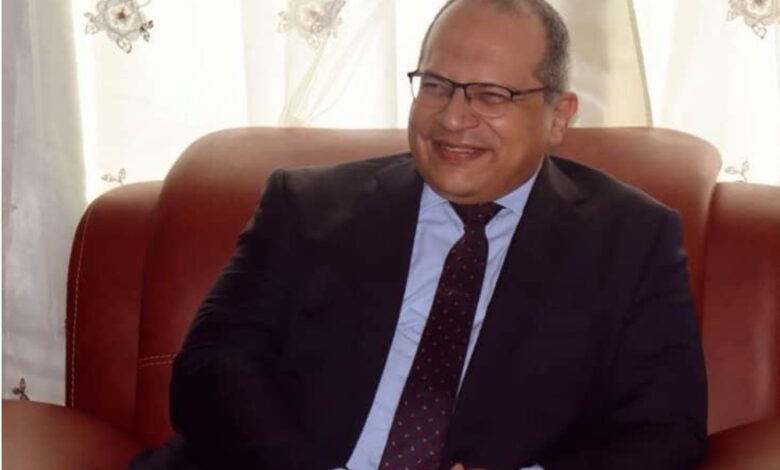
Interview by: Badr Ahmed
Egyptian-Tanzanian relations are witnessing an unprecedented stage of political and economic momentum, driven by a shared vision to enhance African cooperation and transform the bilateral partnership into a model for integration and development within the continent. The recent visit of President Abdel Fattah al-Sisi to the Tanzanian capital, Dar es Salaam, came to confirm this trend, through the launch of a package of understandings and projects aimed at expanding the horizons of cooperation in the fields of energy, transport, agriculture and investment, in addition to strengthening political coordination on African issues of common interest.
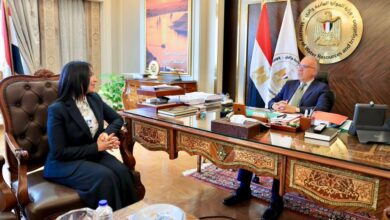
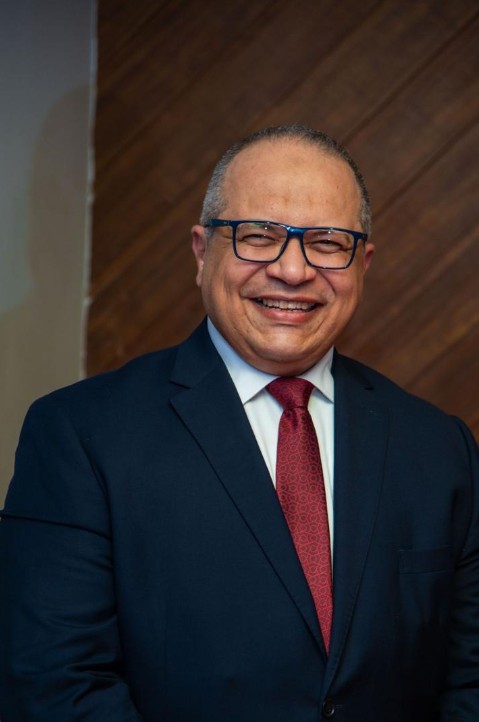
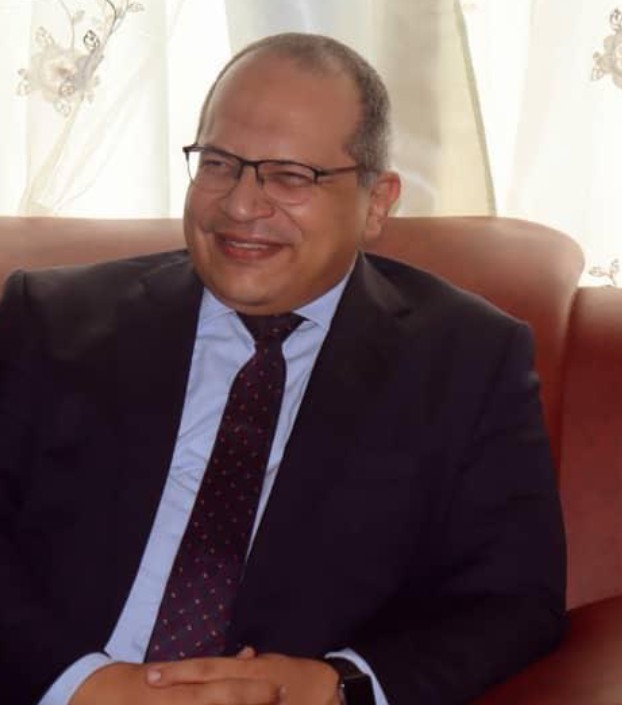
In this context, Zoom Africa News conducted an important interview with Ambassador Sherif Ismail, the Ambassador of the Arab Republic of Egypt to Tanzania, in which he reveals the behind-the-scenes details and dimensions of the presidential visit, reviews its most prominent political and economic results, his vision for the future of relations between Cairo and Dar es Salaam, partnership opportunities in various sectors, as well as the role that the two countries can play in supporting African integration, enhancing development and peacekeeping efforts, and cooperation between the Nile Basin countries in a way that achieves the common interests of the peoples of the continent.
To begin with... - How do you see the importance of President Abdel Fattah al-Sisi's visit to Tanzania at the present time?
Tanzania occupies an important strategic and political position for Egypt, as it is one of the Nile Basin countries, as well as being an important regional pillar in the East African region, and an entry point and outlet for landlocked countries in East and Southern Africa. Egypt and Tanzania have deep-rooted historical relations, as the two leaders, Gamal Abdel Nasser and Julius Nyerere, the leader of the liberation of Tanganyika and the founder of the Tanzanian state, who is referred to here as the teacher, had close relations, and the two leaders had a great role in supporting national liberation movements in Africa during the sixties era.
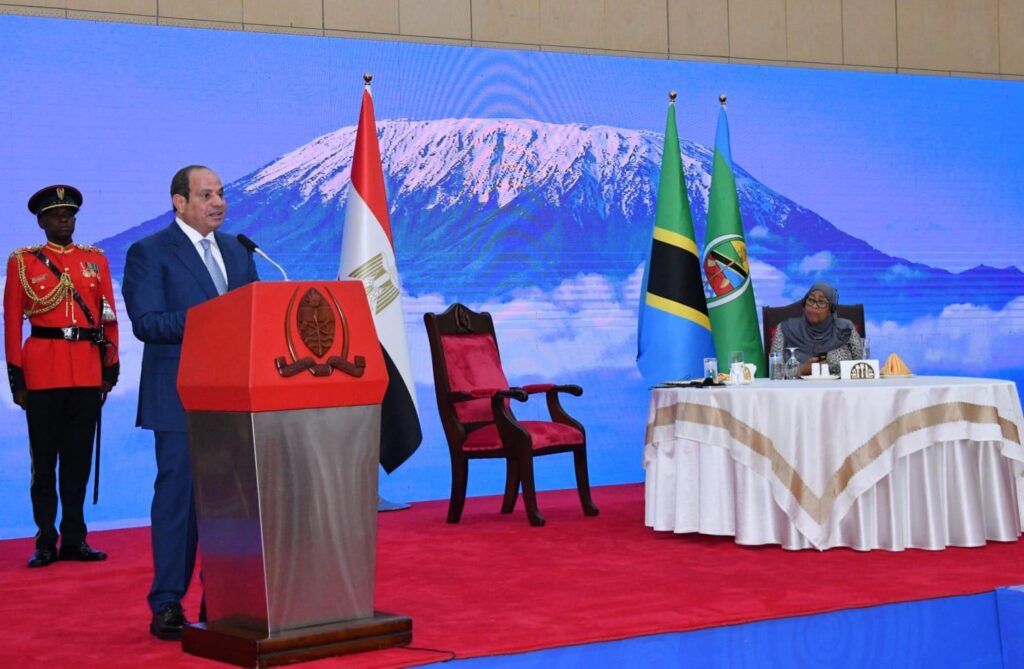
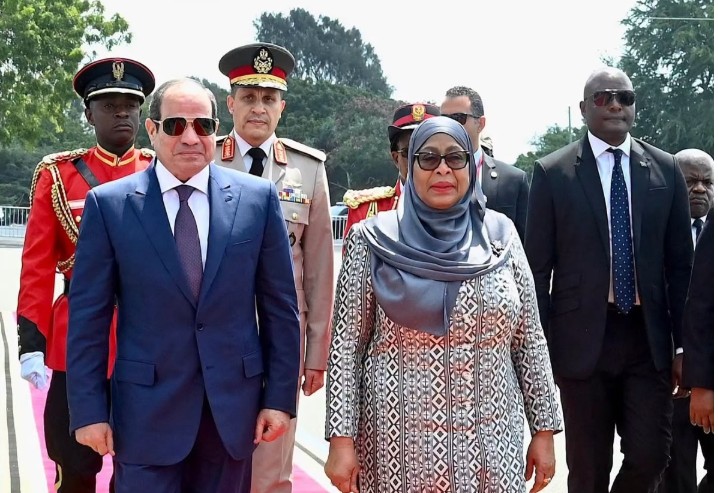
The President previously visited Tanzania in August 2017 in a visit that represented a real shift in relations between the two countries at various levels. Similarly, the President’s visit to Dar es Salaam on July 18, 2026, represents the ideal opportunity to enhance consultation and coordination with Tanzania on issues of political and strategic importance to both sides, and to strengthen bilateral relations in support of African-African cooperation in various fields.
It also indicates the aspiration to continue joint work between the two brotherly countries to develop cooperation relations in a way that achieves common interests, especially with the growth of relations between the two brotherly countries at many levels, and the constant endeavor to enhance this cooperation, especially in connection with the increase in Egyptian investments in Tanzania during recent years, and the interest of many Egyptian investors in the Tanzanian market, where Egypt ranks eighth on the list of foreign countries investing in Tanzania with a value of about $1.4 billion.
What were the most prominent political and economic outcomes of the visit?
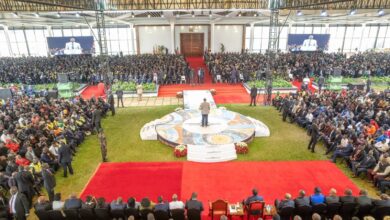
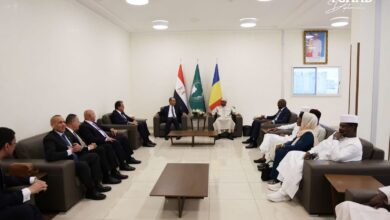
President Abdel Fattah El-Sisi held bilateral talks with President Dr. Samia Suluhu Hassan, followed by an open session between members of the two countries' delegations, during which they discussed how to bring about a qualitative leap in bilateral relations in priority areas, including boosting the rate of trade exchange, encouraging joint investments, and expanding the participation of the Egyptian and Tanzanian private sectors in a number of promising areas of cooperation, as well as signing two memoranda of understanding for cooperation between the two countries in the fields of transport, electricity and renewable energy, which supports the institutional framework for cooperation and allows for the transition to specific executive projects and programs.
The transport and logistics sector was given priority due to its essential contribution to facilitating the movement of goods for export and import between the two countries, as well as through Tanzania to its landlocked neighboring countries, which in turn supports African aspirations to deepen self-reliance and enhance growth and stability rates.
On the economic front, a business forum was held on the sidelines of the presidential visit, bringing together more than 50 Egyptian companies with nearly 120 Tanzanian companies, with the participation of officials from both countries, to discuss opportunities for economic, trade and investment cooperation. President Abdel Fattah El-Sisi and President Dr. Samia Suluhu Hassan attended the closing session of this forum, in a clear message of support and encouragement to the business community of both countries.
How did the visit affect the level of relations between Cairo and Dar es Salaam? And can it be considered the beginning of a new phase of partnership?
Indeed, this presidential visit, as was the case with the President’s visit to Tanzania in 2017, paves the way for a new upward shift in Egyptian-Tanzanian relations, based on a solid foundation of trust in light of what was implemented in the Julius Nyerere Hydroelectric Power Dam project by Egyptian hands, implemented by a consortium that included the Arab Contractors Company and Elsewedy Electric.
The recent presidential visit is expected to open up broader and more comprehensive horizons for building an integrated system of cooperation and strategic collaboration in several areas that achieve mutual interest and benefit, most notably in the sectors of agriculture, energy and renewable energy, ports, transport and logistics, technology, trade and investment, education and medicine.
What were the most important messages conveyed by the visit at the African level?
Africa holds strategic priority in Egypt’s foreign relations and is an extension of our national security. In accordance with the directives of the political leadership, we seek to deepen the frameworks of cooperation, whether bilaterally or multilaterally, with the countries of the continent. Supporting tools have been developed to implement this strategy, most notably the financing mechanism for projects in the southern Nile Basin countries, which Tanzania can benefit from to implement its development plans.
Tanzania is a modern model of Egyptian cooperation with African countries, especially with the highlighting of the Julius Nyerere Dam and Hydroelectric Power Station project, which is a replicable model for how to support development in African countries and a window to showcase Egyptian capabilities to implement the most complex and largest development projects needed by African countries.
In general, how would you assess the level of relations between Egypt and Tanzania in recent years?
The two countries have historically enjoyed strong relations of cooperation and friendship dating back to the era of national liberation movements, established by the late leaders Gamal Abdel Nasser and Julius Nyerere, and continuing to develop over the following decades.
Since the President’s visit to Dar es Salaam in August 2017, bilateral relations have taken a new turn based on understanding and awareness of common interests, becoming a model of African-African cooperation that the countries of the continent aspire to in implementation of their development agenda 2063.
To emphasize the momentum in Egyptian-Tanzanian relations, and in addition to the frequency of reciprocal ministerial and sectoral visits, it is worth noting the continuous pace of communication at the presidential level since Tanzanian President Dr. Samia Suluhu Hassan assumed power in March 2021, during which time the following has taken place:
The Tanzanian President visited Egypt in November 2021, a few months after she came to power, out of her belief in Egypt’s high standing and in appreciation of the unique Egyptian development experience in its new republic, in various sectors from which Tanzania can draw inspiration and lessons learned.
- The meeting will take place in Sharm El Sheikh in November 2022 on the sidelines of the Tanzanian President’s participation in the COP27 summit in Sharm El Sheikh.
- Then again in 2023 in the United Arab Emirates on the sidelines of the COP28 summit.
- During 2024 in Rio de Janeiro on the sidelines of the G20 summit.
- In 2025, a phone call was made to congratulate the President on her re-election for a second term, leading up to the presidential visit in July 2026.
Which sectors offer the greatest opportunities for cooperation between Cairo and Dar es Salaam?
We seek to achieve mutual and balanced benefit in implementing various frameworks of joint cooperation. Indeed, a number of sectors are a priority for the two brotherly countries, including the construction, building, roads and infrastructure sectors, maritime transport, ports and logistics zones, electricity, energy and renewable energy, agriculture, land reclamation and irrigation, livestock and food security, pharmaceutical industries and medical supplies, technology and science, human capacity building, training and transfer of Egyptian technical expertise.
Are there plans for new joint projects in the fields of energy, transportation, or agriculture?
Energy is the primary driver of development, and no country should compromise on continuing to expand its energy production base. Egypt seeks to build on the great success achieved in completing the Julius Nyerere Hydroelectric Power Station and Dam project, which represents a model of the ability of Egyptian national companies to implement major projects for generating clean energy in the African continent, and an entry point to obtaining more similar projects, whether in Tanzania or in other African countries. We are fully prepared, especially through specialized Egyptian companies, to participate in implementing the new energy projects that Tanzania proposes.
As for the transport sector, it is considered fundamental and pivotal in all development plans. For our part, in our relationship with Tanzania, we focus on assisting it in implementing expansion plans in ports and maritime transport, especially with regard to expanding and developing the port of Dar es Salaam, and how to link it with Tanzania’s neighboring countries. Also, we are working on completing the creation of a direct shipping line to link the ports of Safaga and Dar es Salaam to facilitate the exchange of goods, and reduce the value and time of shipping between the two countries to encourage both sides to rely more on each other to provide basic needs.
As for the agricultural sector, Tanzania is primarily an agricultural country, and the agricultural sector represents the main engine of growth and the most important employment sector in it. The leadership and government in Tanzania have ambitious plans to expand the uses of agricultural land and reduce waste of agricultural crops. Here, Egyptian expertise comes in, whether in agriculture or in agricultural manufacturing, to help Tanzania maximize the possible returns from this sector.
Conversely, Egypt, being a net importer of food, is in constant need of alternative markets and diverse options for its agricultural imports. With the establishment of a direct shipping line between the two countries, the agricultural sector will be ready for further cooperation, especially for importing food commodities that can be grown in Tanzania.
How can Egypt and Tanzania work together to promote African integration?
The cooperation between Egypt and Tanzania represents a promising model for African partnership capable of effectively contributing to advancing continental integration efforts and achieving common development goals. The two countries can play this role by supporting the implementation of the African Continental Free Trade Area agreement, enhancing connectivity in the areas of transport, energy and infrastructure, facilitating trade and investment between the countries of the continent, in addition to cooperating on food security projects, water resource management and capacity building.
The two countries can also join forces within the African Union and regional groupings to support peace and security, promote joint African action, and exchange experiences in the areas of development and digital transformation, contributing to the achievement of Agenda 2063 and establishing an effective model of African-African cooperation based on partnership and mutual development.
How do you view Egypt's role in peacekeeping efforts on the continent?
Egypt is a peace-loving country that seeks to spread peace and promote political and diplomatic solutions over any other means. Egypt is also one of the most prominent African countries supporting efforts to maintain peace and security on the continent, based on its belief that achieving sustainable development is closely linked to establishing security and stability.
For decades, Egypt has contributed to UN peacekeeping missions by sending military forces, police personnel, and civilian experts to numerous missions in Africa. It also pays special attention to building the capacities of African personnel through the Cairo International Center for Conflict Resolution, Peacekeeping and Peacebuilding, and supporting mediation, early warning, and conflict prevention efforts.
Egypt continues its close cooperation with the African Union and international partners to strengthen the African peace and security system, which contributes to finding solutions to political crises. Speaking of Tanzania, the two countries share these visions, and the period of cooperation between the two countries in the African Peace and Security Council was characterized by broad coordination to unify positions in support of the stability of the continent and the spread of peace in its countries.
What is the importance of cooperation between the Nile Basin countries to achieve common development?
In Egypt, we believe that the Nile is a lifeline for development and life, and all the countries sharing it have a responsibility to develop its resources and preserve it. Therefore, sincere and honest cooperation between the Nile Basin countries represents a fundamental pillar for achieving common development and promoting stability and prosperity based on mutual interests and shared dependence on the river's resources.
This cooperation provides ample opportunities for implementing development projects that benefit all parties, while taking into account the international rules governing transboundary rivers, which represent the clear determinants of the rights and obligations due to all Nile Basin countries.
How can Egypt and Tanzania cooperate in water resource management and irrigation projects?
Cooperation between Egypt and Tanzania in the field of water resources management and irrigation projects represents one of the most promising areas of partnership, in light of Egypt’s extensive experience in water resources management and the implementation of modern irrigation projects, and Tanzania’s increasing needs to develop its water infrastructure and support its agricultural sector.
Opportunities for cooperation include implementing rainwater harvesting projects, developing modern irrigation systems, rehabilitating irrigation and drainage networks, building small dams and reservoirs, and promoting integrated water resources management, in addition to exchanging experiences, building capacities, and transferring technology in the areas of rationalizing water use and adapting to the effects of climate change.
This partnership will contribute to enhancing food security, increasing agricultural productivity, supporting rural development, and achieving sustainable use of water resources in a way that serves the common interests of both countries. Many opportunities are also available for Egyptian companies working in the fields of land reclamation, modern irrigation, seeds and seedlings, fertilizers, pesticides, agricultural machinery and equipment, food processing, and refrigerated storage and transport.
What are the most important issues that should be prioritized in cooperation between the two countries during the next phase?
Egyptian-Tanzanian relations are characterized by candor and a clear understanding of each country's needs from the other, in light of the available potential in both countries and their mutual desire to deepen the bilateral partnership, maximize the returns from cooperation, transfer expertise, and build cadres. Hence, several areas stand out, as discussed during the presidential visit to Dar es Salaam on July 18, 2026, which could be prioritized in the coming period, most notably strengthening cooperation in the fields of trade and investment, water resources management and irrigation projects, agriculture and food security, energy, infrastructure and transportation, health and the pharmaceutical industry, education and capacity building, and digital transformation and innovation.
Tourism, the blue economy, mining, and manufacturing, along with cooperation in the areas of peace, security, and counter-terrorism, represent promising areas that can contribute to maximizing common interests, promoting sustainable development, and achieving a balance of mutual gains for the two brotherly countries and peoples.
While certain sectors may be prioritized, this does not mean closing the doors to all sectors and files in an effort to maximize mutual benefit. Hence, I am keen to emphasize the leading and required role of the Egyptian private sector in particular to anticipate the opportunities available in Tanzania that achieve mutual benefit. It is certain that Egypt as a country and we as a diplomatic mission in Dar es Salaam will provide all the support and assistance needed to ensure the success of the presence and work of Egyptian companies in Tanzania, hoping that the overall Egyptian-Tanzanian partnership will rise to broader horizons to match the distinction that unites the two countries on the political and official levels.