Malik Aqar: The second most powerful man in northern Sudan (Profile)
Aqar believes that negotiating with the Rapid Support Forces is a sign of the division of Sudan.
Written by Ziad Abdel Fattah
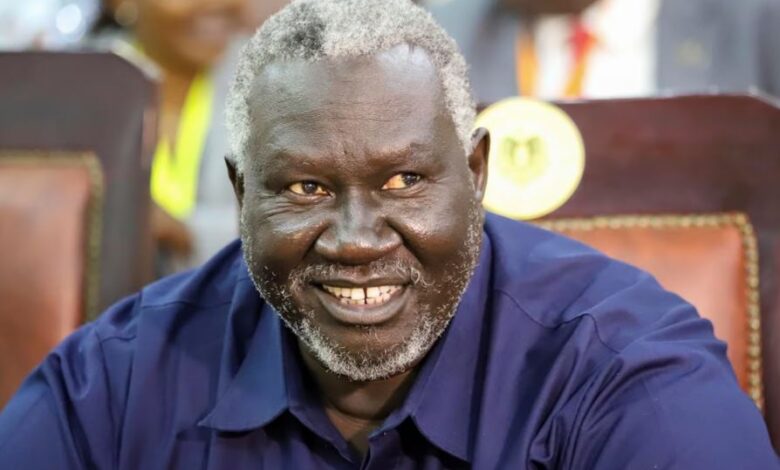
Malik Agar, the current Vice President of the Sudanese Sovereignty Council, is based in northern Sudan and was appointed to this position on May 19, 2023. He is the former leader of the Sudan People’s Liberation Movement-North and is the second most powerful man in the country’s Transitional Sovereignty Council after President Abdel Fattah al-Burhan.
The property owner was born in the city of Baw in the Blue Nile State of Sudan, and worked Governor The Blue Nile State was liberated in April 2010 following the Naivasha Agreement, the Comprehensive Peace Agreement that ended Africa’s longest civil war. It was signed by the Government of Sudan, led by the now-dissolved National Congress Party, which was headed by former Sudanese President Omar al-Bashir, and the other party, the Sudan People’s Liberation Movement, led by John Garang, which became the ruling party in South Sudan.
He worked as a teacher in his early career and then moved on to work as a storekeeper before joining Popular Movement She led a number of battles against the Salvation Government in Blue Nile, and led a number of negotiations regarding the war that broke out in the state in 2011.
Negotiating with the Rapid Support Forces is a sign of the division of Sudan.
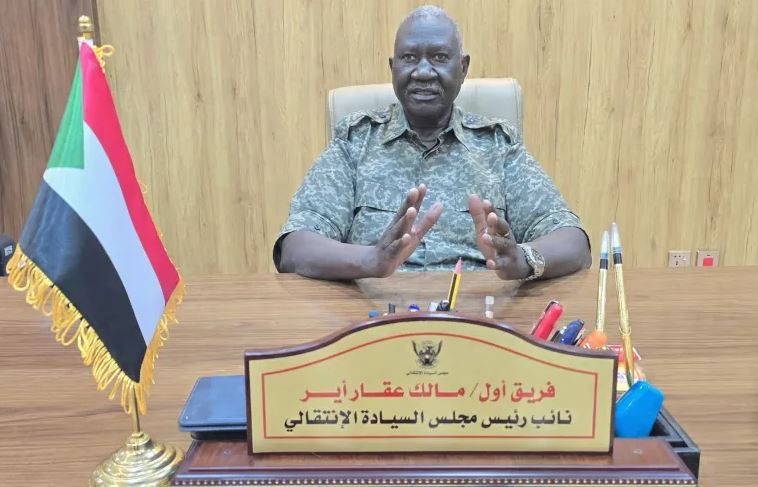
Aqar is firmly convinced that negotiating with the Rapid Support Forces is a sign of the division of Sudan. The Rapid Support Forces are a paramilitary militia formed and composed of the Janjaweed militias that fought on behalf of the Sudanese government during the war in Darfur, and he has real fears of a new division in Sudan.
Nevertheless, he is working to create an environment conducive to peace in the country, and he is convinced that this process must begin with a complete halt to the flow of mercenaries and external support for the Rapid Support Forces militia. He believes that the war in northern Sudan is not a civil war between two Sudanese factions, but rather a war waged by the state against the influx of mercenaries and invaders.
Efforts to increase the number of entities within the Democratic bloc
Currently, the government and its supporters are pushing to expand their political base by bringing more parties and groups into the Democratic Bloc alliance, to increase the number of entities within the Democratic Bloc to represent half or two-thirds of all political forces in Sudan, to prove to external groups that the current political path is the right path for the country’s future.
The Democratic Bloc currently includes 19 parties and armed groups out of 117 parties and armed groups in Sudan. It believes that despite the different goals of these bodies, they share a common commitment to the unity of Sudan. The Democratic Bloc consists of political factions and armed movements that support the army in its ongoing conflict against the Rapid Support Forces, including the Sudan People’s Liberation Movement, the Sudan Liberation Movement, and the Justice and Equality Movement.
Slogans for personal gain
Aqar recently accused some proponents of democracy of using slogans for personal gain, and claimed that many individuals only describe the government as democratic after they have been appointed to political positions.
He also criticized the continued reliance on armed struggle, stressing that weapons are not a tool for democracy. While acknowledging that peace agreements were signed to resolve national crises, he warned that the current proliferation of weapons necessitates an urgent review.