After 10 suspected cases, South Sudan confirms it is free of Ebola.
The epidemic outbreak is escalating in Congo
Written by Ziad Abdel Fattah:
The Ministry confirmed health In South Sudan, the country remains free of Ebola after all 10 suspected cases tested negative, while health authorities continue to strengthen surveillance and monitoring measures as the outbreak worsens in the Democratic Republic of Congo.
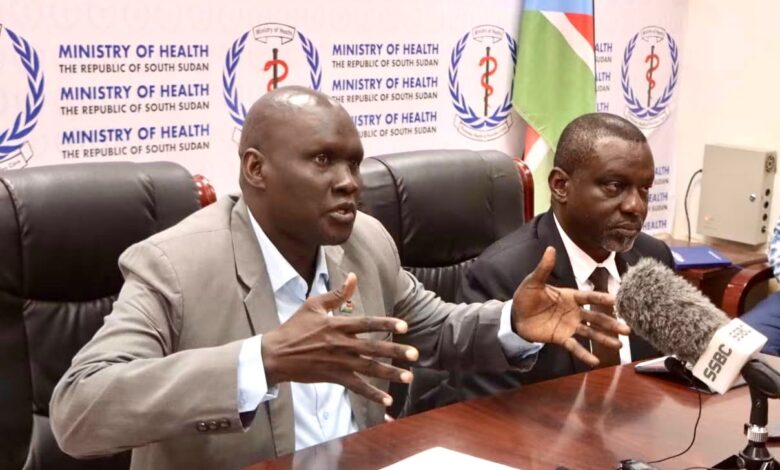
Speaking at a press conference on Friday, the Undersecretary of the Ministry of Health, Dr. Oromo Francis, said the country remains on high alert due to the risk of imported cases from neighboring countries.
Examination of 10 suspected cases
Oromo stated, “To date, we have examined 10 suspected cases and all results have come back negative. We truly hope that every suspected case we examine will have a negative result. But the risks remain high, and we are concerned about imported cases.”.
Oromo noted that preparedness and response efforts have been intensified in 15 border districts with the Democratic Republic of Congo and Uganda, where the risk of cross-border transmission remains at its highest level.
Ebola outbreak escalates in Congo
According to him, the Ebola outbreak in the Democratic Republic of Congo continues to escalate, with 2,273 confirmed cases and 796 deaths recorded as of Thursday, making it the largest Ebola outbreak the country has ever recorded.
Oromo stated that the current outbreak has surpassed the scale of the 2018-2019 epidemic in a much shorter period. He noted that Uganda has made significant progress in containing its Ebola outbreak.
Oromo explained that authorities confirmed the discharge of the last Ebola patient in the country after he tested negative twice, triggering the official countdown of the 42 days required before the outbreak can be declared over.
For his part, Humphrey added that more than 18,000 travelers have been screened at points of entry since preparedness measures were strengthened, allowing authorities to identify and monitor at-risk individuals.
Waban said that South Sudan’s readiness level had improved significantly over the past two months. He said: “When we started, our readiness level was only about 29 percent. After a month, we reached about 45 percent. Yesterday, the team conducted another assessment, and we are now at a readiness level of about 65 percent.”.
In response to questions about the rapid spread of Ebola in the Democratic Republic of Congo, Humphrey attributed the situation to the country's complex geography and community resistance to public health measures.
He commented, “Community resistance has been a major challenge in the Democratic Republic of Congo. But we are quite confident in South Sudan that communities are more cooperative, so we hope we will not see an outbreak of this magnitude.”.
Oromo added that the outbreak in the Democratic Republic of Congo was detected late, allowing the virus to spread before it was officially announced.
He also pointed to attacks targeting health facilities and the resistance faced by healthcare workers as major obstacles to containing the disease.
Oromo explained that health officials revealed that the 10 suspected Ebola cases examined in South Sudan originated from Juba (4 cases), Yambio (4 cases), and Nimule (2 cases).
He also confirmed that temporary measures have been taken to limit some cross-border trade activities, including the transfer of salted fish to the Democratic Republic of Congo, while continuing to strengthen monitoring and inspection at official border entry points.
Oromo urged the public to remain vigilant, cooperate with health workers, and immediately report any suspected Ebola symptoms, as the country continues its efforts to prevent the virus from entering South Sudan.
The World Health Organization's representative in South Sudan, Humphrey Karamage, praised the government's efforts to improve the country's preparedness to respond to any potential Ebola case.
Humphrey said: “South Sudan is doing a very good job in terms of improving our preparedness to respond to any Ebola outbreak. At the moment, our preparedness is on par with, and in some areas better than, some of our neighboring countries.”.
Regarding international travel, the World Health Organization representative, Humphrey, explained that the organization does not recommend imposing travel restrictions and does not have the authority to permit or prohibit travel between countries.
He said: “The WHO does not prevent anyone from traveling anywhere, but our advice is that no restrictions should ever be imposed. What countries need is to strengthen their preparedness and screening systems.”.