Africa is on the verge of a new ocean's birth... Scientists observe the beginning of the continent's splitting.
The early stages of a geological split
Written by Omnia Hassan
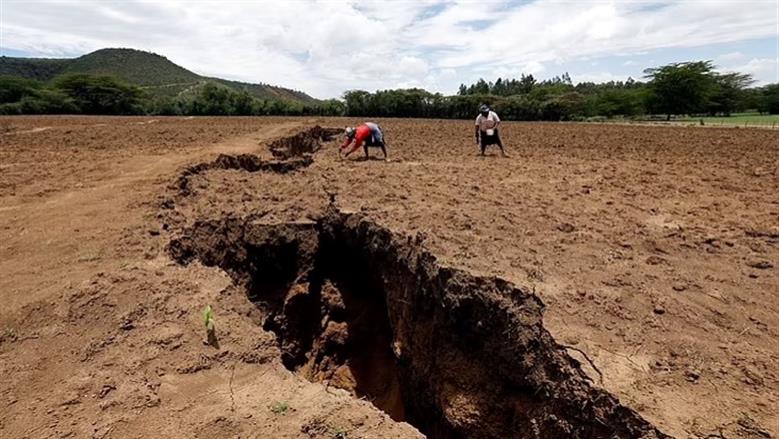
In an exciting geological discovery that could change scientists' understanding of the future of planet Earth, recent research has revealed strong indications of the beginning of the formation of a new tectonic boundary within a continent. AfricaIn a move that could represent the first stages of a massive geological split that will take millions of years.
Geologists have detected unprecedented evidence in the Kafue Rift region of Zambia, discovering a direct connection between hot springs and the Earth's deep mantle. Researchers consider this a significant indication of escalating tectonic activity that could eventually lead to the formation of new plate boundaries in the heart of the Earth. continent .
A deep crack reveals secrets of the Earth's interior
The researchers explained that the geothermal springs in the Kafue Fault contain unusually high levels of helium isotopes, a rare chemical signature indicating that the escaping gases came from deep within the Earth's mantle, which lies up to about 160 kilometers below the surface.
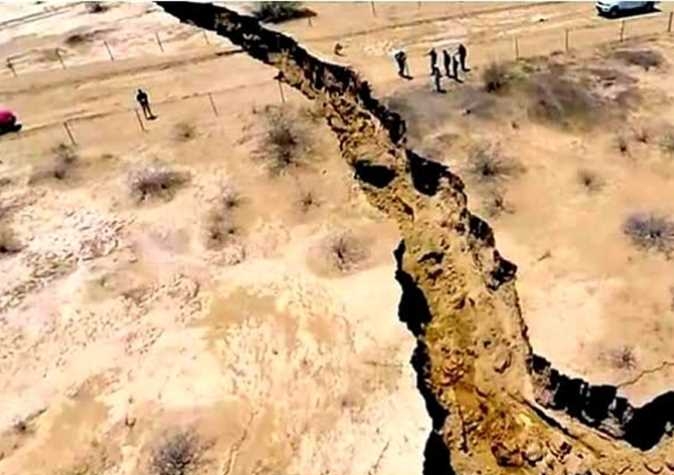
Scientists believe that this “seamless connection” between the mantle and the Earth’s surface is important evidence that the geological fault in the region is still active, and may be going through an early stage of tectonic formation that could in the future lead to the splitting of parts of the African continent.
Will the story of “Pangea” repeat itself?
Experts believe that what is happening today may be similar to what happened hundreds of millions of years ago, when the supercontinent Pangaea broke apart into the continents we know today.
Although these changes occur so slowly that they cannot be observed during a human lifetime, the Earth's tectonic plates are constantly moving, causing enormous changes in the shape of continents and oceans and volcanic activity around the world.
The Kafue Rift is part of a massive geological system that stretches for about 2,500 kilometers across Central Africa, and some scientists believe it may eventually be linked to the Mid-Atlantic Ridge, where the African and South American tectonic plates meet.
A new ocean may be born in Africa
Researchers indicate that continued tectonic activity in the region could, in the long term, lead to the formation of new continental boundaries, and perhaps the birth of a new ocean separating parts of Africa from each other, in a geological scenario that would take millions of years.
Studies also confirm that the movement of tectonic plates played a key role in making Earth habitable, through recycling minerals, regulating the carbon cycle, and stimulating volcanic and thermal activity within the planet.
Even today, Africa remains one of the most geologically active regions in the world, especially in the East African Rift Zone, where the Somali Plate is gradually separating from the African Plate.
Promising economic potential
Despite the importance of the discovery, scientists stressed the need to treat the results with caution, given that the study was based on limited samples from a single region within the vast fault system.
Researchers hope to expand the scope of the studies and gather additional data from other regions to ascertain whether the signals coming from the Earth's mantle extend along the entire geological system.
The discovery also draws attention to the great economic potential that these faults may hold in the future, especially in the fields of geothermal energy and the extraction of helium and hydrogen gases, which has prompted specialized companies to support and fund ongoing research in the region.
The study's findings were published in the journal Frontiers in Earth Science, a move researchers believe paves the way for a deeper understanding of the slow shifts that could redraw the map of the continents in the distant future.