Ambassador Iman Yaqout in an interview with “Zoom Africa News”: Congo-Brazzaville is a land of promising opportunities… and security and stability are the key to cooperation
Egyptian history is taught in schools in Congo-Brazzaville
Interview by: Sally Atef
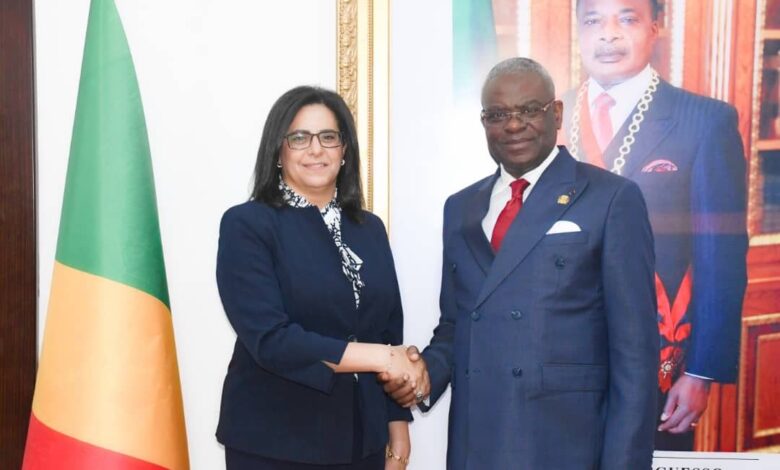
As part of Egypt’s interest in strengthening its presence in the African continent, “Zoom Africa News” conducted a special interview with Iman Yaqout, the Ambassador of the Arab Republic of Egypt to Congo-Brazzaville, in which she discussed the most prominent features of the bilateral relations between the two countries, and her vision for the future of political and economic cooperation.
The ambassador affirmed that Congo-Brazzaville is a promising country with great opportunities in the fields of agriculture, energy and infrastructure, noting that the security and stability enjoyed by the country is an encouraging factor for Egyptian investors.
She also reviewed her experience as an ambassador in Brazzaville, explaining that there is a common cultural and historical ground that facilitates communication and opens new horizons for partnership, stressing that the future holds wide opportunities for cooperation if Egyptian companies have the courage to enter the Congolese market.
Here is the text of the dialogue:
What is your comment on the inauguration ceremony of the Congolese president? And how do you view the Egyptian participation in the ceremony?
Congo witnessed yesterday the inauguration ceremony of the president for his fifth term, which is one of the largest inauguration ceremonies held there since he took office, as it was attended by a large number of African heads of state, especially from neighboring, central and West African countries, including the Angolan president, the current and former Ghanaian president, and the presidents of Rwanda, Congo and Kinshasa.
Representatives of heads of state and government from several countries also participated, in a huge public gathering inside a stadium that can accommodate about 60,000 people, which gave the celebration a majestic character.
Egypt was keen to participate with a high-level delegation, represented by Ambassador Mohamed Karim Sherif, Assistant Foreign Minister for African Affairs, which was greatly appreciated by the Congolese side, especially as it came as an extension of the direct communication between President Abdel Fattah El-Sisi and his Congolese counterpart, through the telephone call on March 29 to congratulate him on the victory, followed by an official congratulatory telegram.
This Egyptian interest was reflected positively in the Congolese media, both officially and among the public, who sensed Egypt's keenness to strengthen bilateral relations and highlight its interest in East African countries.
How do you view the political and economic relations? And what are the most important issues between the two countries?
The political leadership in Egypt pays great attention to strengthening relations with sister African countries in various fields, especially economic, trade and investment fields.
The coming period is expected to witness greater development in trade and cooperation in sectors of common interest, especially those vital to the Egyptian side.
Congo, for its part, is keen to develop its relations with Egypt, and the recent period has witnessed positive steps in this direction, as the two countries have overcome some previous challenges, such as the UNESCO file.
In December 2025, the Congolese Foreign Minister visited Cairo to participate in the second Russian-African Ministerial Forum and met with his Egyptian counterpart, Badr Abdel-Aty, which helped restore relations to their normal course.
Politically, preparations are underway to hold a meeting of senior officials from the foreign ministries of the two countries in Cairo, following the completion of the formation of the new Congolese government.
Coordination is also underway to hold a meeting of the Egyptian-Congolese Joint Committee, with work being done to finalize a number of memoranda of understanding in various fields, including cooperation between chambers of commerce, judicial fields, small and medium enterprises, in addition to cultural cooperation, as some agreements are still under negotiation.
Economically, Egypt is keen to strengthen the presence of its companies in Congo, such as Arab Contractors, which is highly regarded for the projects it is implementing in the industrial zone near the capital, as well as Petrojet, which has begun establishing a headquarters there after previous cooperation with the Italian company Eni.
The Congolese side is paying special attention to transferring expertise and benefiting from the Egyptian experience in the fields of infrastructure and major projects, which paves the way for more cooperation during the next stage.
What are the most important investment opportunities available to Egyptians in Congo?
The agricultural sector is one of the most promising areas for cooperation and investment between Egypt and Congo, in addition to fish farming, which is of great importance.
The energy sector, including electricity and gas, is also a key focus of cooperation, in addition to infrastructure and port projects.
The Congolese side recently proposed the idea of cooperation between one of the Congolese ports and the port of Alexandria. In addition, there are broad investment opportunities in the fields of agriculture, fish farming, and poultry farming, as natural resources are abundant in Congo, which provides opportunities for fruitful cooperation.
These sectors simply need more boldness from Egyptian companies to enter the Congolese market strongly, thereby enhancing their presence and achieving common interests for both parties.
What is the volume of trade between the two countries?
The volume of trade between Egypt and Congo is currently small, estimated at only about $30 million, and limited to basic foodstuffs. Egypt imports products such as oils and sugarcane from Congo, while exporting iron, fertilizers, and some foodstuffs, but in limited quantities.
This reality highlights the urgent need to push trade exchange between the two countries towards higher levels, especially since there are multiple areas and many tools that can be invested in to enhance trade and economic cooperation in a way that serves the interests of both parties.
Describe your experience as Egypt's ambassador to Congo?
I can say that the experience was very positive. The country has a very important advantage, which is the element of security, which is available to a large extent, and this is the most important factor for investment, trade, or even the presence of Egyptians.
The political and security stability here gives great confidence to investors wishing to enter the Congolese market.
The country is generally peaceful, with a population of approximately 6 million, and the system is stable, which enhances opportunities for economic and trade cooperation.
The Congolese people of Brazzaville are also characterized by their calm nature. Despite the tribal diversity, they are far from manifestations of violence, which makes the social environment more stable.
Culturally, the Congolese people value and excel in handicrafts and woodworking. Congolese cuisine also has a distinctive flavor; I've tasted it and it relies heavily on vegetables cooked in sauces. One of their most prominent traditional dishes is "Saka Saka," a dish similar to spinach cooked in sauce, in addition to various methods of preparing dried fish.
Despite these positives, there are ongoing challenges such as infrastructure problems, water, electricity, and malaria, which are common problems in many African countries and are not limited to Congo-Brazzaville.
Overall, the experience reflects a stable and secure environment, with great opportunities for cooperation and investment, along with challenges that require gradual solutions.
Would you like to send a message to Egyptians interested in Africa, whether for visiting, investing, or trading?
Congo-Brazzaville is a promising country with great opportunities for cooperation and investment. It is rich in resources and has broad potential in multiple fields, which we have discussed previously.
Its most important feature is the element of security and stability, which is a very encouraging factor for investment and trade, and gives reassurance to those wishing to enter the Congolese market without worry.
The political system here has been stable for a long time, which enhances confidence in the sustainability of cooperation. Therefore, my message to Egyptians interested in Africa, whether through visiting, investing, or trading, is that Congo-Brazzaville is a suitable and promising destination where fruitful cooperation can be achieved that benefits both sides.
Egypt also offers training courses in various fields, and the Congolese side is showing great interest in them, which opens up additional prospects for cooperation in capacity building and exchange of experiences.
What is your vision for the future of relations with Egypt in the coming years? And is there a focus on a specific issue?
I believe the future of our relations is very promising, even though we have experienced periods of some setbacks, which we have thankfully overcome. As long as we have been able to overcome them, it means we are capable of cooperating and advancing economic and investment projects, especially since they are very interested, and Egypt is a large country with a rich history for them.
In the government schools here, they teach Egyptian history, and they have extensive knowledge of it.
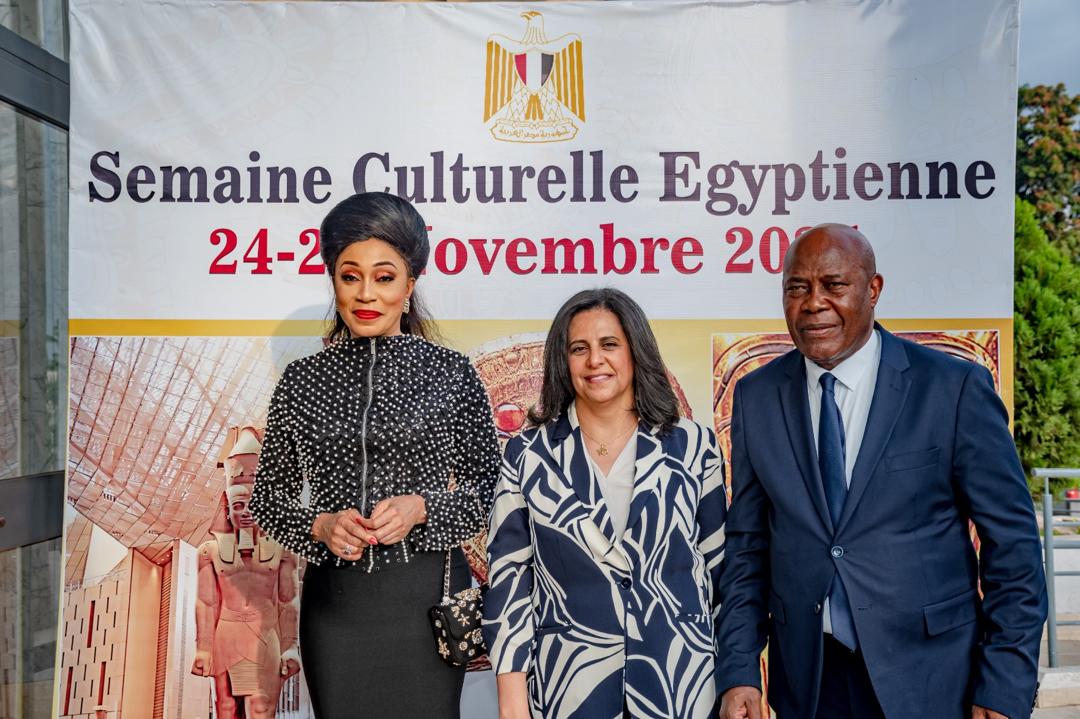
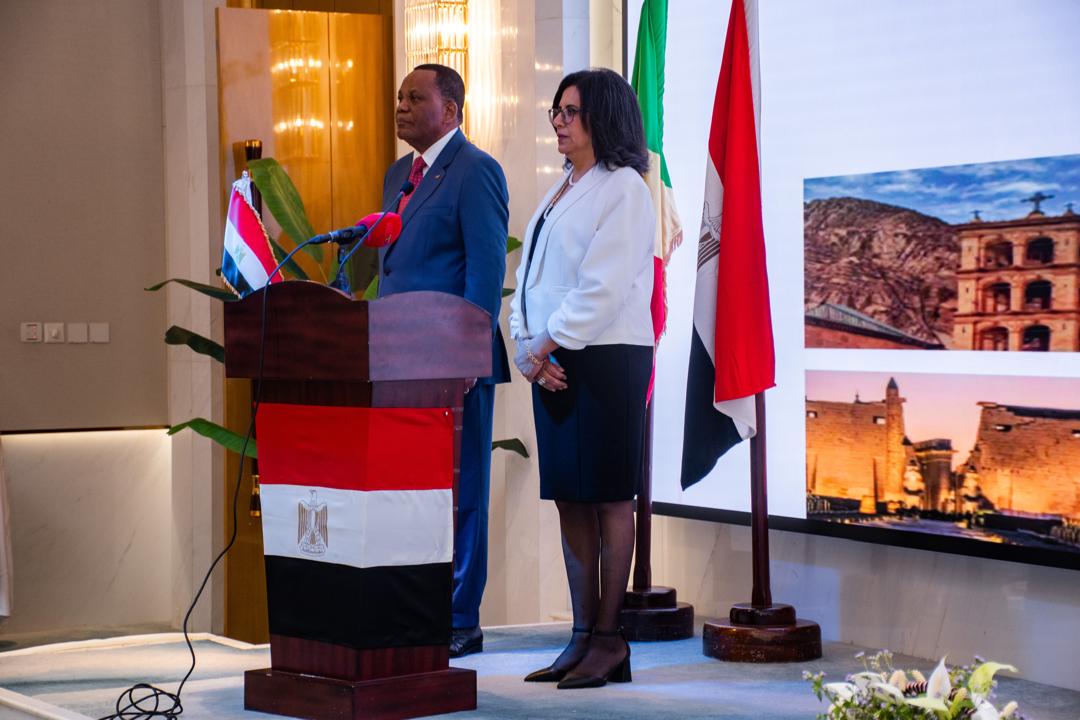
When we presented the opening ceremony of the Grand Egyptian Museum as part of a cultural week, we showed Egyptian films translated into French, and films about Siwa to promote tourism in Egypt, and they received great interest from students in both universities and schools, because they had already studied Egyptian history.
In the past, there were a large number of Egyptian teachers in Congo, and many of the officials we met still remember them; it was a significant gesture to hear from them. This confirms that communication will not be difficult, as there is a foundation that can be built upon, developed, and revitalized.
Therefore, I see the future of relations as very positive, and it just needs a degree of boldness from Egyptian companies, so that they can see the opportunities and advantages that exist and take advantage of them.