A river unites them, but borders separate them... The difference between the Democratic Republic of Congo and Brazzaville
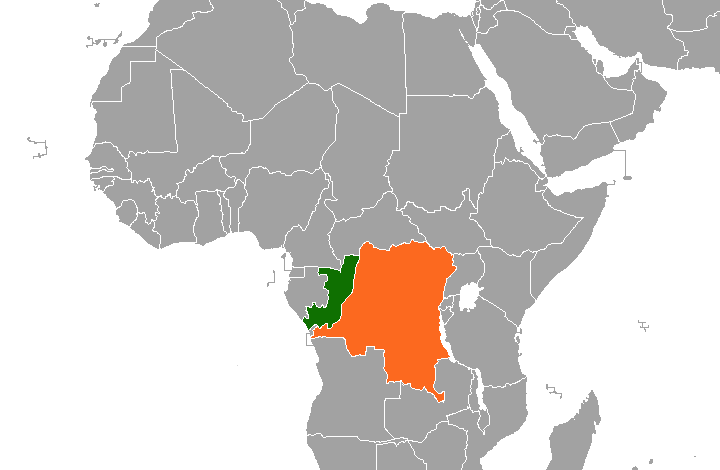
The Congo River unites them, but borders separate them. They differ in name, history, and social reality. These were the most prominent differences between the Democratic Republic of Congo and its neighbor, Congo-Brazzaville. In the following lines, we explain these differences between the identities of the two countries located on the banks of the Congo River.
Origin of the name
The two countries share the first half of their names. The first is called the Democratic Republic of Congo, while the second is called Congo-Brazzaville. The name Congo is historically known as the name of the Bantu peoples, so the region has been called Congo since the colonial era onwards.
Similarities between the Democratic Republic of Congo and Congo-Brazzaville
There are many similarities between the Democratic Republic of Congo and Congo-Brazzaville, as they are located in the same region, have the same climate, the same language, and the same wild nature.
historical differences
Historically, the two countries differ as Congo-Brazzaville is a former French colony, established in 1891, and was initially known as Moyenne Congo, before adopting its current name, the Republic of Congo, on August 15, 1960, with Brazzaville as its capital.
As for the Democratic Republic of Congo and its capital Kinshasa, it is a former Belgian colony established in 1908, and gained its independence on June 30, 1960. During the era of General Mobutu, the capital took the name Zaire to avoid confusion with its neighbor, but with the arrival of the democratic forces to liberate it, its capital returned to the name Kinshasa once again.
Area difference
The Democratic Republic of Congo has an area up to 7 times that of its neighbor, Congo-Brazzaville, with the former covering 2,345,000 square kilometers, while the latter covers 342,000 square kilometers.
Capital cities and flags
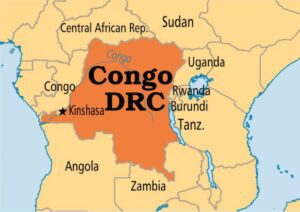
The Congo River separates the two countries' capitals, which face each other on the banks of Lake Malibu.
Externally, the public distinguishes between the two countries by the flag of each country separately. The flag of Congo-Brazzaville uses colors such as red, green and yellow, which are known as the colors of African unity, while the flag of the Democratic Republic of Congo is red, yellow and blue, with a star in the middle that symbolizes the country’s promising future.
Stability and conflicts
On the political front, Congo-Brazzaville enjoys relative political stability, unlike its Democratic neighbor. Since the civil war in the 1990s, the country has been ruled by President Sassou Nguesso, while the Democratic Republic still suffers from severe instability, with dangerous areas continuing to exist in its east.