The protests in South Africa have taken a turn: demands to overthrow the regime.
Ahmed Salem
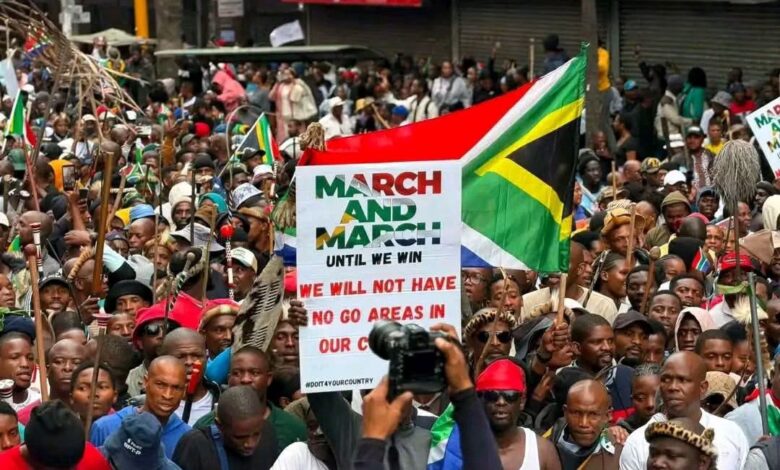
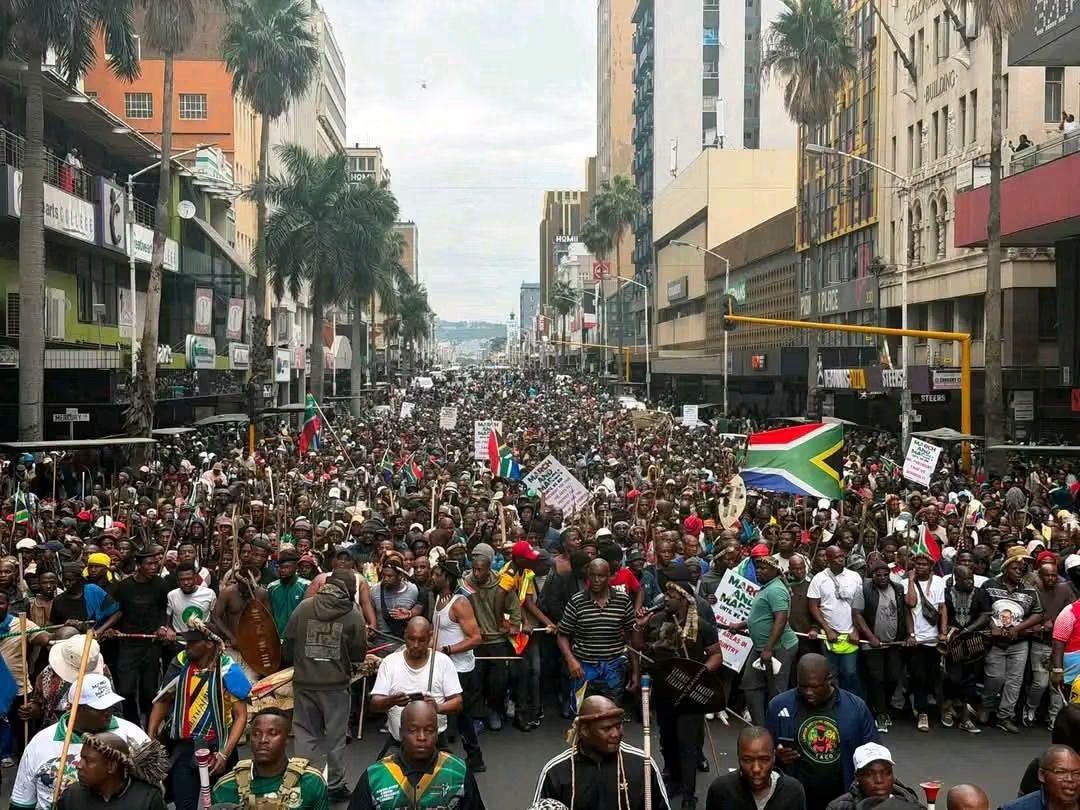
Several regions in South Africa are witnessing nationwide protests, despite the intensive security preparations undertaken by the government, where police forces have been deployed and reinforced with military support in some areas, in anticipation of these demonstrations.
Reports indicated that the protests in some areas had broadened beyond mere immigration issues, with the main organized groups – including the March and March movement – focusing primarily on the issue of irregular migration.
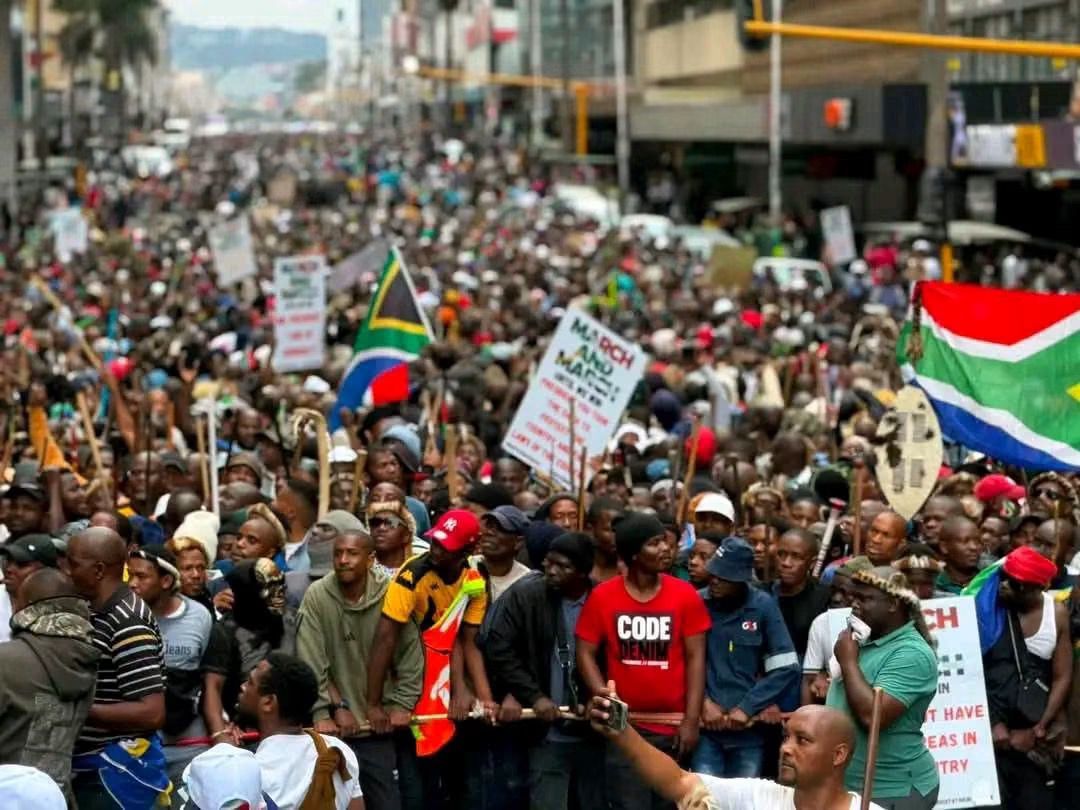
While some protesters and their allied groups called for the resignation of President Cyril Ramaphosa, expressing their dissatisfaction with unemployment, corruption and crime rates, as well as the government’s handling of immigration and governance issues.
Thousands of people protest against the expulsion of migrants.
As the unofficial deadline approached, thousands of people, mostly Malawians and Zimbabweans, gathered in Cape Town and Johannesburg on Tuesday, waiting for help to return home, having fled anti-immigrant violence across South Africa.
The Border Management Authority told AFP that around 25,000 people have been returned from South Africa to their country in recent weeks, as protests by armed groups backed by citizens have intensified.
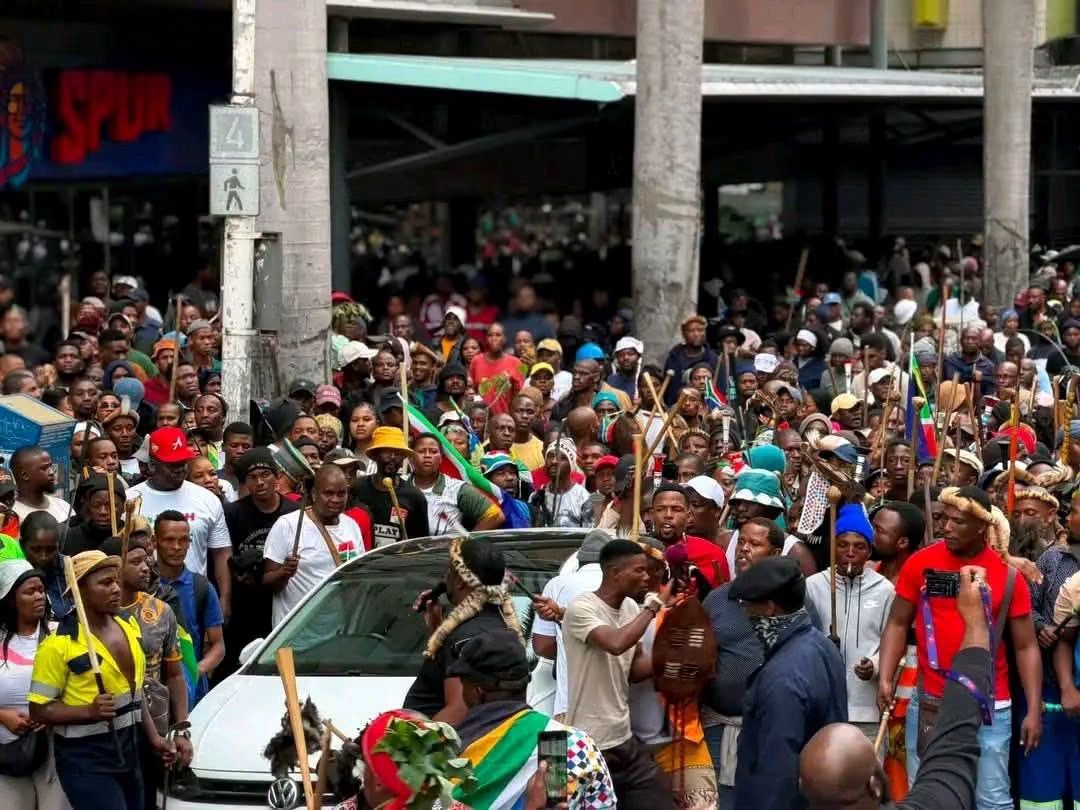
Since this morning, South African police have been deployed on Tuesday to prevent unrest and protests during the unofficial deadline set by citizen-led groups for illegal immigrants to leave, which has already prompted thousands to flee.
Officers were deployed in large numbers to prevent expected violence during the day, while hundreds of foreign nationals fled to several cities, urgently seeking help to leave.
Migrants killed as protests escalate
At least two Mozambicans, one Ethiopian and one Malawian have been killed in anti-immigrant violence in recent weeks, and several African governments have organized flights or buses to bring their citizens home.
“I decided to go to avoid being attacked,” said Peter Madswan, a 45-year-old Malawian, who was among the thousands of people who gathered in the coastal city of Durban on Monday waiting for a bus to take him home.
The construction worker added: “I am the sole provider for my family in Malawi, and it is better for me to go rather than die in South Africa.”.