The opposition coalition challenges the Congolese president over potential constitutional reform.
The opposition in Congo
Written by Ziad Abdel Fattah:
Political tensions are escalating in the Democratic Republic of Congo as the main opposition parties form a new coalition against a potential constitutional amendment proposed by Felix Bako's government. ChiskidiPresident of Congo.
Accusation of attempting to extend Tshisekedi's term in office
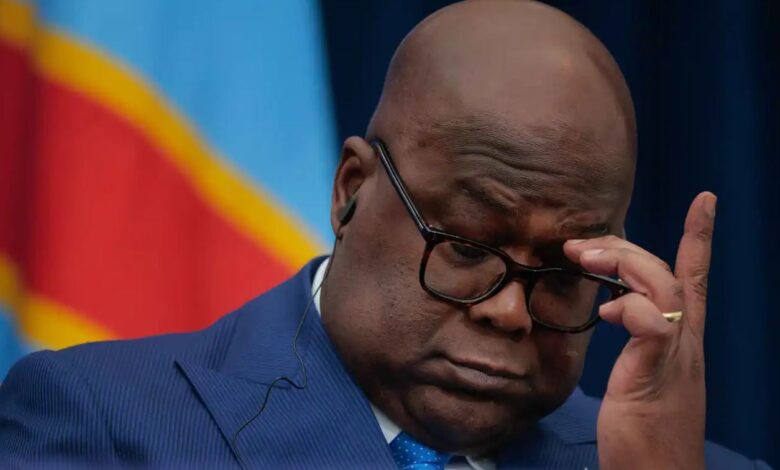
During a press conference in Kinshasa, opposition leaders accused the government of trying to extend Tshisekedi's rule beyond the constitutional limit of two terms, and the coalition described the proposed reforms as a threat to democracy ahead of the upcoming elections.
Nicolas Lenga, an official from the opposition party, strongly criticized the government, describing the constitutional initiative as “an act of rebellion against the republic and a declaration of war on the Congolese people.”.
Lenga also urged citizens to defend the constitution, citing Article 64, which calls on the Congolese people to resist any individual or group exercising power in violation of constitutional provisions.
Tshisekedi seeks a third term
This political dispute follows recent statements by Tshisekedi indicating that he may seek a third term after his current term ends in 2028 through a national referendum, despite constitutional restrictions.
Tshisekedi warned that the elections could face delays due to the ongoing conflict in eastern Democratic Republic of Congo, where M23 rebels have seized key areas, including the cities of Goma and Bukavu in North and South Kivu provinces.
Emergency operations in eastern Congo
In another context, the World Health Organization intensified its emergency operations in the eastern part of the republic. Congo Democracy after the country recorded 136 deaths and about 543 suspected cases of Ebola, according to Health Minister Samuel Roger Kamba, while medical supplies and international experts arrive in Bunia as authorities battle the rapidly spreading Bundibugyo strain, for which there is currently no approved vaccine or treatment.
The World Health Organization delivered 12 tons of emergency medical supplies to Bunia in Ituri province, the epicenter of the outbreak near the borders with Uganda and South Sudan.
The shipment included personal protective equipment, infection prevention kits, tents, and medical supplies for frontline health workers.
More than 40 medical experts arrived in Bunia on May 19 to bolster the response, while footage released by Doctors Without Borders, also known as MSF, showed the unloading of additional emergency supplies as aid agencies stepped up their efforts to contain the virus.