The strangest fossil discovery in Libya: a monkey that lived 39 million years ago
Ahmed Salem
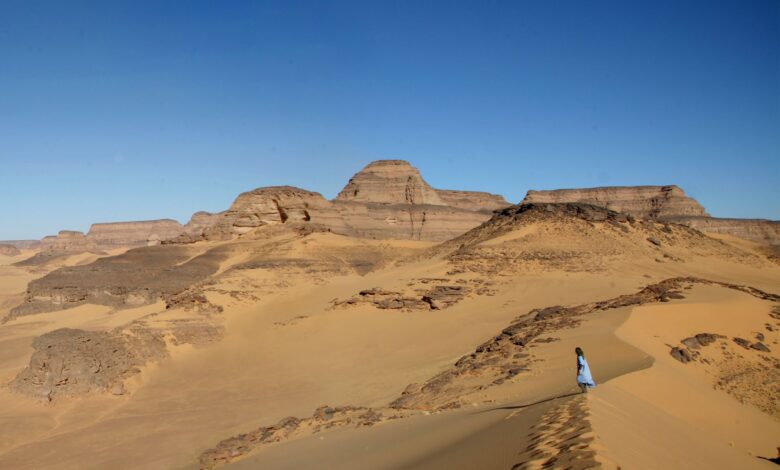
The Dur al-Tallah site in the Sirte Basin in central Libya is one of the sites rich in fossils, which is of exceptional importance among its counterparts in that region.
Researchers have discovered a remarkably distinctive fossil, so much so that it could be described as “the strangest ape in the fossil record known to scientists,” in a stunning discovery that reshapes the scientific understanding of ape evolution.
The strange fossil, recently announced in the issue of the Journal of Human Evolution, was different and was named Sahrapithecus salmi.
The Dur al-Talh area had previously witnessed the extraction of 3 monkey fossils by international research teams, but the fourth fossil was discovered by a French research team in cooperation with Dr. Osama Hilal from the Geology Department at the Faculty of Science, University of Tripoli, from the same area, and Dr. Awad Bilal from the Earth Sciences Department at the Faculty of Science, University of Benghazi.
History of the fossil Sahrapithecus salmi
Researchers estimate that Sahrapithecus salmi lived about 38 to 39 million years ago during the Eocene epoch.
According to the study, the fossil exhibits a unique combination of primitive and advanced dental characteristics, which clearly do not match any known group of African or Asian higher primates.
Discovery of a treasure trove of vital minerals in Namibia
On another front, it is witnessing NamibiaThis is a new step towards strengthening its position in the global vital minerals market, after exploration work in the “Owes” project in the Irongo region revealed promising results, confirming the existence of a wide mineral corridor rich in many strategic minerals used in modern industries and clean energy technologies.
The discovery of multiple minerals enhances investment opportunities.
Askar Metals Limited announced that exploration work at the “K9” pegmatite target within the Owais Multi-Mineral Project has revealed a continuous mineral extension of approximately 950 meters, which enhances the prospects for a large economic deposit of high strategic value.
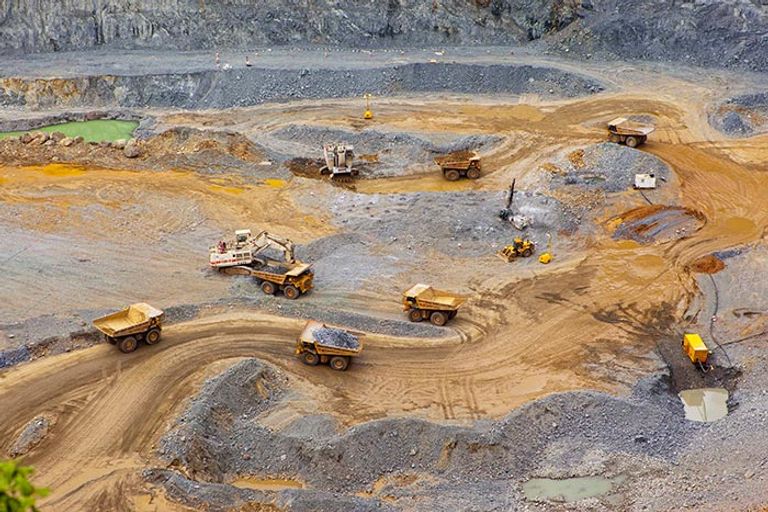
The drilling results revealed remarkable concentrations of tin, lithium, tantalum, rubidium and cesium, elements that are gaining increasing importance in advanced technology industries, particularly in the production of batteries, electric vehicles and renewable energy systems.
Promising results that support the future of the project
Samples extracted from the site showed high levels of the discovered metals, with some results recording up to 4050 parts per million of tin, 0.29% of lithium oxide, 215 parts per million of tantalum, in addition to 2380 parts per million of rubidium and 479 parts per million of cesium.
These results came after the implementation of a systematic drilling program at regular intervals of 40 meters between drilling points, which allowed for a more accurate picture of the size and continuity of the mineral system within the targeted area.
Gino Danna, the company’s CEO, confirmed that the results of the first phase of exploration have strengthened confidence in the quality and size of the mineralization within the K9 area, noting that current data support the hypothesis of a continuous, high-quality mineral corridor, rather than separate clusters of ore.
He explained that this development reduces the risks associated with future drilling operations and increases the project's attractiveness to investors seeking opportunities in the bio-minerals sector.
The Owais project is located within the Cape Cross-Owais pegmatite belt, one of the world’s most prominent tin, lithium and tantalum-rich geological basins. The project also enjoys a strategic location close to Walvis Bay port and the active Owais tin mine.
With the rapidly rising global demand for vital minerals driven by the expansion of the electric vehicle industry and clean energy technologies, Namibia appears well-positioned to solidify its role as a major African hub for securing the mineral resources needed for the economy of the future.