Head of the Climate Change Information Center for ”Zoom Africa News”: Africa faces an unprecedented climate test with “Godzilla El Niño.”
Widespread climatic disturbances affecting the agriculture, water resources, energy, and food security sectors.
Interview by: Mohammed Omran
The African continent faces a growing climate challenge with increasing warnings of developments El Niño phenomenonwhich some media followers describe as ”Junior Godzilla” when it reaches exceptional levels of power, amid fears that it could lead to widespread climate disruptions affecting agriculture, water resources, energy, and food security sectors, at a time when many African countries suffer from fragile infrastructure and weak capacity to adapt to climate shocks.
Head of the Climate Change Information Center for Zoom Africa News: Africa faces an unprecedented climate test with «Godzilla Niño»
The repercussions of the phenomenon vary across the continent's regions. Some countries are expected to face severe droughts that will affect agricultural production, while other countries may experience heavy rains and floods that increase the risks of disease outbreaks and population displacement, putting African governments to a real test of their ability to manage one of the most dangerous climatic phenomena in recent years.
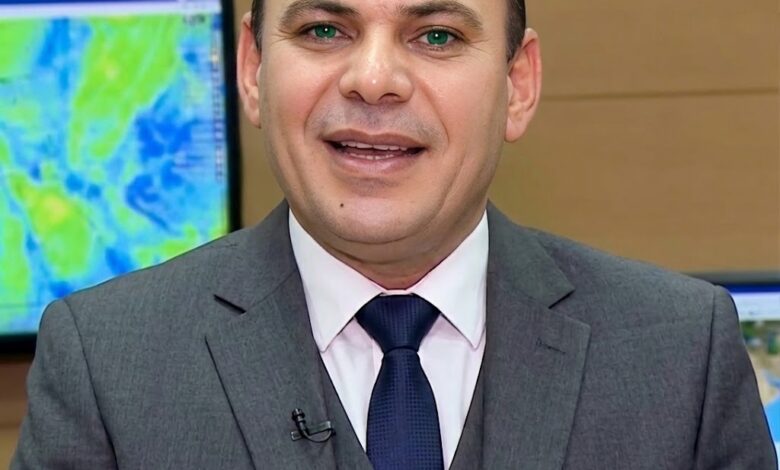
Amidst these challenges, Zoom Africa News interviewed Professor Mohamed Ali Fahim, head of the Climate Change Information Center at the Agricultural Research Center, to understand the reality of the risks associated with the El Niño phenomenon, the most prominent expected scenarios for the continent, its repercussions on food security and the economy, and the urgent measures required to reduce the extent of losses and enhance the capacity of African countries to confront its consequences.
Here is the text of the dialogue:

Is Africa facing a climate disaster as the «Godzilla» El Niño approaches?
As the world braces for major climate shifts, all eyes are turning to the African continent, which finds itself once again in the “eye of the storm.” This time, the challenge is not just a dry season or passing floods, but a climate monster that scientists and experts are calling “Godzilla El Niño,” due to its exceptional power that threatens to undermine years of fragile development in Africa.
To what extent is the El Niño phenomenon a «Godzilla»-like threat in recent years to the African continent?
The current El Niño is classified as one of the five strongest events on record in decades. Its danger lies in the fact that it comes at a time when the Earth has recorded its highest temperatures in recent history.
What scientific indicators confirm that this El Niño variation will be stronger than previous ones?
Scientific indicators, represented by record-high sea surface temperatures in the eastern and central Pacific Ocean, and changes in trade wind patterns, confirm that this version possesses a destructive power exceeding its predecessors in 1997 and 2015.
How do you explain the contradiction between droughts in some areas and floods in others?
Some may wonder how the same phenomenon can burn crops in the south and flood cities in the east. The scientific explanation lies in “teleconnections”; El Niño leads to the displacement of rain paths and air masses.
How does this phenomenon affect the regions of the African continent?
In East Africa, Ethiopia, Kenya, and Somalia, warming Indian Ocean waters are causing torrential rains and floods.
In Southern Africa (Zimbabwe, Zambia, South Africa), the phenomenon suppresses rainfall, leading to drought and stifling heat waves.
What are the most dangerous scenarios Africa could face in the coming months?
The numbers are not promising; in some Southern African countries, there are expectations of losing entire agricultural seasons. These are not just expectations, but a reality that has begun to assert itself with the delayed rainfall in strategic corn-growing regions.
Can the crisis reach the point of losing entire agricultural seasons in some countries?
Yes, in some southern African countries, there are expectations of losing entire agricultural seasons, as rainfall continues to be delayed in strategic maize-growing regions.
Agriculture, water, or energy? Which sectors will be most directly affected?
Although agriculture is the hardest-hit sector (since 80% of Africa’s agriculture is rain-fed), the energy sector is not far behind, as countries such as Zambia and Ethiopia rely on hydroelectric dams whose water levels are threatened by drought, which would lead to power outages in cities and a halt to industrial activity.

To what extent does this situation threaten the food security of millions of people on the continent?
“Baby Godzilla,” as it's called, threatens to push millions of people toward poverty and hunger. With supply chains disrupted and global food prices rising, securing a loaf of bread becomes an existential challenge.
How can expected floods lead to health crises such as cholera and epidemics?
Regarding health, the anticipated floods are not just excess water, but a breeding ground for diseases. The mixing of drinking water with sewage will inevitably lead to the outbreak of cholera, while stagnant water provides an ideal environment for disease vectors such as malaria and dengue fever.
Do African countries have the actual capacity for a rapid response to such shocks?
Most African countries have plans on paper, but the actual capacity to respond remains limited.
Where do the greatest weaknesses lie: in infrastructure or in the lack of early planning?
The fatal weakness lies not only in the lack of planning but in the dilapidated infrastructure. Dams are unprepared for major floods, and roads connecting farms to markets collapse at the first storm.
What is the size of the role required from international organizations at this critical stage?
Adaptation finance remains shameful, with the international community focusing on emissions reduction, to which Africa contributes minimally, while neglecting financing for survival and disaster management on the continent.
Why is climate adaptation finance still limited despite increasing risks?
Because the international community continues to focus the majority of its attention on reducing emissions, while Africa, despite its limited contribution to these emissions, is more in need of funding for adaptation programs, disaster management, and strengthening resilience to climate change.
What urgent measures should African governments take in the coming weeks?
The time has not fully passed, but the window of opportunity is narrowing. African governments must take “surgical” steps within weeks, including providing proactive compensation to farmers to encourage them to plant short-cycle or drought-resistant crops, clearing canals and bridges in flood-prone areas to reduce human losses, and stocking medicines and vaccines in remote areas before they are cut off by water.

Can the current El Niño be considered a warning bell for more severe climate crises in the future?
The “Nino Godzilla” is not just a passing event, but a “rehearsal” for what the future will be like in the face of accelerating climate change.
Amidst all these warnings, can Africa truly mitigate the disaster, or is the time too close for any real preparation?
Africa can reduce the scale of the disaster if it moves as one bloc to demand ”climate justice” from the international community, and if governments prioritize “early hedging” over “late reaction.”.
What is your final message regarding the continent's future in the face of this phenomenon?
The continent is not only facing a climatic phenomenon, but also a test of its resilience. Will “Godzilla” be the cause of a comprehensive planning renaissance, or will it be the straw that breaks the camel's back of African food security? The answer will be determined in the coming weeks.