Zambia Heads to Crucial Elections; Economy Gives Hichilema the Edge
The opposition is betting on the cost of living crisis.
Written by Ziad Abdel Fattah:
All eyes are on Zambia as it approaches Presidential elections Scheduled for next August, in a race expected to give President Hakainde Hichilema a strong chance of winning a second term, he faces a growing challenge from opposition leader Brian Mundubile, who seeks to capitalize on public discontent stemming from the rising cost of living, despite improved economic indicators.
The elections are turning into a referendum on President Hichilema's economic performance since he came to power in 2021, when he took over the administration of the country amid a severe financial crisis after Zambia defaulted on its sovereign debt.
Debt restructuring and rising copper prices boost the economy.
In recent years, the Zambian economy has benefited from debt restructuring and rising copper prices—copper being the backbone of the economy, as Zambia is Africa’s second-largest copper producer. This has contributed to an economic recovery reflected in a number of key indicators, including a decline in the annual inflation rate to 6.5% last June—the lowest level in more than eight years.
Despite this improvement, a large segment of citizens still insists that living conditions have not seen a tangible change, with continued pressure related to the rise in the prices of goods and services, an issue that the opposition is focusing on in its election campaign.
Many families need support.
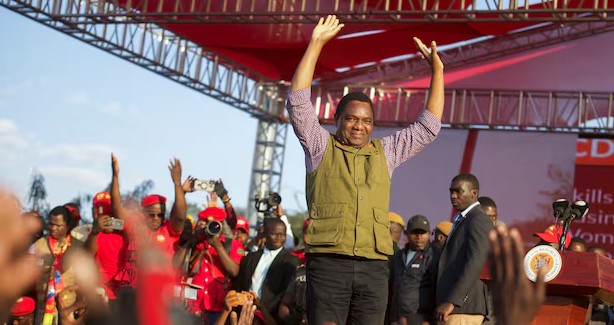
During the launch of his election campaign in the capital, Lusaka, Hichilema acknowledged that many families still need more support, stressing that his government recognizes the scale of the challenges facing citizens and is striving to address them.
Hichilema, 64, is contesting the elections after achieving a landslide victory in the 2021 elections over the late president Edgar Lungu, while Brian Mundubile, a 55-year-old lawyer and former member of parliament, has emerged as a key contender for the first time, after opposition forces succeeded in uniting behind him.
In contrast, the government faces criticism from the opposition and civil society organizations, which accuse it of restricting political activity and narrowing public freedoms, accusations that the authorities deny.
The Cybercrime Law raises human rights concerns
The cybercrime law, approved in 2025, also raised human rights concerns due to what civil society organizations described as its vague wording, considering it could limit online freedom of expression. Similarly, the constitutional amendments signed by the President last December were criticized, as opponents believe they could give the ruling party a political advantage by expanding the number of parliamentary seats.
Mundobi accused the authorities of cracking down on the opposition, stressing that its electoral activities faced obstacles and that some of its meetings were disrupted by the police.
Despite this criticism, opinion polls indicate that Hichilema continues to lead. A poll conducted by the Zambia Election Research Network late last year showed that 55% of respondents intended to vote for the incumbent president, while 51% expected the election to be free and fair, noting that the poll was conducted before the official announcement of Mondobele’s campaign.
Analysts believe the opposition should not underestimate its chances, despite being late in mobilizing its supporters and organizing its campaign, especially with the escalating debate over living conditions.
Hichilema also benefits from the advantages of incumbency, both in terms of logistical capabilities and government resources, at a time when his rivals rely on traveling by land across a country that is roughly three times the size of the United Kingdom.
Economic indicators are supporting the current president’s campaign, as the International Monetary Fund expects Zambia’s economy to grow by 4.3% this year, compared to 3.8% last year, alongside an improvement in foreign investment inflows.
But Mundubil insists that these figures do not reflect the reality faced by the Zambian citizen, considering that the improvement in foreign reserves and economic indicators has not been reflected in the population's living standards, with many continuing to suffer from poverty and high living costs.