Written by: Mohammed Omran
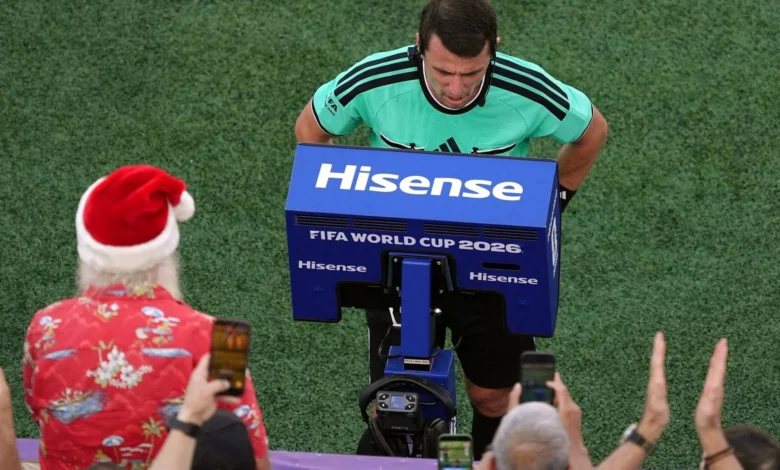
The expansion in the use of video assistant referees (VAR) during competitions World Cup 2026 widespread controversy, as tools such as the Video Assistant Referee (VAR) technology have become a major focus of discussions and objections, rather than putting an end to refereeing disputes as was hoped.
The tournament saw unprecedented Video Assistant Referee (VAR) interventions, exceeding the total number of interventions recorded in the 2018 and 2022 editions combined. This follows the International Football Association Board's (IFAB), in collaboration with FIFA, adoption of four new areas allowing VAR officials to intervene in matches.

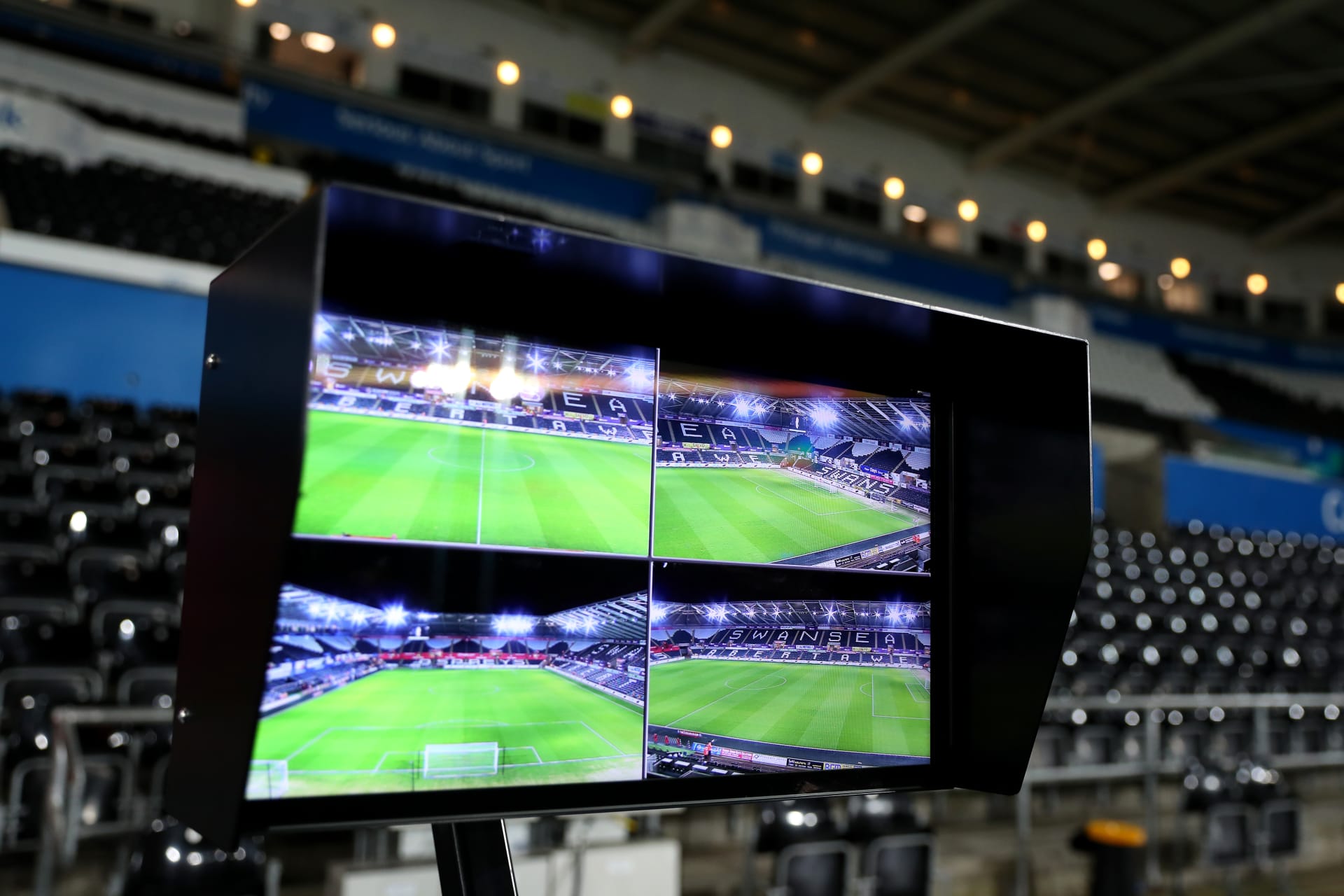
VAR technology under fire
Technology-assisted refereeing decisions have faced increasing criticism from players, coaches, and fans, who believe that expanding the powers of VAR technology has led to a loss of consistency in its application and opened the door to more controversy rather than reducing it.
Among the most controversial incidents was the disallowance of Egypt's goal against Argentina in the round of 16, after a video review showed a foul occurred before the goal was scored. This decision angered Egypt's head coach, Hossam Hassan, who stated after the match that what happened was “unfair.”.
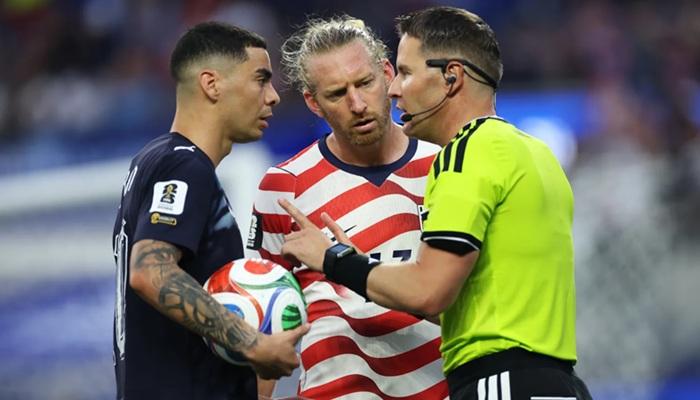
The controversial cases also included the red card shown to American striker Folarin Balogun, an incident that resonated beyond the stadiums, after American President Donald Trump revealed he had contacted FIFA President Gianni Infantino demanding a review of the penalty.
FIFA defends the changes
In contrast, FIFA's Head of Referees, Pierluigi Collina, defended the new approach, stressing that any infringement affecting the flow of play warrants review, regardless of its temporal or spatial distance from the goal being scored.
He explained that the goal of expanding video technology's powers is to achieve the greatest possible arbitration fairness, noting that there is no specific distance or time limit that prevents reviewing any violation that affected the attack.

Record interventions
The tournament showed a marked increase in the number of VAR reviews compared to previous editions, which observers considered a direct result of the new adjustments that came into effect before the start of the World Cup.
The number of red cards also rose sharply, with 13 players being sent off in the tournament up to the end of the Round of 16, compared to much lower numbers in the previous two editions. Several of those decisions were the result of direct intervention from VAR technology.
Experts: Technology has surpassed its primary goal
A number of arbitration and sports data analysis experts believe that the expanded use of technology has begun to go beyond its intended purpose, which was to correct only obvious errors.
Brennan Klein, a researcher in mathematical data science, pointed out that over-reviewing replays reduces the flow of matches and affects the experience of fans in stadiums, considering that fans are now expressing their rejection of this approach through boos.
Objections from national teams
Objections extended to a number of teams, including Croatia, which demanded an explanation from FIFA regarding the decision to disallow a goal against Portugal after an extremely slight touch was detected by the electronic sensor inside the ball, and the Croatian Football Federation described the decision as “a misuse of technology.”.
England manager Thomas Tuchel also criticized some of the decisions made by VAR, considering that the review of some cases was not based on clear errors that warranted intervention, which revived the debate about the limits of using technology in football.
Despite FIFA's confirmation that the new amendments aim to enhance refereeing fairness, the ongoing controversy during the 2026 World Cup reflects the continued division regarding the extent of technology's impact on match flow, amidst increasing demands for re-evaluating VAR intervention mechanisms to strike a balance between accuracy and game fluidity.