African art shines at the Venice Biennale for the first time
Somalia, Ethiopia, and South Africa tell their stories
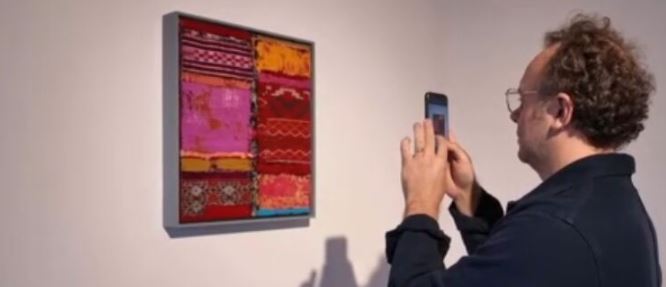
Written by: Hussein Ahmed
In the heart of Venice, behind the doors of a building, the Somali pavilion at the Venice Biennale has a unique artistic character that reflects the spirit of this African country for the first time in the history of the exhibition.
The dedicated room within the pavilion was designed to resemble a typical Somali living room, allowing visitors to experience firsthand the country's atmosphere and culture.
Somalia, Ethiopia, and South Africa tell their stories
Poetry is the cornerstone of this artistic presentation, illustrating the social and historical values of the Somali people.
According to television reports, Mohammed Mir, the pavilion's artistic director, says: Poetry is a very important means of conveying messages and formulating ideas; it is the way that enables successive generations to pass on knowledge and stories.
Poetry is the backbone of the social and historical structures in Somalia.
The Somali artists Ayaan Farah, Asma Jama’a and Warsan Shire are participating in the pavilion, which is located in the three-story Caputo Palace, between the Giardini and Arsenale districts.
Ayaan Farah explains: "I tend towards quiet, contemplative works, and I want to draw the viewer into the environment I create, even if they aren't physically present there. My focus is on the relationship between humans and nature, and how nature influences and is influenced by humans.".
In the Senegalese pavilion, gold occupies the center of artist Caroline Gueye's research, where visitors are invited to reflect on the value that humans place on this precious metal, linked to Senegal's history, and how this perception can change.
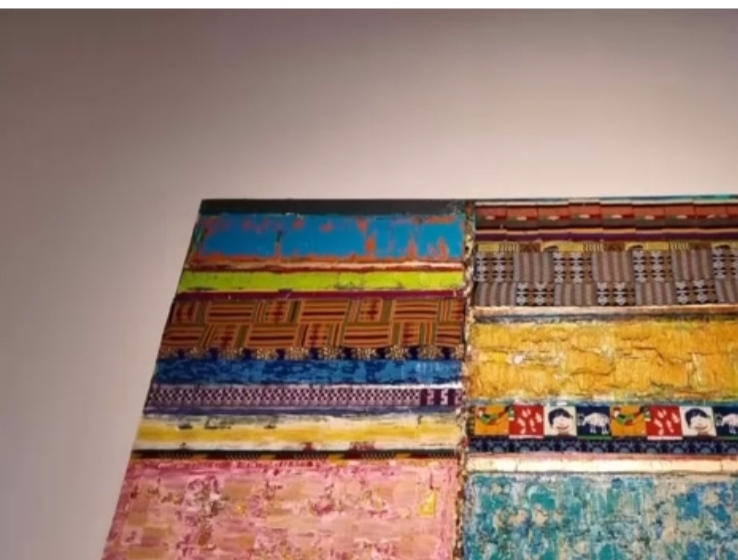
As curator Massamba Mbaye says, art can reflect and reshape perspectives. Gold, by its very nature, has value, and values are what drive people to fight over it. But why do they fight? Simply because of their own perceptions.
The Ethiopian pavilion, in its second participation in the Biennale, presents the works of artist Tejin Konbe, which depict silence as a social and political condition, through huge abstract works full of colors.
Conby explains: Silence is not absence, but presence. Abstract works represent the form and color of silence.
In South Africa, artist Gabrielle Goliath faced the threat of having her work cancelled because it included a tribute to Palestinian poet Hiba Abu Nada, but thanks to artistic and popular support, she was finally able to exhibit her work in the Church of St. Antonin in Venice.
This biennial experience reflects the diversity of African art, from poetry to abstraction, and from gold to politics, affirming that art is a bridge to understanding the cultures and deep stories of Africa.