The Moroccan Sahara: Its Historical and Geopolitical Dimensions, in a book by the Moroccan Ambassador to Senegal
Written by: Ayman Ragab
In a formal atmosphere characterized by an exchange of views among political and diplomatic figures, as well as members of the academic and research communities, the Moroccan Ambassador to Senegal, Hassan Naciri, presented his book, "The Moroccan Sahara: The Geopolitical Stakes of a Key Issue for Morocco," on Monday, July 27, in Dakar. The book, which includes a foreword by former Senegalese Prime Minister and former President of the National Assembly, Moustapha Niasse, offers a historical, legal, geopolitical, and security analysis of one of the pivotal issues for the Kingdom of Morocco.
The presentation ceremony was attended by members of the diplomatic corps accredited in Dakar, former political figures, researchers and academics, as well as a number of prominent figures from various fields, in a meeting dominated by an atmosphere of dialogue and discussion.
A multi-dimensional reading of the Western Sahara issue
The book presents a multi-dimensional reading of the Moroccan Sahara issue, as the author addresses it from the angles of history, law, diplomacy, geopolitical economy, as well as security issues, thus contributing to understanding the various dimensions of this file, which occupies a central place in Moroccan foreign policy.
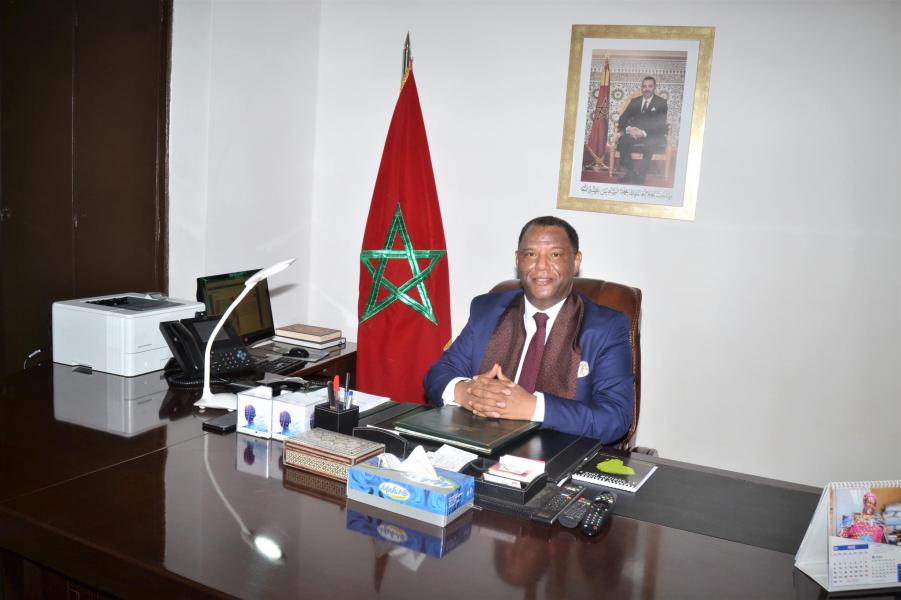
Hassan al-Nasiri explained in his speech during the ceremony that his approach stems from the conviction that the Sahara issue cannot be reduced to a mere regional or border dispute.
He said: “The Sahara issue cannot be reduced to a simple border or regional dispute; it is linked to the history of the Moroccan state, its territorial integrity, its security, its development, and its African mission.”
In his book, the author reviews the history of Morocco and the path to completing its territorial unity after the colonial era, placing the Sahrawi issue in a historical context that he sees as linked to the repercussions of the colonial division and the gradual recovery of the lands.
Hassan al-Nasiri also adopts an organized approach based on four main axes, including the legal framework, the reality of the region and its population, the geopolitical dimensions related to regional and international power balances, in addition to the role of various actors.
He believes that the continuation of the conflict is primarily due to political and geopolitical considerations.
He said in this context: “The obstacle appears to be primarily political and geopolitical, relating to regional power dynamics, the legacy of the Cold War, competition for influence, security perceptions, as well as the difficulties that the Maghreb region still faces in establishing itself as an integrated space.”
Economic transformations in the southern regions
The book also addresses the economic transformations that the southern regions have witnessed, through investments in infrastructure, development projects, and the strategic location of the Sahara within the African and Atlantic spaces.
The author gives special importance to the security dimension, considering that the Sahara region is located at the intersection of the Sahel and Sahara space, and faces cross-border security challenges.
He said: “The stability of the Moroccan Sahara is not only a national security issue, but also a stabilizing factor for the Maghreb region, the Sahel, West Africa and the Atlantic space.”
In the final chapter of the book, the Moroccan diplomat discusses the role of the United Nations, the African Union, and various international parties in the developments of this issue. He also reviews the directives issued by King Mohammed VI regarding the matter, emphasizing the importance of adopting an approach based on consensus and reaching a lasting political solution.
Hassan Nassiri specifically referred to the position expressed by King Mohammed VI in his speech on October 31, 2025, in which he called for a solution that would “save face for all parties, without a winner or a loser.”
The Moroccan ambassador also expressed his pride in the trust bestowed upon him by King Mohammed VI to assume his diplomatic duties.
He said: “I extend my sincere thanks to His Majesty King Mohammed VI, may God help him, for the trust he has placed in me, which represents for me an honor and a responsibility, and a constant source of commitment to serving my country.”
strong relationships
The ceremony also included speeches by a number of participants, including Amadou Diop, the former Senegalese ambassador to the European Union, who reviewed the depth of the historical relations between Rabat and Dakar, recalling the role of the late King Hassan II in strengthening these ties.
The former Senegalese diplomat said: “The late King Hassan II embodied the friendship and brotherhood between the two peoples.”
Amadou Diop also recalled one of the symbolic moments in the last days of the late king’s life, which was attended by a number of international leaders.
He added: “Among those present were King Hussein of Jordan, President Yasser Arafat, and President Abdou Diouf, which reflects the depth of the relations that unite Senegal and Morocco.”
Through this meeting in Dakar, Hassan Naciri presented an analysis of the Moroccan Sahara issue based on the interplay of history, geopolitics, development, and security. He also provided an opportunity for dialogue and exchange of views between political and diplomatic officials and researchers on various issues related to this file.
AC/SF/APA