First country to reject monetary union: 4 reasons behind Guinea's withdrawal from the "Eco" project“
Ahmed Salem
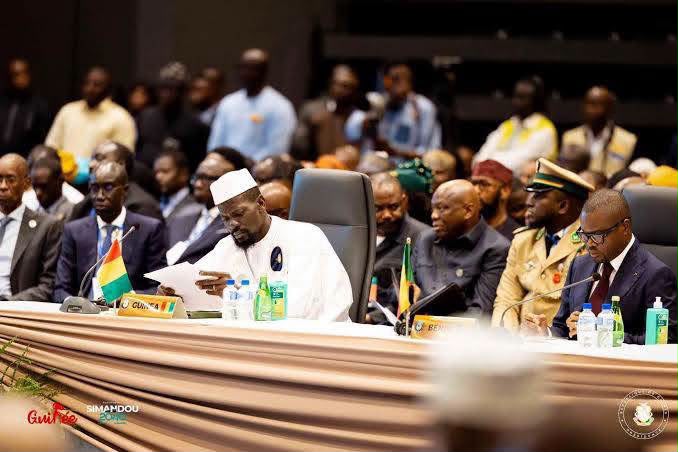
Guinea has officially announced its withdrawal from the planned single currency project (Eco) by the Economic Community of West African States (ECOWAS), thus becoming the first member state to officially reject the monetary union scheduled for July 2027.
Authorities in Mamadi Doumbouya's government confirmed that the country would retain its sovereign national currency, the Guinean franc, instead of adopting the new regional legal tender.
Protecting economic sovereignty
Government officials have stated their clear preference for the Guinean franc, stressing that maintaining an independent currency is crucial for preserving national sovereignty and managing their economic destiny.
Protecting local industries
Meanwhile, economists and policymakers have expressed concerns that joining a rigid monetary union before developing strong manufacturing and production capabilities could hinder local economic growth in Guinea.
Unequal foreign trade
Approximately 801 TP3T of Guinea's exports are destined for Asian markets rather than West Africa. Linking its financial system to neighboring countries offers little structural benefit to its main trade corridors.
Loss of monetary policy tools
Pegging or merging its currency with other West African countries would deprive Conakry of vital independent tools of influence, such as adjusting national interest rates and exchange rates to absorb external shocks.
Why did Guinea refuse?
Economic experts believe the decision reflects Guinea's fears of losing control over its monetary policy at a time when its economy still needs independent tools to manage inflation, the exchange rate, and support growth.
Analysts point out that the Guinean economy is heavily dependent on Asian markets, with approximately 801 TP3T of the country's exports going to Asia, rather than to West African countries, making the expected gains from joining the single currency less significant compared to countries whose trade is primarily linked to ECOWAS markets.
Economist Mohamed Camara also warned that pegging the Guinean franc to a regional currency could deprive the country of some of its ability to manage its economic and monetary policy independently.
Pressures facing the "Eco" project“
The “Eco” project is one of the largest economic integration projects on the continent, as it aims to create a single currency to facilitate intra-regional trade, reduce the costs of financial transfers, and promote investments between West African countries.
However, since its inception, the project has faced a series of delays due to the failure of most member states to meet the economic convergence criteria, in addition to the political and security challenges that the region has witnessed in recent years.