The backbone of the economy: Falling diamond prices in Botswana worsen the situation for workers.
Diamond prices decline in Botswana
Written by: Ayman Ragab
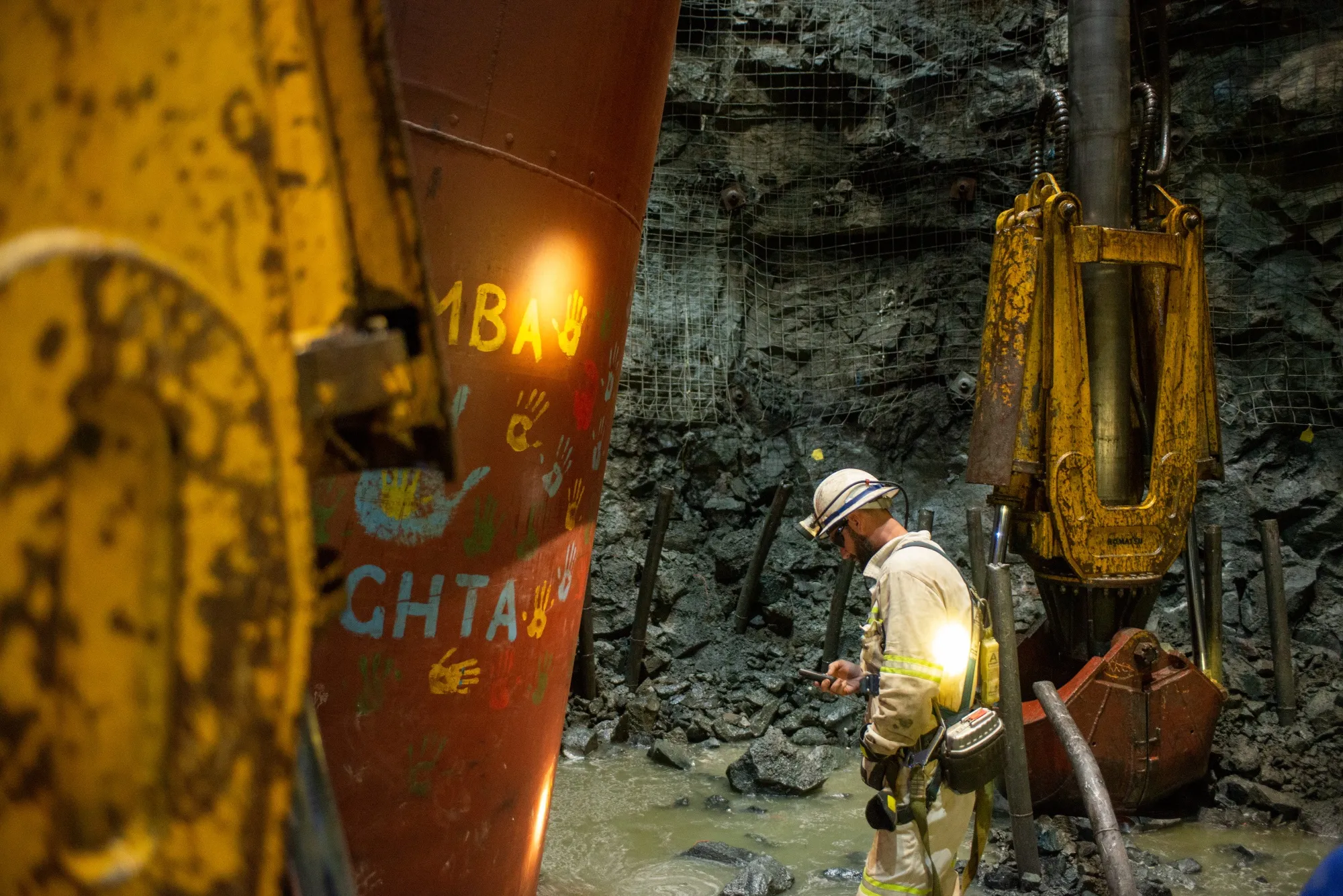
It has been a year since Muchwegwa Rakhudu lost his job after 14 years of working as an installation technician in diamond mining operations in Debswana, northern Botswana.
He says he was working under three-year renewable contracts with Enabler Hires (Limited), and expected the arrangement to continue until 2027.
Instead, he was laid off and made redundant without prior notice.
“The shock was extremely intense,” said Rajodo (not his real name).
In early 2025, I borrowed 26,000 pula (about US$1,900) to buy a car, assuming my job was secure. By mid-May, I found myself unemployed. The sudden layoff left me struggling with debt and household responsibilities, including tuition fees, without any compensation.
Botswana diamond crisis
“It was extremely difficult to be unprepared. Jobs are scarce, and even when job opportunities are available outside the mining sector, the pay is much lower. I am still looking for work,” he said.
Rachodo said he had considered farming or starting a small business, but lacked the capital. He added that selling his car would only cover the remaining loan payment.
He stated: “I would like to go into agriculture, but if I sell the car, the money will only pay off the loan.”.
A senior management official at Enabler Hires (Pty) Ltd, regarding the layoffs, said: ”I will not answer your questions about who gave you my number. I did not share my contact information with any journalists. It is not my right to share information.”.
These layoffs come at a time when Botswana’s diamond sector, which is the backbone of its economy, is experiencing a sharp slowdown.
Weak global demand
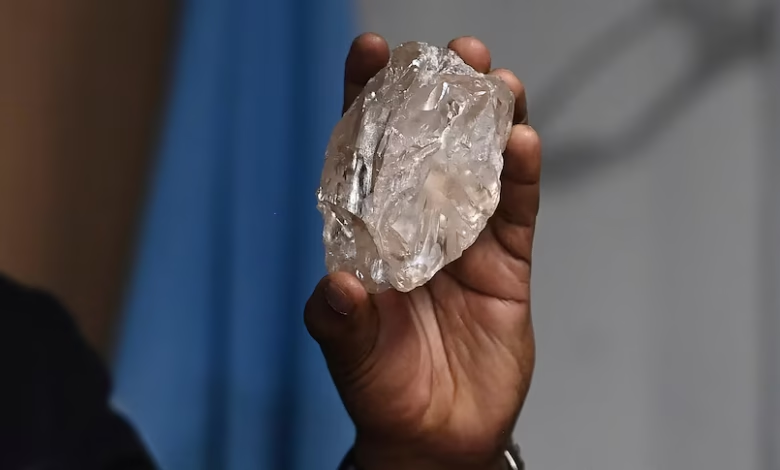
Debswana Diamonds, a joint venture between the government and De Beers, cut its production by about 27% in 2024 to 17.9 million carats amid weak global demand, and plans further reductions to about 15 million carats in 2025. The company accounts for approximately 90% of diamond sales in Botswana.
This slowdown has extended to the economy as a whole, with Botswana's output shrinking by about 5.3% in the second quarter of 2025, the biggest drop since the start of the pandemic, largely due to a decline in diamond production, according to Reuters.
Diamonds account for about 70% of export earnings and about a third of government revenue, according to Reuters and Standard & Poor's Global Ratings, which in 2025 downgraded Botswana's sovereign credit rating to BBB-, citing continued pressure from the global downturn in the diamond market and weak fiscal revenues.
“The decline of the diamond industry is no longer just a commercial problem; it is a humanitarian problem affecting workers, families, contractors, and entire mining communities,” said Mbgani Gaikgotswe, general secretary of the Botswana Mineworkers Union.
He said that uncertainty now dominates daily life.
He said: “The first question that comes to everyone’s mind is whether they will keep their jobs next year. Will contracts be renewed? Will overtime hours be reduced? These are not theoretical concerns; they affect tuition fees, loans, medical bills, and family responsibilities.”
Wage stagnation
Even in places where jobs still exist, the pressure is mounting as wages stagnate and food and transportation costs rise.
Beyond Diamonds: The Search for New Growth
Dominic Obosetsi Maboka, president of the Botswana Diamond Workers Union, said the restructuring process has already extended to contractors and service providers, with more workers being moved to short-term agreements.
He added, “Workers who are still employed are increasingly reliant on short-term or temporary contracts. This makes it difficult for families to plan because they do not know whether the contracts will be renewed or not.”.
He said many earn between $190 and $250 a month, while the cost of living continues to rise, negatively impacting small businesses associated with mining activity.
Since independence in 1966, Botswana’s diamond wealth has transformed what was once among the world’s poorest countries into a middle-income economy, helping to fund infrastructure, public services and sustainable growth.
However, this success has made the sector highly vulnerable to global shocks. The industry is currently facing pressure due to weak demand, competition from lab-grown diamonds, and declining spending on luxury goods in key markets, according to Standard & Poor's Global Ratings.
Levi Ndoye, a political scientist at Tshwane University of Technology, said the economic downturn reveals the dangers of economic concentration.
“When citizens become heavily dependent on a single sector, a decline in global demand becomes extremely damaging.”
He called for faster diversification in agriculture and beef production, along with strengthening regional trade ties.
absorbing job losses
Botswana's Minister of Labour and Home Affairs, Pius Mokgweets, said the government is responding to the crisis by trying to absorb job losses, including expanding copper mining and launching new projects. He added that economic diversification efforts are also targeting agriculture, tourism, and information and communication technology.
The Minister of Minerals and Energy, Bogolo Joy Kinwendo, did not respond to repeated requests for comment.
Chipo Modibidi, president of the Botswana Small-Scale Miners Association, said small operators are still largely excluded from the diamond value chain, which is dominated by large companies.
He said that although it was not directly involved in the diamond trade, the downturn was still spreading throughout the country.
He said: “Laboratory-grown diamonds and strict regulations present challenges, but they could also be opportunities if policies become more inclusive.”.
As for Rakhado, the structural shifts in the global diamond market are still far from being a daily occurrence.
He said: “I’m still looking. I just want another chance to work.”… (Al Jazeera)