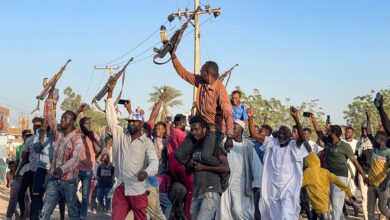
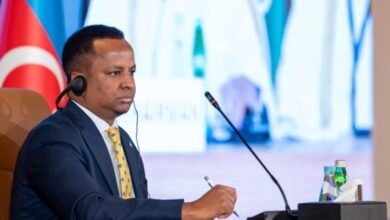
Following recent clashes, the political crisis in Somalia escalates amid an exchange of accusations.
Violent clashes in Mogadishu.
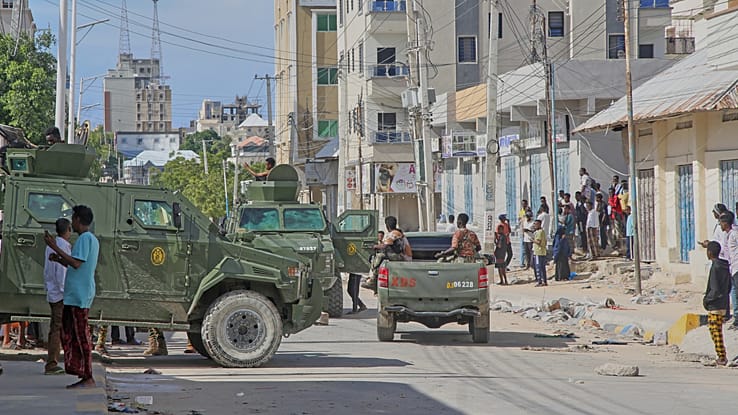
The political crisis in Somalia has entered a new phase of escalation, after former Somali President Sharif Sheikh Ahmed accused the federal government of intimidation and targeting its political opponents.
This comes after armed clashes in the capital, Mogadishu, between government forces and armed groups allied with the opposition.
These developments came ahead of protests that opposition forces were planning to organize in objection to the current president, Hassan Sheikh Mohamud, remaining in power after the end of his term, amid sharp disagreements over constitutional amendments and the future of the electoral process in the country.
Former president: Government forces attacked my home
Sharif Sheikh Ahmed said that government forces surrounded his house and directly targeted him during the clashes that broke out in the capital.
He argued that what happened was an attempt to intimidate opposition leaders and silence voices rejecting the recent political changes. He also accused the government of making “illegal” constitutional amendments aimed at extending the president’s stay in power.
In contrast, the Somali government did not immediately comment on these accusations, while security agencies confirmed that the events were the result of attacks carried out by organized armed groups, and were not related to preparations for peaceful demonstrations as the opposition claims.
Fighting in Mogadishu neighborhoods and displacement of civilians
Several neighborhoods in Mogadishu witnessed heavy exchanges of gunfire and the use of heavy weapons, prompting dozens of families to leave their homes in search of safer areas.
Local residents reported that shells fell on civilian homes and fires broke out in some buildings, amid fears of a worsening security situation.
Former Prime Minister Hassan Ali Khaire also accused government forces of using heavy weapons and drones in populated areas, allegations that could not be independently verified.
Disagreements over the constitution and elections
These clashes come at a time when Somalia is experiencing escalating political discord over constitutional reforms and the mechanism for holding upcoming elections.
The opposition accuses President Hassan Sheikh Mohamud of seeking to extend his term and postpone elections, while the government asserts that the amendments aim to complete the political reform process and move towards a more inclusive electoral system.
Observers believe that the continued political polarization could negatively impact efforts to address the security challenges facing the country, most notably the ongoing insurgency led by the armed al-Shabaab movement.
International calls for restraint
The clashes sparked widespread international concern, with the United States, the United Kingdom, and the United Nations all calling on all parties to exercise restraint and resort to dialogue to resolve political differences without resorting to violence.
These parties also stressed the need to maintain the stability of Somalia and avoid any steps that could lead to further tension and division.