The alliance of necessity is besieging Bamako... Is the military council in Mali about to collapse?
A sudden siege in the heart of the capital
Written by Omnia Hassan
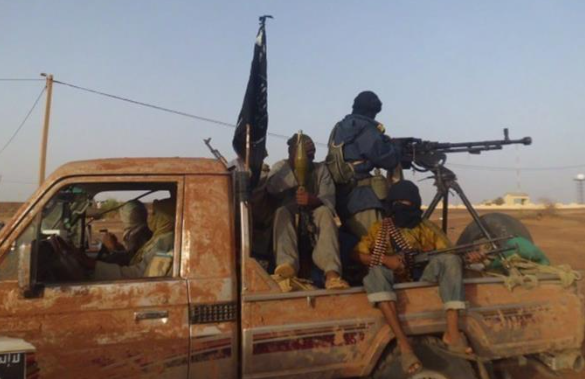
The group imposed terroristThe pro-Al-Qaeda group, in cooperation with the “Azawad Liberation Front,” which includes fighters from the Tuareg and Arab tribes demanding the secession of the north, laid siege to the Malian capital, Bamako.
This development comes after coordinated attacks that killed the defense minister. Sadio Camara The fall of the northern city of Kidal represents the most serious test facing the military council since its 2020 coup.
Map of the North-South conflict
Mali is divided between a strong center in the south, represented by Bamako and Kati, where the interim president Assimi Goïta is holed up, and a north partially controlled by rebels.
The fall of Kidal re-establishes a new political and military reality, and threatens to cut off vital routes between the north and south, as groups seek to control other strategic cities such as Gao and Menaka.
An alliance of necessity: shared goals without ideological integration.
The alliance between “Nusrat al-Islam” and the Azawad Liberation Front is formed from practical interests, as the former seeks to impose a transnational ideological project, while the latter demands national secession for the Tuareg.
Recent reports indicate that the attacks are no longer just a military conflict, but aim to disrupt the state’s ability to function by controlling roads and supplies to the capital.
Russian partner under pressure
The military council has relied on Russia since 2021 after the withdrawal of French forces, but the killing of the defense minister and the abandonment of Kidal to the Russian legion following negotiations with the opposition weakened this support.
Russia’s presence in Mali remains controversial, while armed groups focus their messages on the ruling regime in Bamako and not directly on Moscow.
Survival and collapse scenarios
Despite the rebels' statements that the fall of the capital is only a matter of time, experts believe that Bamako will not fall easily due to its high population density and the shortage of fighters from armed groups.
These groups are using a “strangulation” strategy instead of a direct incursion, with the aim of creating conditions for the collapse of the military council or its political overthrow, while strengthening support among some elements of the army for a possible consensus candidate, General Malik Diaw.
Faced with this challenge, President Goita appeared in a televised address asserting that “the situation is under control,” and calling for a “national uprising” to bolster the legitimacy of his government amid a siege that threatens the survival of power in the heart of Mali.