Mozambique: Tobacco exports to rise by 16% in 2025 despite declining production
The country's main exports...

Tobacco exports in Mozambique increased by 16% during 2025, reaching $258.3 million, equivalent to €224.5 million, according to data from the Bank of Mozambique.
Tobacco exports in Mozambique
The bank’s report, which monitors foreign trade performance from January to December, explained that the value of tobacco exports increased compared to $217.2 million (€189 million) in 2024, and $154.2 million (€134 million) in 2023.
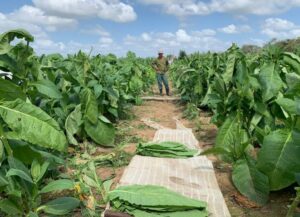
Tobacco is one of the country’s most important cash crops, despite expectations that production will decline to 72,380 tons in 2025, compared to 92,343 tons in 2024, from a total agricultural area estimated at about 71,000 hectares.
Tobacco cultivation in Mozambique
In a related context, a government report on the implementation of the 2025 budget indicated that the value of tobacco production amounted to 7,255 million meticals (98.7 million euros), a decrease of 4.1% compared to 7,567 million meticals (103 million euros) in 2024.
The tobacco sector in Mozambique is dominated by two main companies:
Mozambique Leaf Tobacco
Sociedade Agrícola de Tabaco
The government had warned of the repercussions of declining production on tax revenues, especially after British American Tobacco moved to South Africa.

At the level of agricultural production, the area of tobacco cultivation during the 2022-2023 season reached about 76,850 hectares, with a production of 65,856 tons, registering a decrease of 15% compared to the previous season.
According to a report issued by the World Health Organization in 2023, Mozambique ranks eighth globally in terms of tobacco cultivation area, with about 91,469 hectares, and is the third largest producer in Africa after Zimbabwe and Malawi.
The report noted that Brazil and Mozambique are the only two countries within the CPLP (Portuguese-Speaking Countries Group) listed among the top 50 countries in terms of tobacco-growing area globally.
It is worth noting that tobacco, which was previously classified as a medicinal plant, is now facing increasing criticism and policy measures that limit its widespread use, amid growing global awareness of its health risks.