Egyptian agriculture sends out African envoys to address climate change and protect food security
They represent 12 African countries.
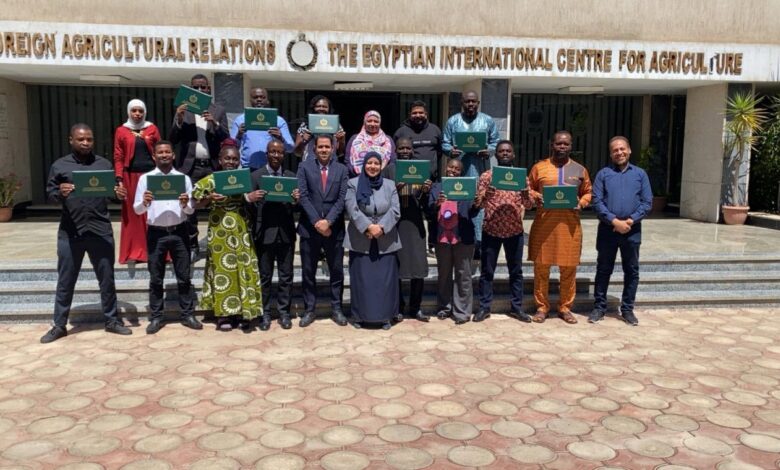
The Ministry witnessed Agriculture The Egyptian Land Reclamation and Land Reclamation program held its closing ceremony for the international training program and the new batch of African delegates, organized by the Egyptian International Center for Agriculture and Foreign Agricultural Relations under the title “Climate Change and its Impact on Food Security”.
This program comes in implementation of the directives of Alaa Farouk, Minister of Agriculture and Land Reclamation, to enhance agricultural cooperation with African countries, transfer Egyptian technical expertise, and activate cooperation protocols with the Egyptian Agency for Partnership for Development affiliated with the Ministry of Foreign Affairs.
Graduation certificates were awarded to 12 trainees.
The ceremony included the awarding of graduation certificates to 12 trainees representing 12 African countries: Somalia, Tanzania, Comoros, Zambia, Sierra Leone, Ghana, Guinea, Liberia, Malawi, Mali, Madagascar, and Mozambique, following a two-week program. The program focused on developing the skills of African personnel in addressing climate change through adaptation strategies, modern irrigation systems, soilless agriculture, and studying the impact of climate on pests and water requirements.
The program also included field visits to vital centers such as the Early Warning Unit at the Agricultural Research Center in Giza, the Directorate of Agriculture in Alexandria, protected agriculture projects in Al-Bustan Monitoring, in addition to the “Sail” project to monitor the effects of climate on animal production.
Egypt's leading role in transferring agricultural expertise and technology
Dr. Saad Moussa, Deputy Director of the Agricultural Research Center for Research and Supervisor of Foreign Agricultural Relations, affirmed that the program reflects Egypt’s leading role in transferring agricultural expertise and technology to its African brothers, noting that these programs aim to equip trainees with practical skills and realistic, implementable solutions to ensure food security.
He added that the early warning and smart agriculture technologies that were transferred represent a “bulwark” for African countries to face climate fluctuations, stressing that the graduation of this batch adds a new network of African experts capable of leading change and achieving sustainable self-sufficiency in their countries.