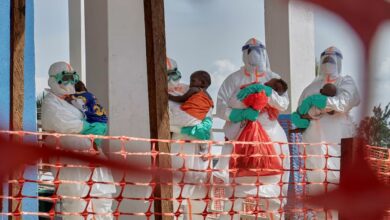
The silent virus... Ebola: A threat to humanity and a history written in blood
Viral epidemics are the biggest challenge to global health security.
Written by Mohamed Ragab
In a world where distances are shrinking and borders are blurring, viral epidemics remain one of the biggest challenges facing global health security. Among these epidemics, the Ebola virus stands out as one of the deadliest and most terrifying viruses in modern history. It is not just a passing disease, but a hemorrhagic fever that has shattered entire health systems and proven that one minute of complacency in the face of epidemics can cost humanity thousands of lives.
The danger of the virus
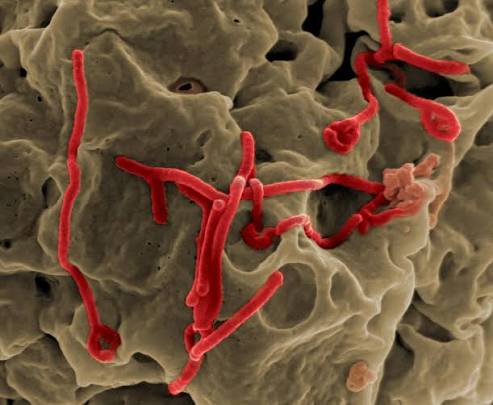
The extreme danger of this virus lies in its vicious attack mechanism, as it infects humans and some types of animals such as monkeys and fruit bats, which are considered its natural host.
The virus is characterized by a terrifying mortality rate ranging from 50% to 90% without immediate medical attention. The medical battle against it begins when it attacks the immune system and blood vessel cells, causing symptoms that start with a sudden high fever and extreme weakness, rapidly progressing to vomiting and severe diarrhea, and culminating in the most alarming stage: internal and external bleeding from the eyes, nose, and mouth.
The documented history of the emergence of this black specter dates back to 1976, when the world awoke to two simultaneous fascisms; the first in the town of Nzara in South Sudan, and the second in the village of Yambuku in the Democratic Republic of Congo.
The reason for naming the virus
The virus was named after the Ebola River near the Congolese village where the first cases were reported, and since then, the name has become synonymous in the global consciousness with rapid death and the inadequacy of traditional medicine.
For decades, the virus remained confined to remote areas of Central and East Africa. However, its spread took a dramatic and terrifying turn between 2014 and 2016, when it swept through West Africa in the largest outbreak ever recorded by the World Health Organization. This devastating wave was concentrated in three main countries: Guinea, Sierra Leone, and Liberia, where it infected more than 28,000 people and caused over 11,000 deaths. It even crossed borders, with alarming cases reaching the United States and Europe via travelers, prompting the declaration of a global health emergency.
The front lines did not stop there, as the Democratic Republic of Congo continued to record successive waves, the most prominent of which was between 2018 and 2020 in the east of the country, resulting in the death of more than two thousand people, followed by another outbreak in Uganda in 2022 of the rare “Sudan” strain, which prompted a rapid international response to contain the epidemic before it spread to neighboring countries.
Conversely, understanding the modes of transmission is the first line of defense. Ebola is not airborne like influenza; rather, it requires direct contact with the bodily fluids of an infected or deceased person, such as blood and saliva. Despite the grim outlook, recent scientific efforts have achieved significant breakthroughs through the development of effective vaccines and the adoption of monoclonal antibody treatment protocols, which have noticeably reduced mortality rates when administered in the early stages of the disease.
Now, in 2026, it has reappeared to threaten Congo, which has announced strict measures to combat its spread.
The Ebola virus remains a stark reminder of the fragility of international health security, and evidence confirms that confronting this danger depends not only on closed research rooms, but also on strengthening health infrastructure in developing countries and raising community awareness. The battle against Ebola is a battle of time and rapid response before the virus turns from a local outbreak into a threat knocking on the doors of the entire world.