Burkina Faso challenges Europe: Diplomatic confrontation reveals the depth of the divide between the Sahel and the West
A European decision sparks a new crisis
Written by Omnia Hassan
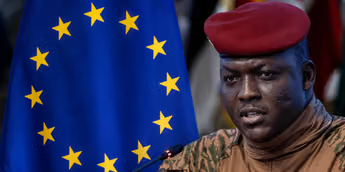
Burkina Faso and the European Union have entered into a sharp diplomatic confrontation after the European Parliament adopted a resolution criticizing the state of civil liberties and human rights in the West African nation. Africa The decision, which received broad support within the European Parliament, angered the authorities in Ouagadougou, who considered it a direct interference in their internal affairs and an attempt to impose political tutelage on them.
Ouagadougou: Accusations with a colonial background
In an official diplomatic note addressed to the European Union mission, the military government led by Captain Ibrahim Traore categorically rejected the European decision, describing its content as an extension of what it called a “neo-colonial mentality.”.
Some European parties were also accused of relying on inaccurate information and adopting biased positions regarding the situation in the country.
The authorities asserted that the European Parliament ignored the complex security challenges facing Burkina Faso in its ongoing war against armed groups, preferring to focus on human rights criticisms that do not reflect the full reality of the crisis.
The European Parliament calls for guarantees of freedoms.
The European Parliament had expressed concern about the shrinking space for civil and media work in Burkina Faso, pointing to restrictions imposed on some media outlets and civil society organizations, as well as allegations of arbitrary detention and human rights violations.
The resolution called on the Burkinabe authorities to respect freedom of expression, assembly and association, while demanding independent investigations into reported violations.
Libya at the heart of the controversy
In its response, the government of Burkina Faso linked the security crisis in the Sahel region to NATO's military intervention in Libya in 2011, arguing that the collapse of the Libyan state contributed to the spread of terrorism, arms smuggling, and cross-border organized crime.
Ouagadougou believes that ignoring this historical background makes any European assessment of the security situation in the region incomplete and unbalanced.
Widening gap between the coast and the west
This crisis reflects the rising tension between the European Union and the Sahel countries led by military regimes, most notably Burkina Faso, Mali and Niger. These countries have begun to raise the banner of national sovereignty and reject what they consider to be external pressures, at a time when they are moving towards building new political and security partnerships away from traditional Western influence.