Diamond industry: Great influence awaits Africans
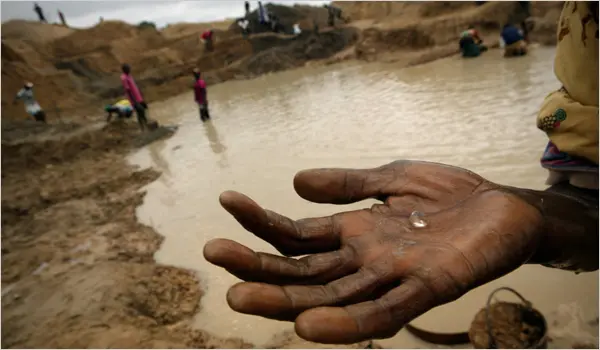
Diamond production in Africa.
Written by: Ayman Ragab
The global natural diamond market is experiencing a period of rebalancing characterized by declining production, competition from synthetic diamonds, and changing demand. According to the De Beers South African Diamond Alliance’s 2026 Diamond Report, the gradual decline in global supply could give African producers significant leverage as they seek to transform their diamond wealth into an engine for economic diversification.
One of the report's key findings is the evolution of the global supply of natural diamonds. According to the study, global production peaked at around 150 million carats in 2017, before declining to just over 100 million carats in 2025.
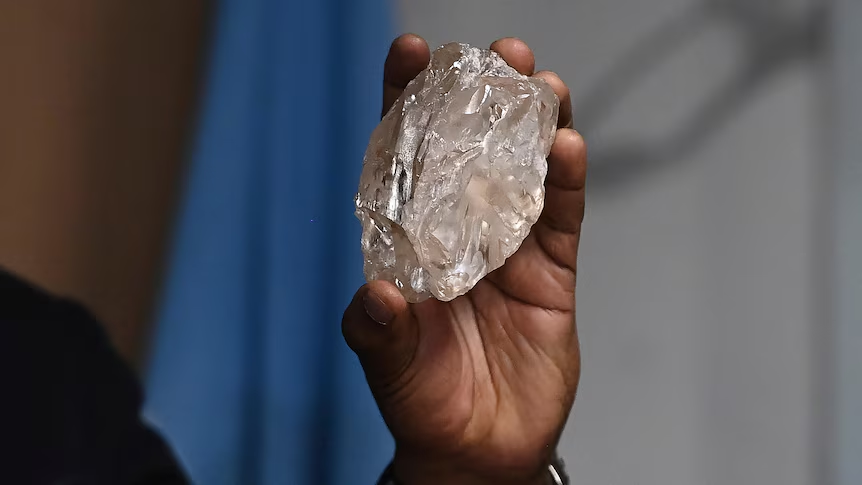
The report also indicates that production is expected to continue declining in the coming years, reaching approximately 96 million carats in 2030.
Important position for African countries
This contraction is not insignificant, as it comes at a time when few new mining projects have come online. The report notes that the Luel mine in Angola is the only major new commercial mine to have commenced operations in the past decade.
This situation definitively confirms the importance of African countries in the global equation.
The report shows that Botswana and Angola are among the major contributors to the global supply of rough diamonds in 2025, along with Russia.
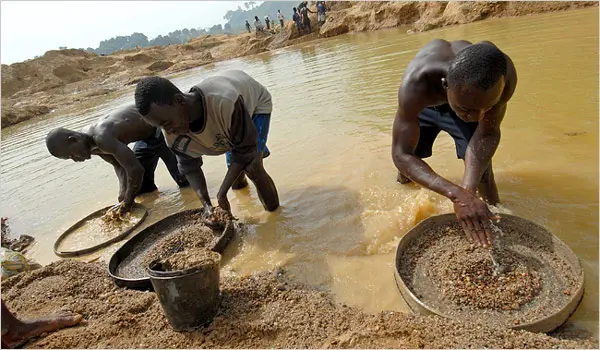
For African economies reliant on this resource, the decline in global supply could provide long-term support, provided demand remains stable. The chief economist at De Beers, as quoted in the report, believes that traditional market mechanisms still operate, and that limited supply encourages a rebalancing of production and consumption once demand recovers.
But the crucial question for Africa is not just about production; it primarily concerns the ability to transform diamond revenues into sustainable economic development.
The report devotes considerable space to Botswana, which is presented as one of the world's leading producers of natural diamonds. According to the document, diamond revenues have contributed to funding free education, healthcare services, and basic infrastructure in the country.
This path illustrates a broader issue of concern to many African extractive economies: how can a non-renewable resource be used to prepare for a post-mining era?
Botswana: An African laboratory for economic diversification
The example of Botswana is particularly revealing because it shows how the extractive sector can contribute to the emergence of activities far removed from mining itself.
The report specifically mentions the “EntreprenHer” program, developed in collaboration with UN Women and public authorities. According to the document, more than 3,900 women have benefited from this program since its inception, including its expansion to Namibia and South Africa.
Another initiative highlighted was the Tokavala Business Development Programme. According to the report, this programme has created more than 11,000 jobs in Botswana since 2017, involving nearly 1,300 small and medium-sized enterprises.

These figures demonstrate a significant shift in economic thinking regarding natural resources in Africa. The value of diamonds is no longer measured solely by the export of rough stones, but also by their ability to finance the emergence of a more diversified production sector.
This logic is also evident in Stanford's Startup Transformation Program, supported by De Beers. The report indicates that more than 100 companies have participated in this program since 2018. Collectively, these companies have raised more than $400 million in capital, increased their revenue by more than $220 million, and created more than 4,500 jobs.
There is also another trend highlighted by the report that could have significant implications for African producers.
According to the study, consumers are paying increasing attention to the origin of diamonds and the conditions under which they are produced. The report confirms that origin is gradually becoming a valuable factor in itself, no less important than the rarity or quality of the stone.
New opportunities for Africans
This development opens up new opportunities for African diamond-producing countries. If consumers show a willingness to place greater value on diamonds whose origin and socio-economic impact are clearly known, producing countries will benefit from greater appreciation of their contribution to the value chain.
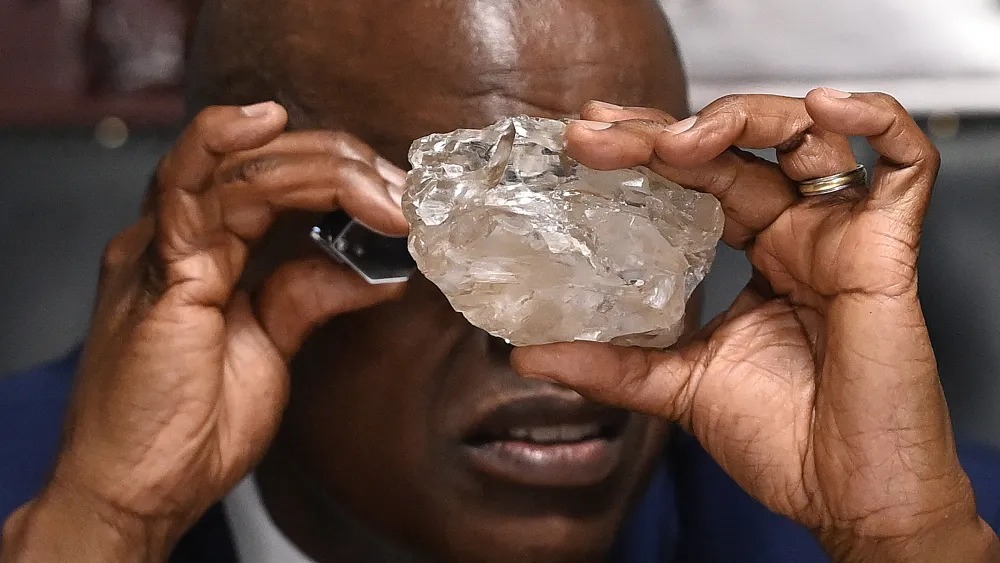
The report specifically mentions De Beers' Origin platform, which identifies the country of origin of gemstones, their trade history, and certain social impact indicators. Initial consumer feedback cited in the study suggests significant interest in this type of information.
The Diamond Report 2026 not only presents a market facing cyclical pressures, but also highlights a deeper shift in the natural diamond business model.
The gradual depletion of global supplies, the continued influence of African producers, and the growing demand for product traceability are increasingly reshaping the balance of power in this sector. In this context, the ability of African countries to move beyond purely extractive approaches has become crucial.