China is redrawing the trade map and is close to breaking the dollar's dominance in Africa.
The yuan is expanding at the expense of the US dollar.
Written by Ziad Abdel Fattah:
China is rapidly moving to strengthen its currency's presence in Africa, driven by a surge in trade with the continent's countries and new customs measures aimed at expanding the use of the yuan in financial settlements, in a move that could reshape the balance of the global financial system.
Trade volume between China and African countries is increasing (18%)
Official Chinese data revealed that the volume of trade between China and African countries increased by approximately 181 TP3T during the past year, while the decisions to reduce customs duties on imports from 53 African countries, which came into effect in May, are expected to contribute to increasing trade flows and enhancing reliance on the yuan in transactions.
The moves are supported by research findings from the International Monetary Fund indicating that the use of the yuan is directly related to increased trade exposure to China, which in turn has announced new measures to expand the global reach of its currency.
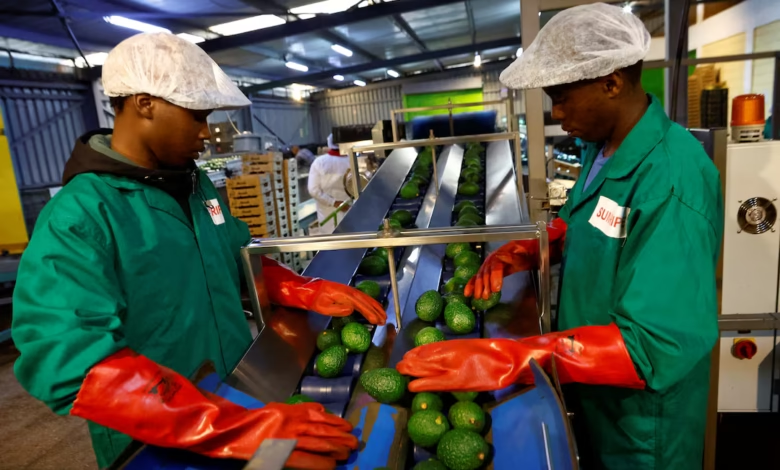
As a variety of African products flow into Chinese ports, from Nigerian cattle bones to Kenyan avocado oil and South African apples, reliance on settlements in yuan is increasing, both directly and via local currencies, despite limited accurate data on the extent of its use within the continent.
The shift reflects the growth of trade relations
Bankers believe the shift primarily reflects growing trade ties, and not necessarily a direct threat to the dominance of the US dollar. Birju Sangrajka, CEO of Standard Chartered Bank in Kenya, said that while yuan transactions are seeing significant growth, they remain complementary to the dollar, not a replacement for it.
South Africa joins the Chinese payments system
In the same context, African banks have strengthened their connection to the Chinese financial infrastructure, with South Africa’s Standard Bank becoming the first commercial bank on the continent to join China’s Cross-Border Interbank Payments System (CIPS), recording transactions of $500 million in just four months.
Beijing is seeking to consolidate its economic influence by removing trade barriers and supporting African exports, taking advantage of the vastness of its domestic market, at a time when the continent is facing increasing challenges due to protectionist policies globally.
International desire to reduce dependence on the dollar
Experts confirm that the move towards the yuan reflects a growing desire among some countries to reduce their reliance on the dollar, especially given exchange rate volatility and rising financing costs. In this context, African banks have begun issuing financing instruments and letters of credit in yuan, enabling companies to lower conversion costs.
Major financial institutions, such as Ecobank and Bank of China, are also developing new settlement products between the yuan and African currencies, a move that could accelerate the shift towards a more diversified financial system.
This comes amid China's growing role as the largest bilateral creditor to several African countries, such as Kenya and Ethiopia, which is encouraging the use of the yuan in debt settlement. Kenya has already successfully converted some of its loans from dollars to yuan, significantly reducing interest costs.
In terms of trade, Kenya stands out as a clear example of this shift, with its avocado exports to China having jumped significantly in recent years, amid expectations that the Chinese market will surpass the European one by 2030, especially with the expansion of the use of the yuan in trade settlements.
Observers believe these developments are part of a broader strategy led by China, in parallel with other countries, to develop alternative payment channels to the dollar-based financial system, which could open the door to a new phase of global monetary competition.