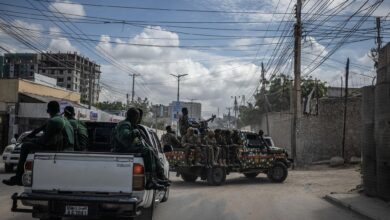
Nigeria under fire: Legal escalation and military confrontations to resolve the terrorism crisis
Nigeria is confronting terrorism with military operations and decisive trials.
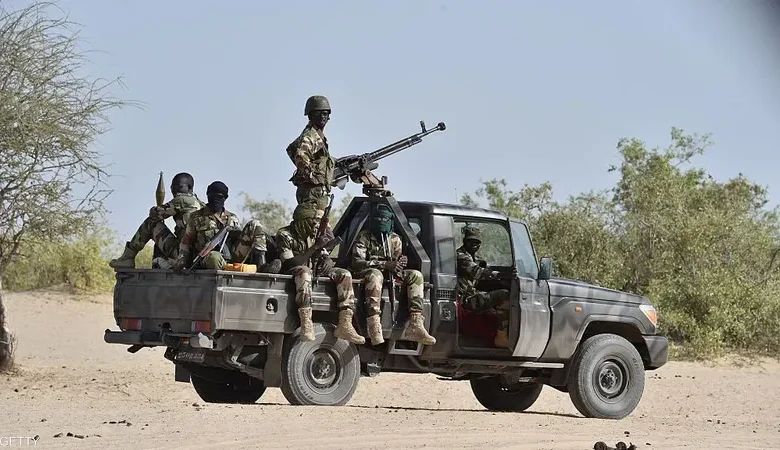
The Federal Republic of Nigeria is currently facing one of the most violent waves of security escalation in its modern history, as the country is witnessing rapid and dramatic transformations that combine an iron fist of the judiciary in the federal capital with fierce field confrontations in the vast forests and bushlands.
This intensified security and military activity comes at a very critical time, as the Nigerian government tries to dismantle the money-generating “ransom economy” and break the power of extremist groups and organized crime gangs whose practices have become an unprecedented threat to regional stability and national security in West Africa, amid close international and global monitoring of the consequences of this open war and the escalating blood toll.
The judiciary strikes at financing networks.
In an unprecedented legal move aimed at striking at the logistical structure and social incubator of terrorism, the Federal High Court in Abuja issued a historic ruling sentencing the mother and sister of the recently slain armed gang leader, Ibrahim Batujo, to 40 years in prison.
This harsh sentence came after rounds of investigations that proved their involvement and conviction for providing logistical support, covering up criminal plans, and transferring sensitive intelligence and military information to militants via telephone lines that escaped surveillance.
In parallel with this deterrent ruling, the Nigerian Ministry of Justice continued to manage the mass trials within its fortified headquarters in the capital, where more than 600 defendants accused of terrorism and financing armed groups were tried publicly.
These successive legal steps come within a public strategy adopted by the state to dry up sources of funding and cut off vital supply lines that feed dormant terrorist cells in villages and remote areas.
Fierce forest battles and targeting of places of worship
On the ground, amidst the raging conflict, the military machine of armed groups and bandits continued to target defenseless civilians to intimidate the authorities. Heavily armed gunmen stormed a church in the “Ida Onyo” area, killing a priest instantly and abducting a large number of worshippers, children, and women, taking them at gunpoint to the dense bushes and forests surrounding the area to use them as bargaining chips later.
In the troubled Katsina state in the northwest of the country, gangs of “bandits” launched a bloody and surprise attack on a safe rural village, leaving behind 10 civilian victims, as well as looting hundreds of head of cattle and burning dozens of homes and crops to the ground.
Meanwhile, security concerns have resurfaced in the troubled northeastern state of Borno, after members of the Boko Haram terrorist organization burned educational facilities and government schools in the Chibok area, bringing back memories of the bitter mass kidnappings of schoolgirls in past years.
Nigerian army revolts
In response, the Nigerian army launched harsh and coordinated military strikes targeting the militants’ command, control and communication centers deep in the forests.
Ground forces, supported by heavy air cover, succeeded in eliminating the prominent leader “Kachala Ibrahim Batujo” along with 15 of his close associates, after thwarting a well-planned military ambush for a failed attempt they led to kidnap school students in Kogi State.
The Nigerian Army High Command announced the implementation of large-scale combing operations and qualitative raids that included the states of Kogi, Kwara and Plateau, which resulted in the destruction of secret training camps and ammunition depots, and the liberation of dozens of civilian hostages who had been held for weeks inside the rugged forests of “Adankolo”.
The Nigerian armed forces are currently imposing a tight and suffocating siege on the “Oyo” National Park to encircle a group of terrorist elements who are taking refuge with hostages from among students and teachers, declaring their complete refusal to blackmail the militants or submit to their financial and political conditions.
For its part, the United Nations warned that the continued violence and escalating impunity in Nigeria are contributing to growing fears and perceptions of acts that could amount to genocide, given the increasing number of deadly attacks targeting civilians in several Nigerian states.