The economic group discusses the 2026-2027 budget and approves priorities for agriculture and food security.
It focuses on supporting productive sectors and promoting economic stability.
Written by: Mohammed Omran
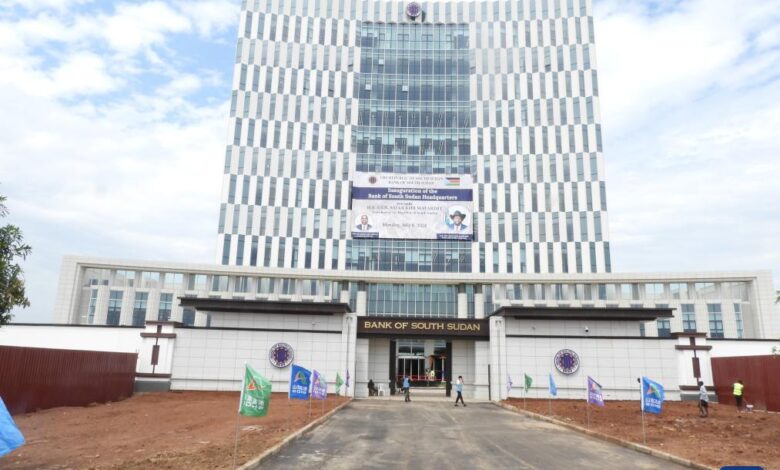
held Economic Group Chaired by the Vice President of the Republic, Professor James Wani Igga, the committee held its regular meeting at the headquarters of the Central Bank of South Sudan in the capital, Juba, to discuss the draft general budget for the fiscal year 2026-2027, which is one of the most prominent economic plans for the next stage in the country.

The economic group discusses the 2026-2027 budget and approves priorities for agriculture and food security.
During the meeting, the Minister of Finance and Planning, Chol Daniel Ayolo, presented a detailed overview of the draft budget, estimated at approximately 11.335 trillion South Sudanese pounds, under the slogan «Building Resilience and Achieving Sustainable and Prosperous Peace,» with a focus on boosting revenues and directing resources towards productive sectors.

The economic group recommended that the draft budget be referred to the Cabinet for approval, in preparation for its presentation to the Transitional National Legislative Council for discussion and approval. The group's spokesperson, Lily Albino Akol, confirmed that the priorities would focus on supporting the agricultural sector and food security, in addition to developing mining and livestock to drive economic growth.

The energy and food security sectors in Africa are undergoing major transformations.
In a separate context, recent reports have identified major economic shifts in Africa related to various issues. EnergyClean energy and refining activities, along with food security, are crucial to avoid the volatility of global crises and disruptions to supply chains.
Kenya and Tanzania compete for one of the world's largest oil refineries.
East Africa is witnessing fierce economic competition between Kenya and Tanzania to win the right to host a giant oil refinery project backed by prominent Nigerian billionaire and industrialist Aliko Dangote.
This is the richest man in Africa, and the project is described as one of the most transformative and attractive energy investments in the history of the African continent.
Recent reports have revealed that the refinery, which is still in the planning and expansion stages, represents a qualitative leap and a historic turning point for the East African region, as its countries suffer from almost complete dependence on imported refined fuels, despite possessing huge reserves of untapped crude oil.
The horrific redraws the map of fuel supply chains
If the project comes to fruition, it will radically redraw the map of fuel supply chains, ending dependence on foreign sources, with an unprecedented surge in the region’s industrial capabilities.
In a televised statement, the Nigerian billionaire confirmed that the refining capacity of the proposed project could reach 2.1 million barrels per day by 2030, placing the refinery among the world's largest.
He added: “From East Africa, we will be able to serve the entire continent… This refinery has tremendous economic viability given the targeted production volume.”.