The President of Cameroon appoints his son as Vice President and assigns him command of the army.
Cameroon's president appoints his son as vice president
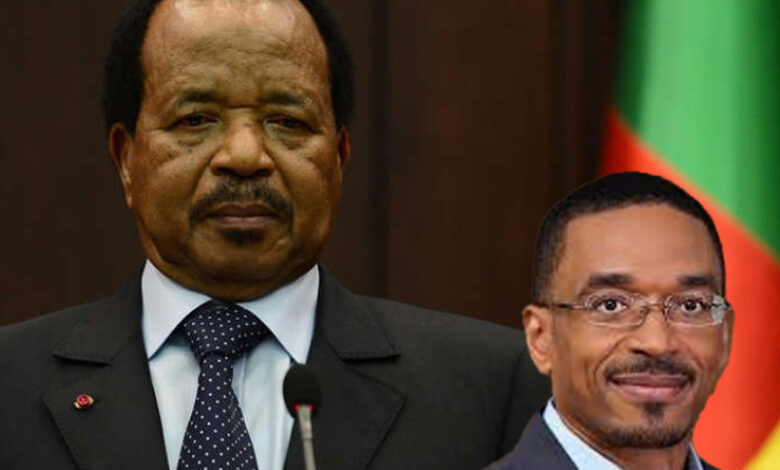
Cameroon's President Paul Biya has appointed his son, Frank Emmanuel Biya, as vice president and head of the armed forces, consolidating his control over the country's political and military structures at a time of increasing unrest.
According to reports, the appointment, announced in an official decree dated April 4, 2026, appoints Frank Biya as Minister Delegate in the Ministry of Defence, placing him at the heart of Cameroon's security structure.
The document stated: “Mr. Frank Emmanuel Biya has been appointed Vice President of the Republic of Cameroon.”.
The statement adds: “Mr. Frank Emmanuel Biya has been appointed Chief of the Armed Forces.”.
The decree indicates an expansion of his role, stating: “The Vice President of the Republic, Mr. Frank Emmanuel Biya, has been appointed Minister Delegate to the Ministry of Defence of the Republic of Cameroon.”.
Citing constitutional provisions and defense laws, the presidency indicated that the appointments were made in accordance with "service requirements," adding that the decree "will be registered and published according to expedited procedures and included in the Official Gazette."
Bia's performance for the constitutional Yemen
This move comes months after Biya, 92, was sworn in for an unprecedented eighth term following a controversial election that sparked nationwide protests and international scrutiny.
Biya received 541,000 votes in the election, defeating opposition candidate Issa Tchiroma Bakari, who received 351,000 votes. Tchiroma Bakari rejected the result, insisting he was the legitimate winner and accusing the authorities of electoral fraud, allegations the government denies.
Despite the controversy, Biya described the elections as “satisfactory” and praised the electoral body for its conduct, while congratulating the security forces for containing the demonstrations without addressing allegations of excessive force.
The Constitutional Council rejected several appeals challenging the results, citing insufficient evidence or lack of jurisdiction.
Constitutional amendments
Earlier, Cameroon's parliament, which is dominated by the ruling party in both chambers, approved by a majority a constitutional amendment allowing the country's president to appoint a deputy to take over his duties in the event of death, resignation, or "incapacity".“