The African economy is withstanding global challenges... A report reveals a surprise
African Development Bank Report
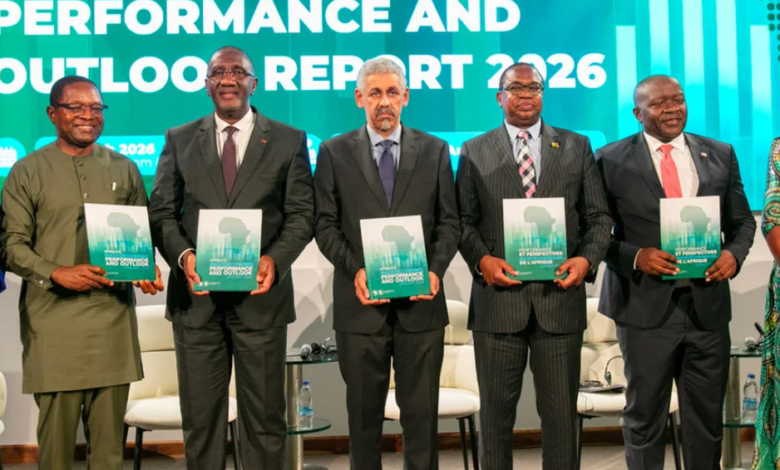
The African Development Bank forecasts that economic growth in Africa will stabilize at 4.3% during 2026, and urges fiscal discipline and regional integration as safeguards against external shocks, including the Middle East crisis.
African Development Bank
In its latest report issued this April, the African Development Bank affirmed the resilience of the African economy in the face of global challenges.

African Development Bank Report
The African Development Bank report noted that despite ongoing regional and global challenges, Africa outperformed the global average in 2025, with real GDP rising to 4.2%, compared to 3.1% in 2024, thus exceeding the global average of 3.1%.
Results of the African Development Bank report
The African Development Bank’s 2016 report highlighted that Africa’s economies experienced widespread growth, with growth exceeding 5% in 22 African countries and reaching 7% in six countries, supported by lower inflationary pressures, improved macroeconomic management, and favorable agricultural conditions.

It is projected that real GDP growth in Africa will stabilize at 4.3% in 2026, and grow further to 4.5% in 2027.
East Africa maintained its position as the fastest-growing region on the continent (recording GDP growth of 6.4%), driven by significant increases in growth rates of 9.8% in Ethiopia, 7.5% in Rwanda, and 6.4% in Uganda, in 2025.
Africa’s per capita GDP growth rate also increased from 0.9% in 2023 to 1.1% in 2024 and 1.9% in 2025, but it is still too low to achieve rapid poverty reduction.
The African Development Bank report also included findings on a decline in inflation, with an estimated average of 13.6% in 2025, down from 21.8% in 2024; it is expected to decrease further during 2026 and 2027.
Foreign direct investment saw a strong recovery in 2024, rising by more than 75% to reach $97 billion.
In addition, remittance flows rebounded strongly in 2024, rising by more than 14% to reach $104.6 billion.
This offset the decline to 6% in 2023, making remittances the single largest source of non-debt external financing, surpassing foreign portfolio investment.