Maasai women are turning drought into a sustainable source of income in Tanzania.
Converting drought-resistant grasses into livestock feed
Written by: Mohammed Omran
With causing drought With large numbers of livestock dying, Maasai women began converting drought-resistant grasses into animal feed, transforming it from a means of survival into a source of income that helped them support their families.
Maasai women are turning drought into a sustainable source of income in Tanzania.
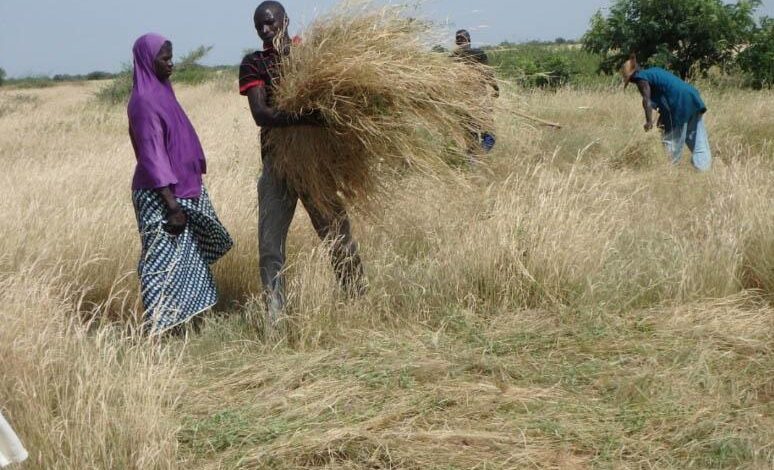
When drought wiped out most of her family's livestock, Nisirkar Longidungi, a 30-year-old mother of four from the village of Silela in northern Tanzania, found herself with very limited options after the loss of most of her animals. But today, she earns a living by growing and selling drought-resistant fodder for her livestock.
![تحمل نيسيركار لونغيدونغي العلف المحصود من حقل العشب التابع لمجموعتها في قرية سيليلا. وقد ساعدها الدخل الناتج عن إنتاج العلف على تحسين مستوى معيشة أسرتها. [صورة مقدمة من مجلس النساء الرعويات]](https://www.aljazeera.com/wp-content/uploads/2026/06/IMAGE-4-1-1780933234.jpg?w=770&resize=770%2C513&quality=80)
Longidungi says: “Before I started growing fodder, I lost most of our goats. Now people come from other villages to buy grass, and I can support my children, and I am no longer afraid of drought.” Thanks to this income, I was able to build a house and buy more goats.

Her story is part of a wider transformation in northern Tanzania, where Maasai women are turning to fodder production as a means of adapting to climate change, within a community of hundreds of thousands of people. The Women Pastoralists Council oversees this work, which has expanded into several pastoral areas.
A local women's organization plays a key role in organizing these projects, operating in several districts and comprising thousands of members in dozens of villages, with a focus on economic empowerment, land rights and girls' education.
According to official data, Tanzania lost hundreds of thousands of head of cattle during recent droughts, causing a significant deterioration in the livelihoods of pastoral communities.
In response, grass seed banks were established and large areas were allocated for fodder cultivation, managed directly by hundreds of women, while thousands of herders benefit during periods of drought.
![إحدى عضوات مجموعة نايشو النسائية تحمل خروفًا تم شراؤه من خلال الدخل المكتسب من حصاد وبيع عشب العلف في قرية سيليلا، مقاطعة موندولي، شمال تنزانيا [صورة مقدمة من مجلس النساء الرعويات]](https://www.aljazeera.com/wp-content/uploads/2026/06/IMAGE-1-1780933228.jpg?w=770&resize=770%2C513&quality=80)
The project proved successful by generating financial returns from the sale of seeds and fodder, which helped transform many women from partial breadwinners to primary breadwinners within their families.
Despite challenges such as weeds and the difficulty of protecting the land from animals, the experiment has become a model that can be expanded in arid regions, where it is no longer just about survival, but an economic project that is reshaping life in pastoral communities and enhancing the role of women in the local economy.