Banning the export of raw rubber... How are Ghana and Liberia betting on increasing revenue?
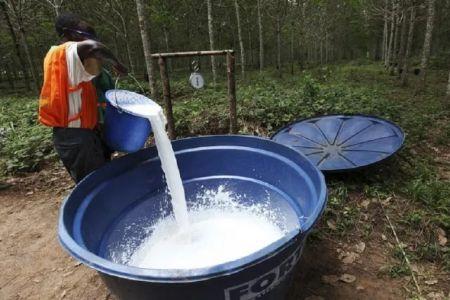
Liberia has indefinitely banned the export of unprocessed natural rubber.
Written by: Ayman Ragab
Natural rubber, a product of the rubber tree, is one of the most important agricultural raw materials exported from West Africa, alongside cocoa and cashews. In this region, Ghana and Liberia rank second and third, respectively, in terms of production, after Côte d'Ivoire.
As of July 1, 2026, Liberia has banned the export of unrefined natural rubber indefinitely. The ban specifically includes natural latex, coagulated rubber, rubber lumps, bark scrap, crepe scrap, and all other forms of raw rubber.
Ghana ban
A few months ago, Ghana took a similar measure. In the former Gold Coast, the Ministry of Trade, Business, Agriculture, and Industry imposed a ten-year ban on raw rubber exports in April 2026, with the ban taking effect immediately.
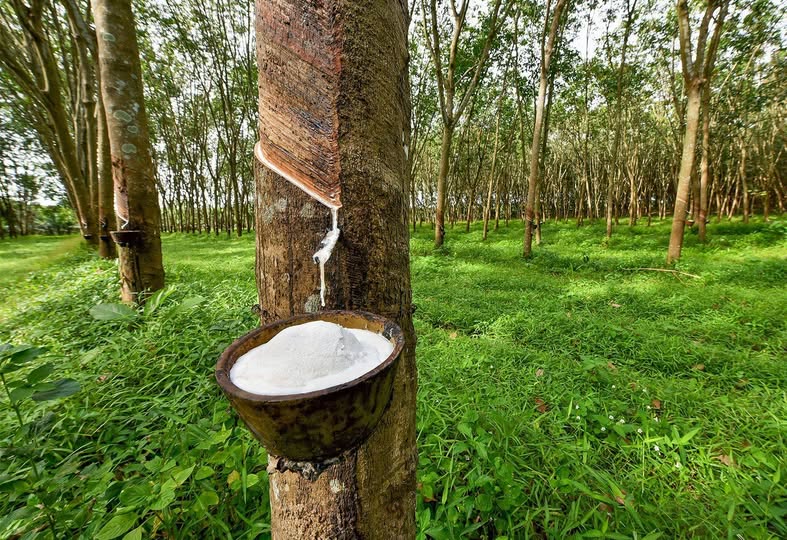
In both cases, authorities justify these decisions by the need to enhance local processing, create more added value, and support the sector's manufacturing.
This direction in manufacturing policies for the West African rubber sector is part of an ongoing development process in Ivory Coast, the leading African producer of the raw material.
Dynamic initiated by the Ivorian sector already since 2023
In Côte d'Ivoire, a policy of industrializing the rubber sector has led to a gradual tightening of controls on raw rubber exports in recent years. Since November 2023, the Rubber, Palm Oil, and Coconut Council (CHPHC) has officially banned the export of natural rubber blocks, the primary form of natural rubber harvested, in order to prioritize supply to local processing units.
This decision is in line with the support measures put in place for manufacturers as part of Abidjan’s goal, announced in 2021, to increase the primary processing rate of natural rubber to 100%.
In line with this policy, the authorities took an additional step in June 2025 by suspending the issuance of new licenses for primary processing plants, as the Primary Rubber Processing Center (CHPHC) concluded that this sector had reached saturation point. This development indicates that the country has sufficient processing capacity to cover most of the primary processing of natural rubber.
In this context, the regulatory authority is now inviting private sector investors to redirect their capital towards secondary processing (manufacturing of tires, technical products, and molded rubber), which remains marginal.
Opportunity to increase export revenues
The challenge of accelerating local processing is becoming more strategically important, as products resulting from the primary processing of natural rubber are valued better in the international market.
In September, Emmanuel Akwasi Owusu, president of the Ghana Rubber Producers Association, pointed out that ”when raw rubber sold at $600 is processed, an additional profit of $900 can be generated. Therefore, if we only export raw rubber, we lose this profit of $900.“ According to him, the low level of processing in Ghana leads to a loss of revenue estimated at more than 100 million dollars annually, according to Ecofin.
Data compiled on the Trade Map platform, for example, shows that the former Gold Coast supplied approximately 104,370 metric tons of natural rubber to the international market in 2025. It is worth noting that 53,86%—more than half of this volume—consisted of natural rubber in its raw form (unprocessed), 39.24% of technically specified natural rubber (TSNR), from primary industrial processing, and approximately 6.5% of natural rubber in the form of smoked sheets (RSS), from artisanal or semi-industrial processing.
Unlike Ghana, Liberia’s share of processed rubber in exports is much higher, but it remains significantly lower than that of the Ivorian sector. According to the trade map, the country exported 101,232 metric tons of rubber in 2025, of which approximately 70% was unprocessed rubber.
By comparison, Côte d'Ivoire exported 1.97 million metric tons of natural rubber that same year, of which 98% of the shipped volume consisted of processed natural rubber.