Crossing Ceuta ignites geopolitical tensions... Has Morocco eased its control over migrants?
Ahmed Salem
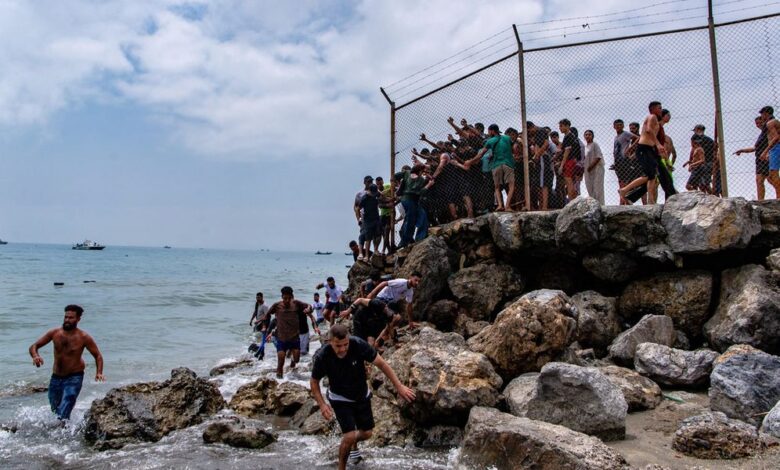
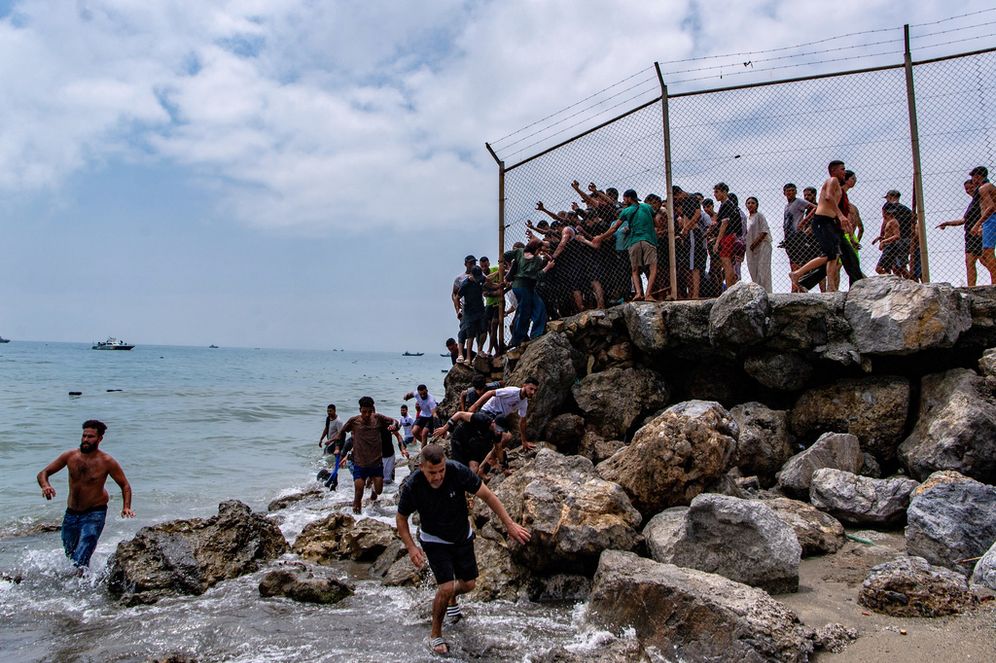
Ceuta witnessed, The Spanish city located in North AfricaA sharp rise in the number of arriving migrants has raised questions about whether Morocco has deliberately relaxed its border control measures.
While Rabat denies easing security measures, analysts say the incident could have diplomatic, regional and geopolitical implications that go far beyond the scope of migration.
Eyewitnesses and analysts indicated that Moroccan authorities had eased security measures around the border town of Fnideq, allowing thousands of migrants to approach Ceuta.
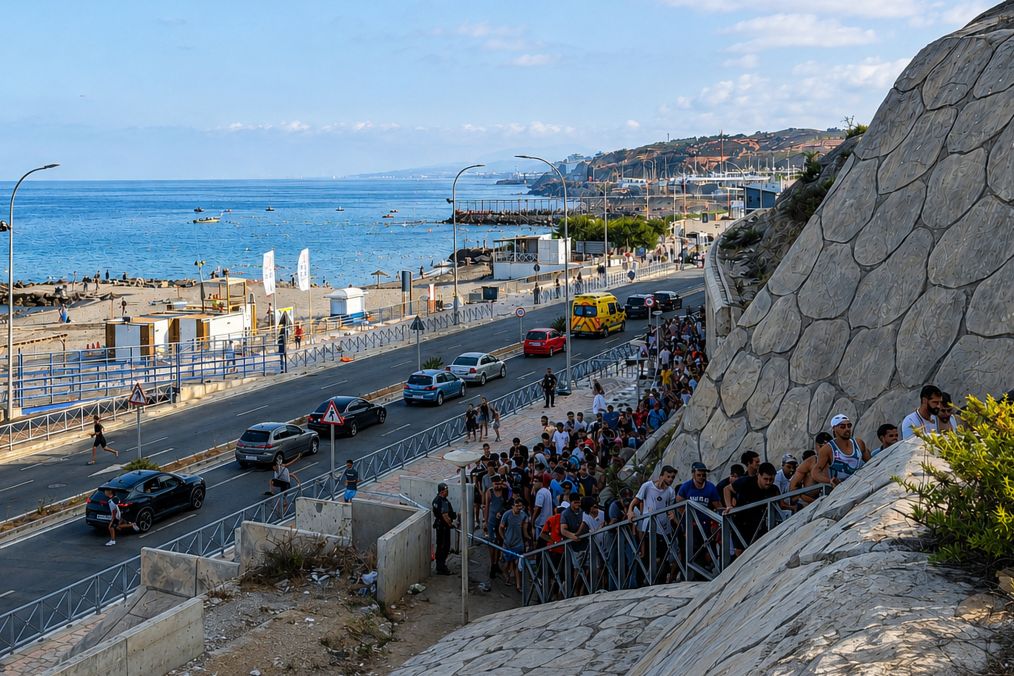
According to residents interviewed by AFP, the usual police checkpoints remained in place, but there was no exceptional security deployment despite the growing crowds.
Hundreds of migrants without oversight
Mohammed Ben Issa, head of the Northern Observatory for Human Rights in Fnideq, said that police reinforcements only arrived after hundreds of migrants had crossed into Ceuta.
Pierre Vermeren, a North Africa specialist, confirmed that Moroccan security services have the capacity to halt the movement if they choose to do so. However, no evidence has emerged to suggest that the Moroccan leadership has ordered a relaxation of border controls.
A Moroccan source denied any relaxation of security measures, while the Interior Ministry attributed the influx to misinformation circulating on social media, human trafficking networks, and misunderstandings about immigration rules.
Rabat rejects the accusations
Morocco insists that the influx of migrants was not the result of official policy, while Interior Ministry spokesman Rachid El Khalfi said the events were driven by the malicious exploitation of digital platforms, misinformation and criminal trafficking networks that created the false impression that migrants could easily enter European territory without legal consequences.
The royal palace has not issued any public comment on the allegations that the authorities deliberately allowed the crossings.
Is there a diplomatic message behind the crossing of Ceuta?
Many analysts believe the timing may not have been coincidental. The surge coincided with Morocco's Throne Day celebrations, a time when authorities typically emphasize the country's stability.
Vermeeren argues that the incident may have been intended as a warning to Spain regarding Western Sahara, where Morocco and the Algeria-backed Polisario Front remain locked in a decades-long conflict.
Spain’s recent diplomatic engagement with Algeria has also sparked speculation that Rabat wanted to signal its displeasure.
This situation brought back memories of the 2021 Ceuta crisis, when more than 10,000 migrants crossed into the city during a diplomatic dispute after Spain allowed the Polisario Front leader to receive medical treatment there. The crisis subsided after Madrid later endorsed Morocco's proposal to grant autonomy to Western Sahara.
Ceuta remains a sensitive issue
Morocco has never recognized Spanish sovereignty over Ceuta and Melilla, and has claimed both territories since gaining independence in 1956.
Riccardo Fabiani of the International Crisis Group said recent events could serve as a reminder that Spain relies on Morocco's cooperation to secure the region, thus strengthening Rabat's influence over the disputed enclaves.
Broader geopolitical tensions
Some observers have linked the wave of migration to broader international tensions. Fabiani noted that Morocco may also have sought to strengthen ties with key allies, including the United States and Israel, amid disagreements between Spain and both countries over Middle Eastern issues.
Meanwhile, Israel’s ambassador to the United Nations, Danny Danon, criticized Spain’s handling of the Ceuta crisis, while questioning its continued control over the enclaves in North Africa.
Others point to statements by US President Donald Trump, who recently criticized Spain over defense spending and its stance during the Iranian conflict.
Although there is no evidence directly linking Washington to the wave of migration, some analysts believe that this incident reflects broader geopolitical tensions affecting relations between Morocco, Spain, and their international partners.