Egyptian agriculture foils attempt to smuggle rare wildlife
The smuggled animals from Egypt were deposited in the Alexandria Zoo.
Written by Qusay Hussein
The Ministry of Agriculture and Land Reclamation announced today the success of joint efforts between the General Authority for Veterinary Services, in cooperation with security and customs authorities at Cairo International Airport, in thwarting an attempt to smuggle a number of wild animals in violation of wildlife protection laws and the international CITES agreement.
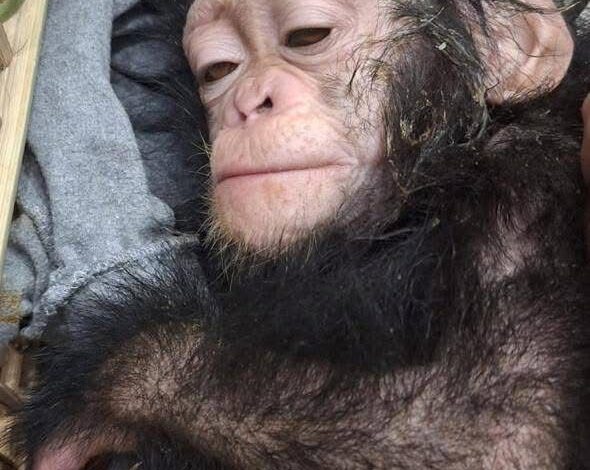
Dr. Hamed Al-Aqnas, head of the General Authority for Veterinary Services, said that the men of the Central Administration for Veterinary Quarantine at Cairo International Airport, in coordination with the security authorities, were able to apprehend an Egyptian passenger bound for India, in possession of: 3 baby chimpanzees, in a state of complete anesthesia, which directly threatened their lives, as well as (10) bags containing a group of rare reptiles, which were kept without being opened inside the airport premises for security and precautionary reasons.
Egyptian agriculture authorities thwart an attempt to smuggle wild animals
Al-Aqnas explained that immediate coordination was made through the General Administration for Wildlife Conservation office at the airport, in order to conduct examination and classification of the seized items and accurately determine their types, in preparation for taking the technical procedures followed in such cases to ensure proper handling of each species according to its danger and environmental needs.
He pointed out that immediately after the seizure, Mr. Alaa Farouk, Minister of Agriculture and Land Reclamation, directed the Central Administration for Zoos and Wildlife Conservation to coordinate immediately with the Veterinary Quarantine for immediate confiscation, in accordance with the law regulating the possession and trade of endangered wildlife.
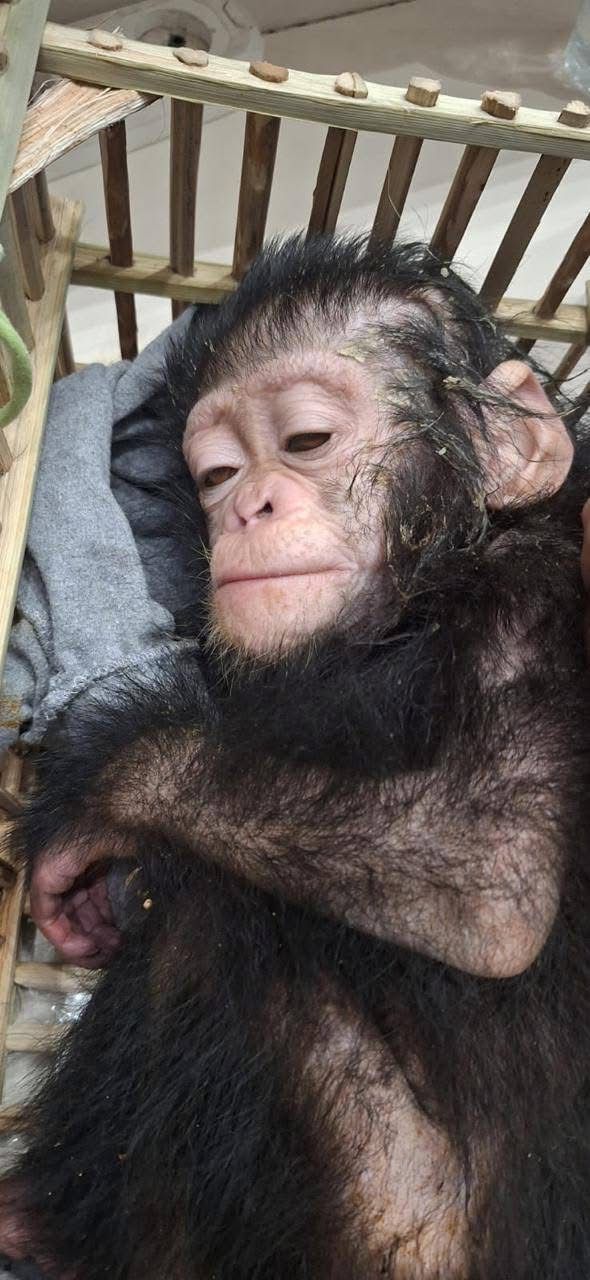
In addition to providing the necessary veterinary medical care and transporting the young chimpanzees and reptiles under the supervision of a specialized veterinary doctor to ensure their recovery and health, they are also placed in the Alexandria Zoo, as a safe place to place these creatures and provide a suitable environment for them, while being subject to careful observation by veterinarians.
In a related context, the Ministry of Agriculture and Land Reclamation confirmed that all necessary legal measures have been taken regarding the incident, the necessary reports have been filed, and the violators have been referred to the relevant authorities to conduct investigations, stressing that the state will not tolerate any attempt to harm natural resources or violate international treaties.
The ministry confirmed that this operation comes within the framework of tightening control over all border crossings, and decisively confronting the phenomenon of illegal wildlife trade.
The ministry praised the security vigilance and high level of coordination among all state sectors to protect natural resources and Egypt’s commitment to international treaties in this regard.