Through its partnership with Egypt, South Sudan places education at the top of its priorities.
Vice President: Plans to establish a branch of Alexandria University in Tonj and a technical school in Wau
Written by Ziad Abdel Fattah:
South Sudan aims to enhance the quality of education and facilitate access to educational services in the country through key partnerships with Egypt. South Sudan plans to establish a branch of Alexandria University in Tonj and a technical school in Wau, the country's third largest city, amid structural challenges facing education in South Sudan.
The Vice President of South Sudan renewed his commitment to the services group. Hussein Abdel Baqi AkolFocus on expanding access to education through key partnerships with EgyptHe highlighted plans to establish a branch of Alexandria University in Tonj and an art school in Wau.
There is an urgent need to strengthen the country's education system.
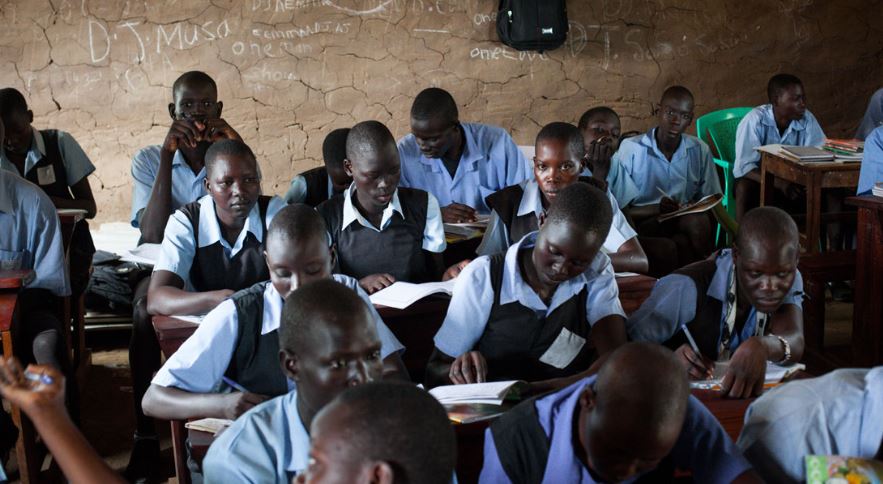
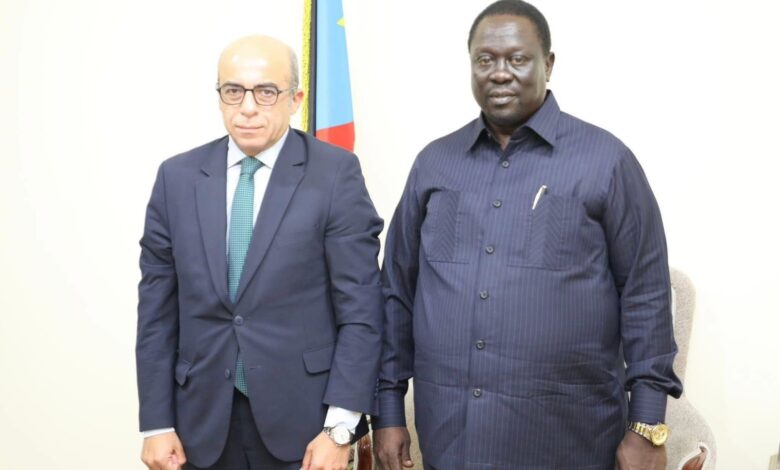
During his meeting in Juba with the Egyptian Ambassador to South Sudan, Hazem Mamdouh Fawzi, the Vice President stressed the urgent need to strengthen the country’s education system as a foundation for development and service delivery.
Bilateral agreement to open a branch of Alexandria University in Tonj
The discussions focused on the progress made in reaching a bilateral agreement to open a branch of Alexandria University in the historic city of Tonj in South Sudan, and reviewing plans to establish a technical school in Wau, aimed at providing young people with practical skills to meet labor market demands and enhance employment opportunities.
Structural challenges facing education in South Sudan
According to the United Nations Children's Fund (UNICEF), education in South Sudan faces structural challenges and a severe shortage of resources, with more than 701,000 children (approximately 2.8 million) remaining out of school.
The education system follows an 8-4-4 structure (8 years primary, 4 secondary, 4 university), and suffers from a shortage of teachers, low salaries, and a lack of schools. The state is seeking to develop its own national curricula to overcome the previous educational legacy.
According to the organization, more than a decade after the split, South Sudan continues to suffer from a long-term humanitarian crisis, affected by conflict, economic stagnation and instability, as well as being highly vulnerable to climate shocks. One of the consequences of this protracted crisis is the lack of educational opportunities for children and adolescents.
It is worth noting that spending on education as a percentage of GDP in South Sudan increased from 41 TP3T in 2011 to 11,211 TP3T in 2021, after declining during the period between 2016-2018. With the increase in the education budget to 12,51 TP3T of GDP in 2023, total enrollment increased from 1.6 million children in 2013 to 2.3 million in 2021. The female enrollment rate increased from 211 TP3T in 2005 to 491 TP3T in 2021. However, according to UNESCO, there are 2.8 million children out of school, or more than 701 TP3T of children not receiving an education, the majority of whom are girls.
Literacy rates are among the lowest in the world.
In addition, literacy rates in South Sudan, which has suffered for decades from civil war, are among the lowest in the world, with about a quarter of adults able to read, but in urban areas, nearly half of the adult population is literate.