At the FAO Conference for Africa, Egypt affirms its readiness to build the capacities of its brothers on the continent.
During training programs
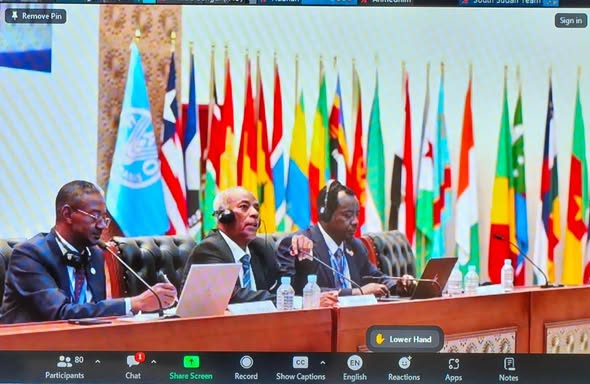
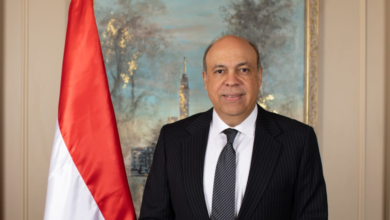
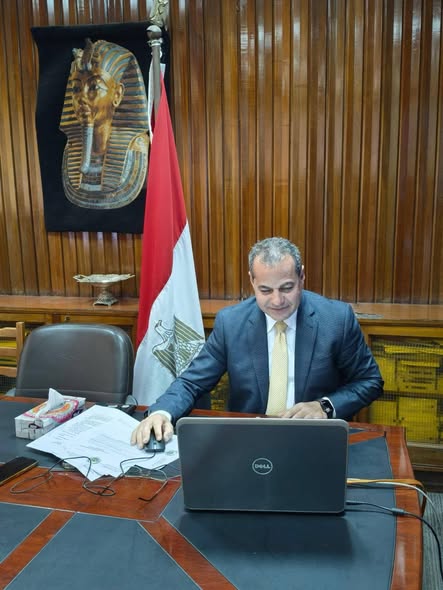
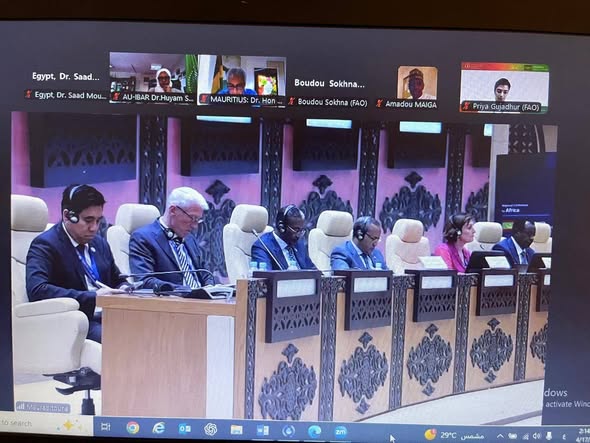
The Egyptian Ministry of Agriculture participated in the work of the thirty-fourth session of the Regional Conference of the Food and Agriculture Organization of the United Nations (FAO) for Africa, which was hosted by the Republic of Mauritania during the period from 14 to 16 April 2026, with high-level participation that included meetings of senior technical officials and the ministerial session, and in a delegation headed by Dr. Saad Moussa, Undersecretary of the Agricultural Research Center and Supervisor of International Relations and Agreements, on assignment from Alaa Farouk, Minister of Agriculture.
During the interventions of the Egyptian delegation, thanks and appreciation were expressed to the Islamic Republic of Mauritania for the excellent organization and hosting of this important event, as well as to the Food and Agriculture Organization of the United Nations (FAO) for its continued efforts in supporting issues related to enhancing agricultural productivity and achieving food security for the peoples of the African continent.
Structural challenges facing the agricultural sector in Africa
The Egyptian delegation emphasized the structural challenges facing the agricultural sector in Africa, foremost among them land degradation, desertification, and water scarcity, noting that these challenges require integrated responses and innovative policies based on regional and international cooperation.
Egypt reviewed its national experience in facing these challenges, despite the limited natural resources, as it succeeded in implementing ambitious programs to develop the agricultural sector and enhance its resilience, through: horizontal expansion by reclaiming about 4 million acres, and vertical expansion through the development of high-yield plant varieties that are tolerant to climate change, as well as expanding water desalination projects and reusing agricultural drainage water.
The delegation stressed the importance of adopting sustainable seed production systems, enhancing plant health, animal, fish and poultry production, as well as expanding the application of modern irrigation systems, and developing agricultural infrastructure, especially in the areas of storage, in order to reduce losses and waste.
In this context, the importance of formulating advanced agricultural policies in cooperation with the FAO was emphasized, along with strengthening partnerships with the private sector and creating an attractive investment environment, especially in the areas of agricultural infrastructure and value chains.
Capacity building for our brothers in African countries
On the other hand, the Egyptian delegation affirmed the readiness of the Ministry of Agriculture and Land Reclamation to provide all aspects of technical support and capacity building to brothers in African countries, through training programs implemented by the Egyptian International Center for Agriculture.
During the ministerial session, the Undersecretary of the Agricultural Research Center and Supervisor of International Relations and Agreements reviewed the efforts made by the Egyptian government to support food systems, including developing agricultural production, improving animal breeds, enhancing agricultural extension, and expanding training programs and transferring expertise to sister African countries.
At the conclusion of the participation, the Egyptian delegation expressed its appreciation to the FAO for its pivotal role in supporting the food security system, and to the Islamic Republic of Mauritania for its successful hosting of the conference at a critical time that is witnessing increasing challenges at the level of global food security.