Intra-African trade is projected to grow to $230 billion by 2026 (10%).
Accelerated implementation of the Continental Free Trade Area agreement
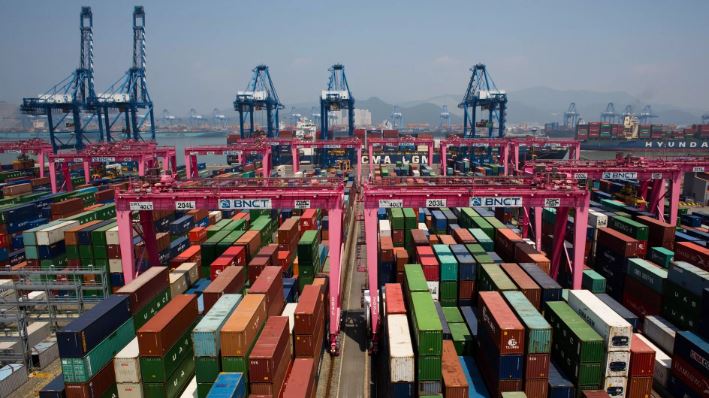
On March 30, 2026, the African Export-Import Bank (Afreximbank) published a report forecasting that intra-African trade volume would grow by 10% in 2026 to reach $230 billion, up from $210 billion in 2025.
According to the report, this increase is largely due to the accelerated implementation of the African Continental Free Trade Area (AfCFTA).
The report, entitled “African Trade and Economic Outlook 2026 – Leveling Up: Realizing Greater Value from African Commodities”, describes the growth estimates as an optimistic scenario.
This scenario is based on political stability, regional integration, and targeted competitive reforms, along with a stable global trade environment.
Easing geopolitical tensions
This scenario assumes a reduction in geopolitical tensions, a partial normalization of supply chains, and a restoration of confidence in the multilateral trading system, allowing African economies to translate structural reforms into sustainable gains in trade and income.
Improvements in regional trade prospects are expected to be driven by progress in 2025, including the entry into force of the African Payments and Settlement System (PAPSS), which is set to reduce foreign exchange costs by 20% to 30%, the phase-out of non-tariff barriers along key trade corridors, and the adoption of the African Continental Free Trade Area Protocol on Digital Trade.
Intra-African trade is expected to reach 16% by 2026, compared to an average of 15% in recent years.

The manufacturing, agriculture and food sectors are expected to play a larger role, accounting for between 48% and 50% of intra-African trade flows, up from 46% in 2025, offsetting the slowdown in commodity trade.
According to the report, regional trade flows are also expected to become more balanced across the continent's sub-regions. Southern Africa will remain the primary driver of intra-African trade, but the accelerated implementation of the African Continental Free Trade Area (AfCFTA) is expected to broaden participation from West and East Africa, while North Africa continues to strengthen its trade ties with other sub-regions.
Huge untapped potential
Total African trade, both within and outside the continent, reached approximately US$1.4 trillion last year, according to the report. The continent's trade balance is skewed, with commodities dominating exports (between 601 TP3T and 701 TP3T of the total) and manufactured goods dominating imports (60.51 TP3T).
Africa’s share of global exports remained modest at around 3%, suggesting that the recent recovery in trade was driven more by cyclical price fluctuations than by a structural change in the continent’s position within global value chains.
Despite efforts to diversify trading partners, the continent remains vulnerable to commodity price volatility, with varying levels of dependence among sub-regions.
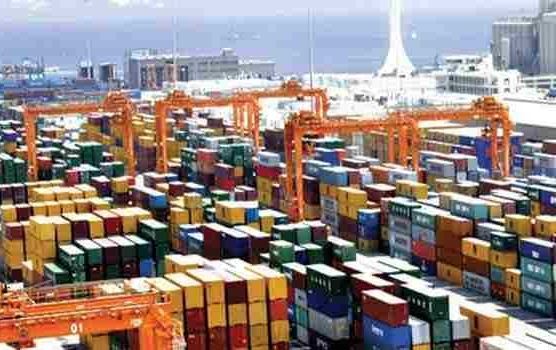
North Africa combines high-value exports with a relatively wide diversification, while West and Central Africa remain highly concentrated, dominated by crude oil, unprocessed agricultural products, and mining products.
East Africa, on the other hand, has the lowest export value, but it shows greater diversification, reflecting the range of its agricultural production and the emergence of a light manufacturing sector.