Khat in Africa: Flourishing cultivation and widespread consumption spark controversy
القات في القارة السمراء.. محصول يدر المليارات ويثير مخاوف صحية
Written by: Badr Ahmed
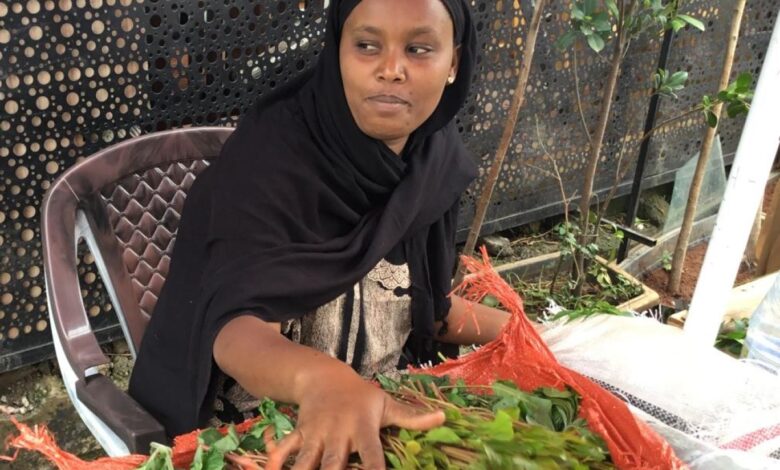
Across the Horn of Africa and East Africa, khat has become one of the most controversial crops, combining its importance as a source of income for millions of farmers with growing criticism due to its health, social, and economic impacts. While chewing khat leaves is part of the social customs in several African countries, its widespread cultivation and use have sparked considerable debate about the crop's future.
What is khat?
Khat (Catha edulis) is an evergreen plant. Its fresh leaves are chewed to obtain a stimulating effect due to their content of cathinone and cathine, which give a feeling of activity and alertness, before being followed by fatigue and a decrease in activity after the effect wears off.
The use of khat in East Africa dates back hundreds of years, where it was associated with social and tribal occasions, and over time it became part of daily life in some communities.
Where is khat grown in Africa?
Khat cultivation is mainly concentrated in East Africa and the Horn of Africa, with the most prominent producing countries including:
Ethiopia: It is the largest producer and exporter of khat in Africa. It is grown in the Oromia, Harar and Sidama regions and is one of the most important cash crops that generates millions of dollars in export revenues.
Kenya: It is widely cultivated in Meroe County, where it is known locally as Mira, and large quantities of it are exported to neighboring countries and foreign markets.
Somalia: Consumes in huge quantities, while relying heavily on imports from Ethiopia and Kenya to meet domestic demand.
Djibouti: The local market relies on khat imported daily, and it is one of the countries with the highest per capita consumption.
Uganda: There is limited agriculture in some eastern regions.
Tanzania: Its cultivation is less widespread compared to the countries of the Horn of Africa, in some northern areas near the Kenyan border.
Countries with the highest consumption of khat
Khat is part of social life in a number of African countries, but consumption levels vary from country to country.
Somalia is among the top consuming countries, where khat chewing sessions are a daily activity for a large segment of the population.
Djibouti also has one of the highest per capita khat consumption rates, due to the population's reliance on daily imports.
In Ethiopia, consumption is widespread in cities and rural areas, especially on social occasions and among certain groups of workers, students, and drivers.
In Kenya, consumption is concentrated in the eastern and northern regions, in addition to its use within some local communities.
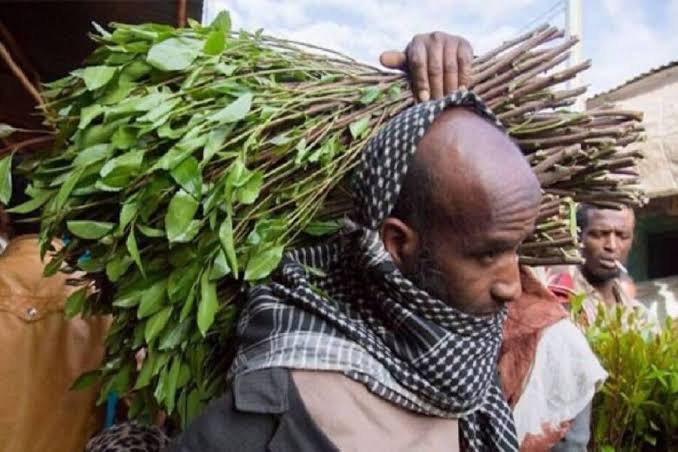
Khat consumption is not limited to Africa, as Ethiopia and Kenya export large quantities to countries such as:
Somalia
Djibouti
Some areas of East Africa
Quantities of it are also transferred to European countries with communities from East Africa, even though many of these countries have banned its import and classified it as a controlled substance.
Economic importance
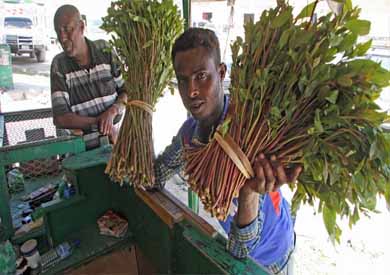
Khat is a major source of income for hundreds of thousands of farmers in Ethiopia and Kenya, as it is characterized by its high yield compared to coffee or corn crops, and it also provides job opportunities in transportation, trade and distribution.
In Ethiopia, khat is one of the most prominent agricultural exports that generates foreign currency, while entire regions in Kenya depend on its cultivation as a major source of income.
Health and social impacts
Health experts warn that excessive khat chewing can lead to high blood pressure, sleep disturbances, digestive problems, anxiety and depression in some users, as well as the possibility of developing psychological dependence on it.
Studies also indicate that daily spending on khat depletes the income of some families and affects productivity and working hours, especially in countries where consumption is widespread.
Ongoing debate
East African governments face a real dilemma in dealing with khat; on the one hand, it is an important economic crop that provides jobs and export revenues, and on the other hand, there are increasing demands to put in place controls to limit its health and social effects.
Between economic interests and health warnings, khat remains one of the most controversial crops in Africa, where it is difficult to do without in some communities, while other countries are moving towards tightening control over its trade and consumption within the framework of public health policies.